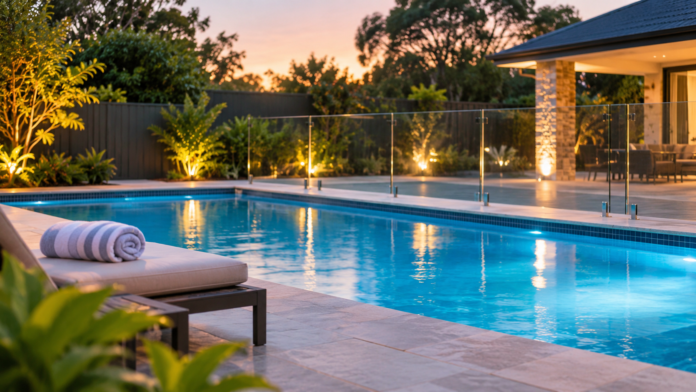

Who doesn’t love the idea of a home swimming pool? It’s an instant way to transform your backyard into a place to relax and entertain. However, never underestimate the effort needed in building one. There’s more to it than simply selecting its shape and deciding where to put the sun loungers.
In fact, the features you include from the outset determine how practical, comfortable, and safe your pool will be for years to come. That’s why, before construction begins, you should cover these essential features.
Reliable Pool Fencing and Safety Barriers
Safety is always a priority when designing a home swimming pool. That’s multiplied tenfold if children and pets regularly use the garden. With a barrier in place, it restricts unsupervised access to the water, while a secure gate provides a controlled entry point.
There are several materials to consider, but frameless glass railings can be appealing for multiple reasons. That’s certainly the case if you want to retain unobstructed views across your outdoor space. Made from strong tempered glass, these minimalist systems achieve a protective boundary without the visual bulk of traditional railings. Always select appropriately tested and compliant installations, with secure fixings and self-closing, self-latching gates where required by local regulations.
A Practical Pool Deck and Surrounding Area
It might sound dramatic, yet the area immediately surrounding your pool deserves as much attention as the pool itself. Why? Because you’ll need enough room for people to enter and exit the water comfortably, move around the perimeter, and relax without crowding the space.
Start by picking a surface designed for outdoor and poolside use, complete with good slip resistance and drainage. Materials such as textured stone can achieve an attractive finish, but don’t overlook how hot they can become in direct sunlight and how much maintenance they require.
Effective Filtration and Water Circulation
Keeping pool water clean demands a properly designed circulation and filtration system. The pump moves water through the filter, which in turn removes dirt, debris, and other unwanted particles before returning it to the pool.
Your system should be selected according to the pool’s size and expected usage. Different filters come with different maintenance requirements, so compare their practical benefits before deciding. You’ll also need a water treatment routine to achieve balanced conditions and keep the pool hygienic.
Lighting for Evening Use
With pool lighting, you can enhance both the atmosphere and functionality of your outdoor space. Underwater lights make the pool more visually appealing after sunset, while surrounding fixtures are great for illuminating pathways and seating areas. Light positioning should be factored early into the design stage. This ensures electrical installations are appropriate for wet environments and completed by qualified professionals.
Heating and Temperature Control
Do you want to use your swimming pool year-round? This is where heating is important. A pool heater or heat pump allows you to maintain a more comfortable water temperature, which naturally extends the swimming season. Your choice will depend on various aspects like the pool’s dimensions, energy costs, local climate, and how frequently you plan to swim. To retain heat and reduce evaporation when the pool isn’t in use, don’t forget to use a pool cover.