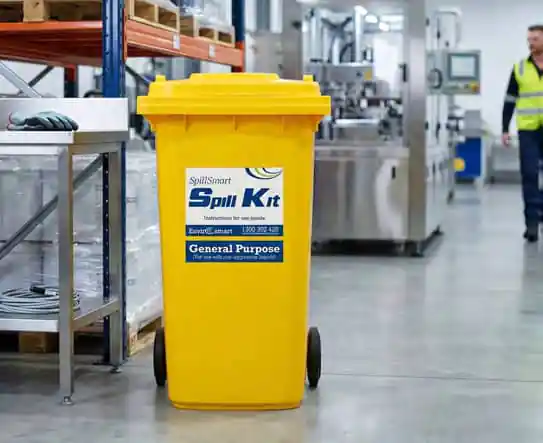

An oil spill kit supports a planned response to leaks involving lubricants, hydraulic oils and fuels. In Australian workshops, warehouses and construction sites, these releases can create slip hazards and contaminate drains or soil. Effective preparedness means selecting compatible equipment, recognising response limits and keeping supplies ready. Absorbents alone do not remove fire or vapour hazards.
Key Takeaways
- Match absorbents and protective equipment to the spilled liquid.
- Confirm absorption capacity rather than relying on container size.
- Plan drain protection using equipment suited to the site.
- Define when workers must withdraw and seek assistance.
- Replenish supplies and arrange contaminated-waste disposal after use.
Understand the Risks Before Responding
Identify the Liquid and Hazards
Review current safety data sheets (SDS) for oils and fuels handled onsite. Consider likely spill quantities, ignition sources, nearby drains and potential exposure.
A lubricant leak and a volatile fuel spill can require different responses. An oil-only absorbent does not make a flammable atmosphere safe.
Establish Clear Response Limits
Workers should respond only within their training, procedures and available equipment. Unknown liquids, hazardous vapours or uncontrolled releases may require withdrawal and specialist assistance.
Procedures should explain how to raise the alarm, restrict access safely and contact designated responders.
Choose the Right Oil Spill Kit
Selecting an oil spill kit requires checking liquid compatibility, likely quantities and whether deployment will occur on land or water. Oil-only absorbents generally take up oils and fuels while repelling water; confirm suitability for the actual product.
Check Contents and Capacity
Request an itemised contents list. Depending on site risks, equipment may include:
- Pads for absorbing accessible pools and residues.
- Socks for limiting spread around machinery.
- Purpose-designed booms for suitable water applications.
- Drain covers or seals where appropriate.
- Compatible protective equipment and waste containers.
Absorbent socks and booms do not necessarily seal a drain. Confirm the required protection method before an incident.
Ask whether advertised litres refer to container volume or absorption capacity, and how that capacity was assessed.
Plan Containment and Waste Handling
Where safe and authorised, trained responders can follow site procedures to stop a leak and limit its spread. Do not wash oil or fuel into stormwater drains.
Use suitable containment materials, then collect contaminated absorbents in compatible containers. Confirm disposal arrangements and incident-reporting requirements through the workplace response plan.
Maintain Equipment and Practise Procedures
When comparing best quality spill kits, assess documented compatibility, refill availability and storage requirements alongside price.
Keep kits clearly marked and safely accessible. Inspect contents regularly and after use, replacing missing or damaged supplies promptly.
Practise locating the SDS, raising the alarm, recognising response limits and deploying equipment safely.
Summary
List the liquids, likely quantities and drainage risks before purchasing. Confirm compatible contents, usable capacity and refill options, then integrate the kit into workplace training and emergency procedures.