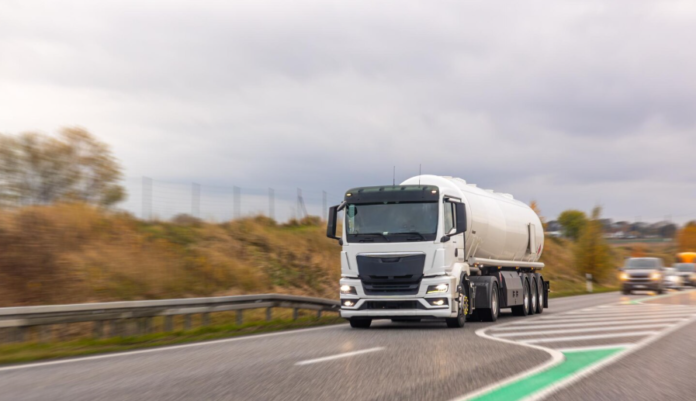

Tanker trucks hold liquids – not boxes. Just this one detail greatly alters construction plans for the vehicle itself. Liquid shifts all around inside its container whenever the truck moves – and poor engineering could even make it topple over completely. Fuel, milk, water and chemicals cross Australia every day in Western Star tanker trucks made to handle that risk. Dangerous goods account for roughly 8 percent of all items transported via road and rail in our nation, says the National Transport Commission. That’s a significant portion of cargo relying heavily on excellent tank design, robust baffles – and a very attentive driver behind the wheel.
Why Liquid Cargo Needs a Different Kind of Truck
A box of apples does not move once you load it. Liquid is not like that. It pushes and pulls inside the tank every time the truck brakes, turns, or climbs a hill. Engineers call this surge. A bad surge can throw a fully loaded truck off balance in seconds. That is why tankers use baffles, metal walls built inside the tank that break up the liquid and slow it down. A tank with no baffles and a driver braking hard is a bad mix. Good tanker design is not a nice extra. It is the whole point of the truck.
Where Tanker Trucks Actually Work Hardest
Fuel runs mines, farms, and petrol stations. Milk needs to reach the processor fresh, every single morning. Water goes to towns, building sites, and fire crews during a bushfire. Chemicals keep farms and factories running. Each job asks something different from the tank sitting behind the cab.
| Cargo | What the Tank Needs | Where It Usually Goes |
| Fuel and diesel | Sealed compartments, vapour recovery, ADG placards | Mining sites and fuel depots |
| Milk | Insulated stainless steel, strict hygiene seals | Dairy farms to processing plants |
| Water | High capacity tank, simple internal baffles | Rural towns and bushfire crews |
| Chemicals | Lined tank, strict ADG labelling | Farms, factories, and ports |
One chassis, four completely different jobs. That is the real skill behind building a tanker fleet that actually works.
The Rules Nobody Gets to Skip
Transporting liquids that may catch fire, poison people, or harm the environment requires extremely strict regulations – and Australia really gets it right. The Australian Dangerous Goods Code addresses 9 different hazardous materials categories plus 16 subcategories – all with very distinct labelling and documentation requirements. The newest edition became compulsory for all road transport from October 2025. On top of the Code, every tank vehicle must meet Australian Standard AS 2809 for regular inspection and upkeep. Skip a step here and a fine is the least of the problem. A rollover carrying fuel or chemicals puts the driver, the public, and the environment at risk all at once.
What a Tanker Driver Actually Needs From the Truck
Good tank design only does half the job. The truck underneath has to carry that weight without losing control on a wet road or a tight corner.
- A reinforced chassis built to handle constant heavy loads without flexing
- Electronic stability control tuned for the extra sway of a liquid load
- High-torque engines, Detroit or Cummins, for steady power on long routes
- Driver assist tech like Active Brake Assist and lane departure warning
- A fuel tank big enough to skip extra stops on remote routes
Miss any one of these and the job gets harder, not easier.