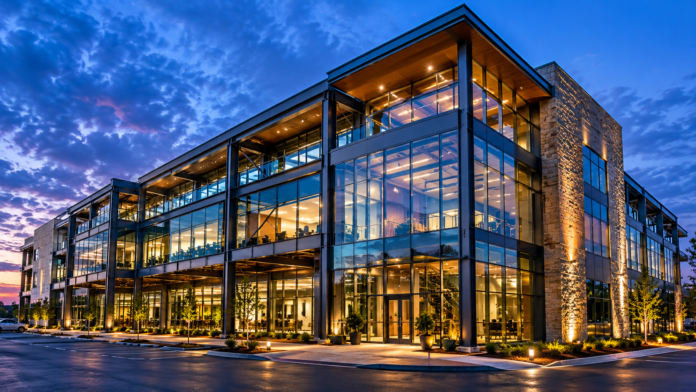

Building a new commercial spot usually gives developers a headache right from day one. You want something that looks sharp from the street—clean lines, glass panels, maybe some nice exterior cladding. But the moment contractor estimates for full concrete or custom stonework roll in, the budget blows right past the limit. On the flip side, throwing up a cheap metal warehouse saves cash, but it ends up looking way too industrial for a corporate office or retail storefront.
That exact cash versus looks struggle is why a lot of property guys now rely on hybrid steel buildings for commercial projects. Instead of sticking to just one material for the whole structure, this method splits things up. You get heavy structural steel inside for strength and wide floor spans, while the outside gets finished with glass curtains, concrete panels, or decorative brick.
The logic behind it is pretty simple. Steel columns carry all the vertical weight and roof load. Because the inner skeleton handles the heavy lifting, your outer walls do not hold up any weight at all. That means architects have total freedom on the outside. They can slap on floor-to-ceiling glass windows or stone details around the entrance without messing up the structural math. Passersby see an expensive, custom building, but the owner gets the speed and low cost of engineered steel underneath.
Inside the property, wide open floor spaces make layout changes super easy. Since steel beams can span long distances without needing a forest of interior support posts, you get clear floor layouts that fit whatever business moves in next:
- Logistics hubs get high vertical clearance so forklifts can zip around without dodging support pillars.
- Retail stores and offices can set up modular drywall partitions and swap layouts whenever a new tenant signs a lease.
- Industrial setups get wide-open floor plates to drop in heavy machinery and overhead crane rails without getting blocked.
Time is money in commercial real estate. Every extra month a job site stays open means burning cash on equipment rentals, site security, and bank loan interest. Traditional builds crawl because crews have to work step by step outdoors through rain and mud.
Hybrid builds cut right through those delays because most of the heavy work happens off-site in dry factories:
- Steel columns, beams, and trusses get cut, drilled, and pre-engineered before shipping.
- Trucks drop off the steel members on site, and the crew bolts the main frame together in just a few days.
- Prefabricated wall panels or glass frames lock right onto the skeleton to seal the building fast.
Getting the roof and walls up early means electricians, plumbers, and drywall guys can get inside out of the weather much sooner. Shaving a couple of months off the timeline saves a ton of overhead and lets owners start collecting rent way faster.
Of course, construction cost is only half the battle. You also have to pay heating and cooling bills for the next thirty years. Big steel wall cavities give you tons of space to pack in thick insulation blankets. When you pair an insulated steel frame with cool-roof panels and good glass, the AC and heating units do not have to work nearly as hard during brutal summer or winter peaks.
Plus, steel holds up way better than wood over time. It will not warp, rot, or twist when moisture gets in, and bugs ignore it completely. That means your exterior panels stay straight and tight, keeping long-term repair bills super low year after year.
Pulling off a hybrid build smoothly comes down to getting details straight before materials hit the dirt. Steel fabricators and panel suppliers need to match up their measurements down to the millimeter so everything bolts together without drama on site.
Working with experienced teams who know how hybrid steel buildings perform in the real world keeps load math, panel fits, and delivery trucks on schedule.
Blending heavy steel strength with flexible exterior finishes gives developers a smart middle ground—delivering tough, great-looking commercial properties without blowing up the budget.
Frequently Asked Questions (FAQs)
What is a hybrid steel building? It is a construction style that uses a heavy structural steel frame for inside load support, paired with non-load-bearing outer materials like glass, concrete panels, or stone for looks and insulation.
Are hybrid steel buildings cheaper than regular concrete builds? Yeah, usually. While they cost a bit more than a basic metal shed, they run way cheaper than full concrete or brick structures because assembly is fast and needs less manual labor.
Can you remodel an old steel building into a hybrid setup later? Totally. Since the outer walls don’t hold up the building, old metal siding can get stripped off during a remodel and swapped out for glass walls, concrete panels, or custom facades.