
The first cold night in Denver usually plays out the same way. Someone nudges the thermostat, the furnace hums to life, and a dusty smell drifts out of the vents.
Most of the time, that is just a summer of dust burning off, and it fades on its own.
But when the smell is earthy, lingers for days, or gets stronger every time the blower kicks on, something else may be riding through your ductwork. Often, that something is mold.
Why Denver’s Dry Air Does Not Protect Your Furnace
Plenty of Front Range homeowners assume mold is a problem for Houston or Miami. Inside a forced-air system, though, the weather outside matters far less than the water inside.
Mold needs moisture, and a heating and cooling system has several spots where water collects. The EPA notes that an HVAC system tied to a moisture problem can become a place where mold grows.
Here is the Colorado twist. Because our winter air is so dry, many homes run a whole-house humidifier mounted right on the furnace.
That humidifier is wet by design. Skip its yearly service, and it can turn from a comfort upgrade into a mold source in a single season.
Where Mold Hides Inside a Heating System
Colette Bell, owner of RestoPros of East Denver, says the problem rarely starts in the vents.
“When someone calls about a musty smell from the vents, we go looking for the water first. Clean the ducts without fixing a dripping humidifier or a damp furnace closet, and that smell comes right back.”
These are the spots worth checking first.
- The humidifier water panel. This pad soaks up water so the furnace air can carry moisture through the house. Bryant and Aprilaire both say to replace it at least once a year.
- The humidifier tray and drain line. Mineral scale and standing water build up here, especially in homes with hard water.
- The AC coil and drain pan. In many homes, it sits right on top of the furnace, and a clogged summer drain line can leave water behind.
- The return air intake. The EPA lists mold near the system’s intake as a sign the system itself may be contaminated.
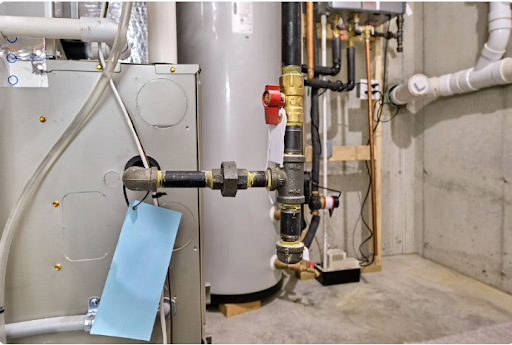
- The furnace closet. Slow drips from a nearby water heater or supply line can soak drywall, insulation, and flooring around the unit.
Signs Your Furnace Is Moving Mold Around the House
Not every dark smudge on a vent cover is mold. Dust and soot look similar, so treat these as reasons to look closer, not a diagnosis.
- A musty smell that shows up when the blower runs and fades when it stops
- Dark growth on vent covers, the humidifier housing or the filter slot
- Sneezing, a runny nose or itchy eyes that flare up indoors once the heat is on
- Rust, water stains or crusty white mineral trails below the humidifier
- Condensation on windows on cold mornings, a clue the humidifier is set too high
A Simple Furnace Check Before Winter Sets In
None of this takes long, and most of it can happen in one afternoon.
- Swap the humidifier pad and clean the tray. Shut off water and power to the humidifier before you open it up.
- Check your indoor humidity. The EPA suggests staying below 60 percent, ideally between 30 and 50. An inexpensive hygrometer from the hardware store will tell you where you stand.
- Stay on top of the furnace filter. The Colorado Office of the Utility Consumer Advocate recommends cleaning or replacing it every one to three months during winter.
- Book a professional inspection. The same state office advises having a gas furnace cleaned and inspected before each heating season.
- Walk the furnace closet with a flashlight. Look for stains, soft drywall, damp insulation or a musty corner nobody has checked in a while.
When to Call an HVAC Tech and When to Call a Mold Pro
This is where a lot of homeowners get stuck. The short answer is that equipment problems go to your HVAC company, and growth on building materials goes to a remediation company.
Your HVAC technician is the right call when:
- The humidifier is leaking, scaled up, or overdue for a new pad
- The condensate drain line is clogged, or the drain pan is holding water
- The coil or blower looks dirty, and the system needs a deep clean
A mold remediation company is the right call when:
- Growth shows up on drywall, insulation, or framing near the furnace
- The affected area is bigger than about 10 square feet, the point where the EPA recommends following professional remediation guidance
- There has been real water damage around the unit, or someone at home has health concerns
One rule matters more than the rest. The EPA says not to run your HVAC system if you know or suspect it is contaminated with mold, because it can spread mold through the whole building.
Often the best outcome comes from both trades working together. The HVAC tech fixes the equipment, and the remediation crew handles the mold and the materials around it.
Make the First Cold Night a Reminder
That musty smell on the first cold night is easy to shrug off. Treat it as a nudge instead.
Change the pad, check the humidity, and take one honest look around the furnace closet. An hour in October beats a remediation project in February.