
Key Highlights
- A training video production company turns complex training content into clear learning with strong instructional design and defined learning objectives.
- Good corporate training video work starts by understanding your business, subject matter, and the change you need people to make.
- The best video production process covers planning, scripting, filming, editing, and rollout across your learning management system.
- Professional training works better when the format fits the task, whether that is animation, live action, or scenario-based learning.
- Strong corporate video production does not stop at delivery; it also supports engagement, retention, and easy updates later on.
- Real examples, workplace locations, and clear structure help training feel practical instead of generic.
Introduction
A training video production company does much more than just record people talking. It uses training content, fits it with learning design, and makes a corporate training video that staff can use easily. If your team needs clear training, including leadership development, that can be repeated by everyone, using video can make complex details simple, keep training the same for all, and give people a format they can watch again when they need to.
Understanding Your Training Needs Before Production
Start here: find a training video production company that takes time to get to know your business. This is important when your subject matter is not simple, or your process changes impact many people.
You also have to set clear learning objectives and strong instructional design before any filming begins. If you skip this step, your training content may look good but still not meet the learning goal. The next two sections will show how scope and local context help to make better results.
Scoping the Project: From Workplace Inductions to Compliance Modules
Scoping answers a key question: what is this training video meant to help with? In corporate training, scoping clarifies whether the goal is onboarding new hires, simplifying compliance training, or creating an effective onboarding film to teach product knowledge. Filming isn’t the hard part—planning the learning experience is.
A clear scope defines:
- target audience
- required knowledge or skills
- where the video will be used
- how success will be measured
For example, onboarding videos differ from compliance training in pace and content. A good production company identifies these needs early so the script, style, and rollout match the purpose.
Customising Learning Outcomes for Australian Business Contexts
Training is more effective when it suits the workplace people know well. For Australian business, this means using local language and examples, as failing to address this harder problem can lead to ineffective training. The subject matter should fit daily tasks, not follow a default format from other places.
This is where learning objectives and instructional design help. Instead of giving a lot of information, a skilled team can break the content into short modules, which is the kind of thing that supports clearer learning management.
The result, as noted by the Director of Marketing, is better employee training. People move at their own pace and can go over important points when they need to. This structure works well when teams are scattered, busy, or facing process changes often.
Types of Training Videos Offered by Production Companies
A video production company can make many types of training videos for businesses. These may be educational videos, animated explainer videos, or live-action training filmed on location.
Picking the right format depends on what you need the people to learn. Some subjects are best shared in simple ways you can see. Some need to show real people, real tools, and the real place. So, it is important to let the learning goal guide the style, not what is only popular at the moment.
Animation, Live Action, and Scenario-Based Learning Explained
Most training video production companies assist with scriptwriting and content planning, refining your message before filming. They choose formats that make lessons clear.
Different video types address specific needs:
- Motion graphics simplify complex steps.
- Live action demonstrates real-world interactions.
- Animated explainers clarify tough concepts.
- Scenario-based videos show practical solutions.
For policy updates, animated explainers work well. For customer interactions, live action is best. The right training video comes from careful planning, not guesswork.
Case Study: Safety Training for Mining or Construction Sectors
A useful example is safety training for high-risk work such as mining or construction. In this kind of corporate training, corporate training video production can provide people with clear, repeatable guidance that can be delivered at scale and reviewed again inside a learning management system.
| Training need | Video approach |
| Site safety steps | Short, structured modules |
| Risk-heavy procedures | Clear visual demonstration |
| Wide internal rollout | Learning management system delivery |
| Ongoing refreshers | On-demand replay for staff |
This shows why the production process matters. Professional training in these sectors needs more than a camera. It needs structure, consistency, and a format workers can return to before the next shift or task.
Filming and Editing: Bringing Training Videos to Life
What really makes a team stand out is not only how the content looks. It is the way the production team manages the entire curriculum and the whole video production process. The team starts from the first idea and goes on to the last edit, always keeping the learning goal in mind.
A dedicated creative director helps to pull together the message, the images, and the way the video moves in different styles. This can make the video easy to follow and may raise its completion rate. The next sections will talk about picking locations and working on post-production details that affect how well the result turns out.
Using Local Film Crews and Real Workplace Locations
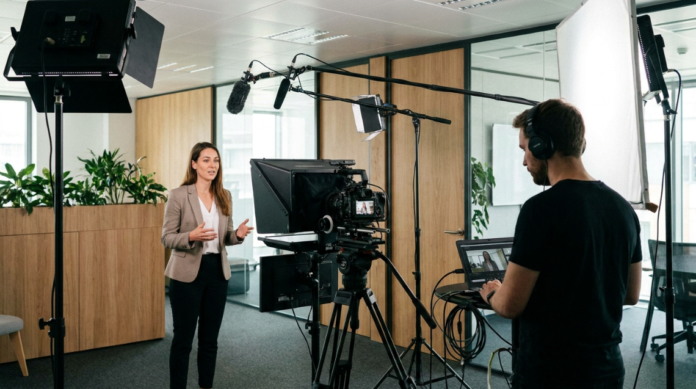
Using real settings in training videos makes the experience more authentic. When production teams film with local crews at actual workplaces, lessons feel directly relevant to viewers’ jobs and hold their attention better.
Filming on location also improves scriptwriting and planning. It keeps content realistic, allowing teams to build scenes around familiar spaces, tools, and routines. This approach makes production more practical and less staged.
There’s an added communication benefit too. Training videos can still showcase the company—like a brand film—while focusing on teaching. Striking this balance helps build trust within the organisation.
Post-Production Techniques: Animation, Voiceover, and Accessibility Features
Your brief needs to ask for accuracy, review steps, and accessibility features from the start. This way, making the right call helps subject matter experts have time to check all compliance points before the final version is finished.
Useful requests after production include:
- animation to show hard steps more clearly
- voiceover for steady explanation
- captions and accessibility options
- easy edits so updates can be done
These choices make video content better without adding more weight. In educational videos, little things like captions and graphic labels can make a lot. This helps staff who might be watching in different places or coming back to a module later.
Ensuring Effective Learning with Professional Video Production
Professional production supports learning best when the video is made for the viewer, not just the message. This is why instructional design is just as important as the visuals.
Companies mostly check engagement rate, completion rate, and signs of knowledge retention in their learning management system. These measures tell if people watched the video, finished it, and remembered enough to use the content well.
Measuring Engagement: Tracking Completion Rates and Knowledge Retention
Companies keep track of training videos by seeing who watched, who finished, and what people remembered from them. The key numbers sit inside the learning management system. You can see both viewing and follow-up work together in one place.
Common things to check are:
- finishing rate for each module
- engagement rate across the series
- quiz or review scores after watching
- SCORM packaging info inside the platform
This is why short educational videos are good. If one module gets less attention early, you spot the trouble quickly. You can then change the pacing, the structure, or the content, instead of just guessing what went wrong.
Gathering Feedback and Iterating Based on Learner Response
Numbers show the results, but feedback tells you why learners acted the way they did. You can get this feedback from internal comms, manager comments, or by asking simple questions about production steps after training.
This is important when process changes happen a lot. If staff say that a step is not clear, is old, or covers too much, the learning experience can be made better, especially if you address any creative problems. You do not have to rebuild the whole thing.
Easy edits help most at this point. You can update a well-planned video in small parts. This keeps employee training up-to-date and helpful, especially when provided by the best companies in the industry. For a training library, it makes the difference between having something you use once and having a tool that works every time.
Conclusion
Partnering with a training video production company makes your content more engaging and easier to learn from. When the team tailors videos to your needs, viewers retain information better and stay interested. Choose from animation or live action to share key messages in fresh ways. Professional filming and editing ensure your video resonates with viewers. To maximise your training video’s impact, consider working with experts. Ready to enhance your training videos? Contact us now for a free consultation!
Frequently Asked Questions
How long does it usually take to produce a training video in Australia?
The time it takes can change a lot based on the video production process, review steps, and what kind of content it is. A simple module will move quicker than a big training library. When you make a corporate video, there are main steps in the video production process. These are scoping, scripting, filming, editing, and approval.
Can a training video production company help deliver remote learning solutions?
A video production company can help with online learning. They make training video content that fits all types of learning management systems. This means teams can watch corporate training videos any time and from anywhere, especially on social media. There is good on-demand access for people who work in different places or at different times.
What should I request in my brief to ensure my training video meets compliance standards?
Ask for clear goals for compliance training. Make sure the main subject matter points are reviewed. The approach needs to follow learning design and instructional design. Your brief should also talk about approval steps, how easy the product training is to access, and when updates may be needed. This will help keep the final video up-to-date and useful for employee training.