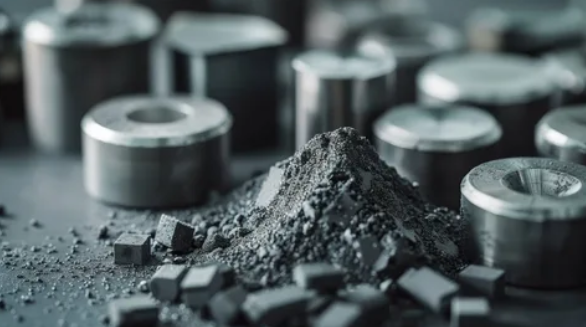

Industries are always trying to figure out how to make parts that function well and do not increase material cost, machining time, or waste in production. In this case, sintered metal parts have an advantage. By using powder metallurgy technology, industries can produce accurate parts with optimal use of materials and production quality.
Sintered metals can solve multiple issues that normal manufacturing techniques cannot. The following benefits explain why this manufacturing approach has become valuable across demanding industrial applications.
1. High Material Efficiency
One of the biggest benefits of sintered metal components is their excellent use of raw material. Sintered Metal Engineering can achieve material utilization rates that routinely exceed 95%, allowing manufacturers to get more usable components from the material purchased. This high efficiency can significantly reduce scrap compared with processes that remove large amounts of material during production.
The components can generally be compressed close to their final size prior to sintering, minimizing any material removal in secondary processes. In manufacturing thousands or even millions of components, any savings in waste material will mean savings for the manufacturer.
This efficiency also supports more predictable production costs. Less wasted material means fewer resources are lost during manufacturing, while reduced machining requirements can lower tool use and processing time.
2. Complex Shape Production
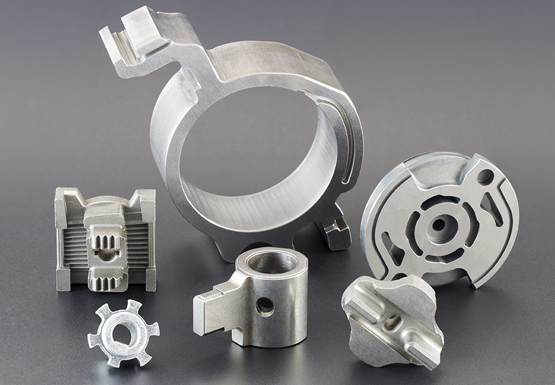
Industrial components are not always simple shapes. Gears, cams, splines, non-circular holes, and other intricate features may require several operations when produced through conventional methods. Sintered metal manufacturing can form many of these features during the compacting stage, reducing the need for multiple machining steps.
Complex geometries can therefore be incorporated into a component without relying heavily on separate cutting or shaping operations. This allows manufacturers to simplify production while maintaining consistent dimensions across repeated parts.
Fewer machining operations can also improve dimensional consistency. When complex features are formed as part of the primary process, there are fewer opportunities for errors to develop between separate manufacturing stages. This makes the process particularly useful for components where repeatability matters.
3. Cost-Effective Large-Scale Manufacturing
For high-volume industrial production, manufacturing economics can determine whether a component design is practical. Sintered metal components can offer a cost advantage because the process combines efficient material usage with rapid production and limited secondary machining.
Once the tooling is established, large quantities of similar components can be produced with consistent dimensions. The high productivity of automated powder compaction allows manufacturers to maintain steady output while reducing the labor and processing time associated with more machining-intensive methods.
Energy consumption can also be lower in applications where near-net-shape production reduces extensive cutting, grinding, and other secondary processes. When material savings, production speed, reduced machining, and lower processing requirements are considered together, the overall cost per component can become highly competitive for large production runs.
4. Improved Strength and Durability
The industrial components are used in environments where there is recurring loading, friction, vibrations, and severe conditions. The sintered metal provides the required mechanical strength and durability in such scenarios as a result of controlled material and controlled conditions during the sintering process.
In the sintering process, heat treatment compacts the metallic powder to form a structure. Processes such as sinter hardening improve the mechanical performance of the material better by allowing for an even grain structure and increased hardness of the material.
Wear resistance is another important benefit. Components exposed to continuous contact or movement can require materials that maintain their performance over extended service periods. Properly engineered sintered materials can provide the wear tolerance needed to support longer component life and dependable industrial operation.
5. Customizable Porosity
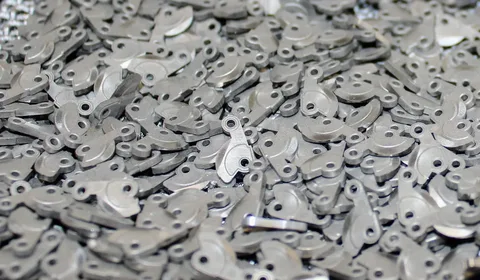
Another distinctive advantage of sintered metal is the ability to control porosity. Unlike many fully dense metal components, powder metallurgy parts can be engineered with specific levels and patterns of interconnected pores. This allows the component structure to be adapted to particular functional requirements.
Controlled porosity works well in situations like industrial filters, where the pores of the material will enable the passage of fluids or gases and hold back any particles that are not required. The same idea is also applicable to self-lubricating bushings, where the lubricant will be held inside the pores of the material. These sintered metal products can therefore provide functional advantages that are difficult to achieve with fully dense materials.
This ability to control density provides manufacturers with another way to match component properties to application needs. Rather than treating porosity as a limitation, powder metallurgy allows it to become a functional design feature.
6. Consistent Component Performance
Consistency is critical in the production of industrial parts on a massive scale. Any inconsistencies in the dimensions or properties of the materials may have an impact on the ease of assembly and the functioning of machinery. Sintered metal production allows for repeated production through the use of controlled powder composition, tooling, compaction pressure, and sintering.
After the production process is correctly set up, industrial parts may be manufactured with controlled dimensions and properties. This ensures that consistency between different production runs increases. This provides an important advantage for the performance of large numbers of parts.
The other advantage of consistency in production for industrial manufacturers is that it lowers the chance of rejecting and having to redo parts.
7. Better Value Through Engineered Material Properties
Components made of sintered metals can be made using various types of metal powder and tailored compositions in order to meet the required performance standards. This way, the properties of the material used can better match the requirements of the component.
Various properties, such as strength, hardness, and wear resistance, among others, can be affected by choosing certain materials and processing conditions. This way, the design of components is based on their intended use and not on a general material.
Engineering of material properties can be useful in balancing cost and performance. Components can be designed to deliver the characteristics required for their intended application without unnecessarily increasing material or processing requirements.
Greater Manufacturing Value for Industrial Applications
The benefits of sintered metal become particularly valuable when considered together. High material utilization reduces waste, complex-shape capability limits machining, and efficient production supports lower costs at high volumes. Controlled material properties, durability, and customizable porosity further expand the practical advantages of the process.
Compared with traditional CNC machining suppliers, which may remove substantial material to achieve complex shapes, sintered metal can produce many geometries closer to their final form. Compared with conventional casting manufacturers, powder metallurgy can provide strong dimensional repeatability and controlled porosity for applications where those characteristics are important.
Volunteer Sintered Products brings these advantages together through a focused approach to powder metal manufacturing. Its capabilities make it a stronger choice when manufacturers need efficient material use, repeatable production, complex component geometries, and engineered performance in the same solution. The result is a manufacturing approach that can deliver greater value across demanding industrial production.