
Table of Contents
- Confirm Construction Work Is Truly Complete
- Divide Cleanup Into Three Practical Phases
- Control Dust Instead of Spreading It
- Follow a Room-by-Room Checklist
- Keep Housekeeping and Safety in the Plan
- Check HVAC Areas and Indoor Air Conditions
- Plan the Cleaning Schedule Before the Last Day
- Choose a Scope That Matches the Job
- Build a Final Walkthrough Routine
- Know When Specialized Commercial Support Makes Sense
- Common Questions
- Turn the Checklist Into a Smooth Handoff
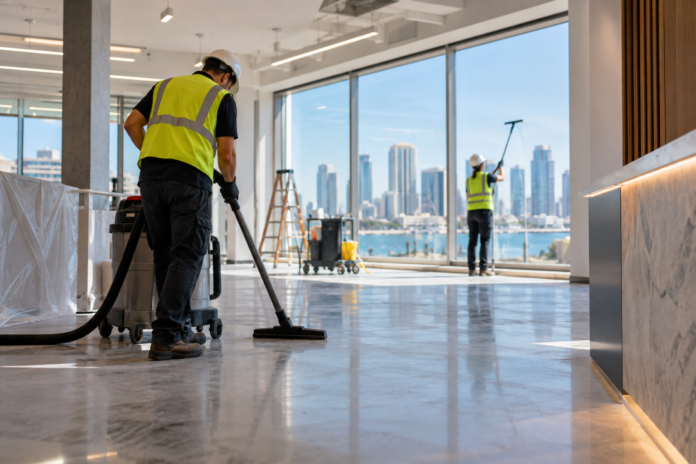
A commercial build can be substantially complete without being ready for an owner, tenant, inspector, employee, or customer. Drywall dust, packaging, protective film, adhesive, paint marks, grout haze, and debris often remain after the last major installation. In San Diego, where offices, retail spaces, hospitality properties, schools, clinics, and industrial facilities may face tightly scheduled openings, a deliberate cleanup plan helps the finished work look finished.
For projects that need additional support, San Diego post-construction cleaning services from Big League Clean are designed around rough cleaning, final detail work, and pre-inspection touch-ups for commercial construction handoffs. Big League Clean focuses on jobsite-ready commercial cleaning scopes and serves project types in areas including downtown San Diego, Sorrento Valley, and Otay Mesa, where build-out schedules and access requirements can require close coordination with general contractors and property teams.
Confirm Construction Work Is Truly Complete
Before the final detailed clean, confirm that the debris-producing trades have completed their work. Painting, flooring, electrical trim, plumbing fixtures, millwork, cabinetry, ceiling work, and hardware installation can all create new dust or residue. Ask the general contractor which punch-list items remain and whether crews will still need access to cleaned rooms.
Cleaning too early often means cleaning the same surface twice. A rough clean can happen while the job is active, but final presentation cleaning should follow the completion of the work whenever possible.
Divide Cleanup Into Three Practical Phases
Rough Clean
Start by removing loose waste, scrap material, packaging, and obvious debris. Clear access routes, stairs, corridors, and work areas so remaining trades can work safely. This stage is also the time for an initial dust knockdown on broad surfaces.
Detail Clean
The detail phase addresses the fine dust and residue that affect a walkthrough. Clean ceilings, walls, ledges, baseboards, vents, built-ins, doors, cabinets, counters, fixtures, windows, and hardware. Remove suitable surface residue such as stickers, tape, protective film, grout haze, paint splatter, and adhesive.
Touch-Up Clean
Schedule a final pass shortly before the walkthrough, inspection, move-in, or opening. This step catches fingerprints, new dust, smudges, and messes caused by late deliveries, small repairs, or final fixture adjustments.
Control Dust Instead of Spreading It
Fine construction dust can settle repeatedly after it is disturbed. Avoid relying on dry sweeping alone in finished spaces, since it can move particles back into the air. Use controlled vacuuming, damp wiping on appropriate surfaces, and equipment suited to fine dust. Clean high surfaces first, then work downward so dust does not fall onto areas that have already been detailed.
During renovation work near occupied spaces, EPA guidance on renovation and indoor air quality recommends separating work areas, limiting pollutant movement through HVAC systems, and cleaning debris and dust regularly. Those principles are useful for commercial projects, particularly when one portion of a property remains open during a phased renovation.
Follow a Room-by-Room Checklist
Floors, Windows, and Glass
- Remove loose debris before vacuuming, mopping, or using floor equipment.
- Match the process to the surface, whether it is concrete, tile, vinyl, wood, carpet, or another finish.
- Inspect edges and corners for dust, scuffs, adhesive, paint drops, and grout haze.
- Clean glass, tracks, frames, sills, storefront panels, and interior partitions.
- Check windows and glass from more than one angle to identify streaks, smears, labels, or film residue.
Walls, Trim, and Service Areas
- Dust ceilings, vents, ledges, and light fixtures before walls and lower trim.
- Wipe baseboards, door frames, cabinets, handles, and corners behind doors.
- Clean restrooms, kitchens, break areas, and janitor closets, including sinks, counters, appliances, mirrors, plumbing trim, and under-sink spaces.
- Disinfect appropriate high-touch surfaces before occupancy.
Keep Housekeeping and Safety in the Plan
Debris removal is not simply about appearance. Walkways, stairs, exits, and work areas should remain clear of trip hazards, sharp materials, exposed fasteners, and unstable waste piles. OSHA’s construction housekeeping standard requires work areas, passageways, and stairs to be kept clear of debris as far as practical.
Separate ordinary trash from materials requiring special handling. Do not assume that a cleaning crew can dispose of every material found on site. Project teams should identify disposal responsibilities for items such as paint products, solvents, oily rags, damaged lamps, or materials suspected of containing hazardous substances.
Check HVAC Areas and Indoor Air Conditions
Inspect supply vents, return grilles, filter locations, and accessible mechanical areas for visible dust. Follow the project plan for replacing construction-period filters, and coordinate with the HVAC contractor before operating equipment after dusty work. If new flooring, coatings, adhesives, or paint leave strong odors, allow appropriate ventilation before staff or customers arrive.
Routine cleaning is not a substitute for testing or specialized remediation involving lead, asbestos, mold, or other hazardous materials. Those concerns require qualified assessment and controls before ordinary cleanup proceeds.
Plan the Cleaning Schedule Before the Last Day
- Review the construction calendar with the project manager.
- Set the rough-clean date after major waste-producing work is complete.
- Schedule detailed cleaning after finishing trades leave each area.
- Reserve time for a touch-up before the final walkthrough.
- Allow extra time for multiple floors, large glass areas, phased openings, or spaces with specialized finishes.
Choose a Scope That Matches the Job
A written scope prevents assumptions. Specify whether the work includes debris hauling, interior and exterior glass, floor restoration, carpet extraction, protective-film removal, exterior entrances, waste containers, equipment, products, and final touch-ups. A site walkthrough generally provides a clearer scope than square footage alone because two spaces of equal size can have very different dust levels, finishes, access conditions, and remaining work.
Build a Final Walkthrough Routine
Walk the space in daylight and with interior lighting on. Open cabinets, closets, drawers, and storage spaces. Check behind doors, under counters, beneath sinks, around toilets, along baseboards, and on window sills. Look at floors from several angles for dust, streaks, residue, and marks. Photograph unresolved items, then assign each item to the appropriate trade rather than leaving it unclaimed.
Know When Specialized Commercial Support Makes Sense
A specialized team can be especially useful for deadline-driven openings, large office build-outs, retail projects, medical spaces, schools, hotels, warehouses, and industrial sites. Commercial-grade vacuums, floor equipment, glass tools, safety procedures, and phased checklists can help the construction crew remain focused on completing the build while the property team prepares for handoff.
Common Questions
How long does commercial post-construction cleaning take?
Timing depends on building size, number of floors, surface types, dust and debris levels, access, and whether the project needs one final clean or several phases.
Should cleaning happen before the final inspection?
A detailed clean can support a clear inspection and walkthrough. Plan for a smaller touch-up afterward if punch-list work or late changes create new messes.
Can a regular janitorial crew handle construction dust?
Routine janitorial work and post-construction cleanup are different scopes. Construction cleanup may require fine-dust control, residue removal, floor restoration, glass detailing, debris handling, and coordination with active trades.
Turn the Checklist Into a Smooth Handoff
A successful commercial opening depends on more than the last construction task. By planning cleanup in phases, controlling dust, protecting safe access, defining the scope, and conducting a detailed walkthrough, San Diego project teams can present a clean, orderly space that lets owners, tenants, inspectors, employees, and customers see the finished project at its best.