
Key Takeaways
- Brush as often as possible. Daily brushing is best, and brushing several times a week can still help.
- Chews play a supporting role. Dental chews may help reduce plaque and tartar, but brushing is the most effective habit at home.
- Go easy on hard chews. Bones, antlers, hooves, and hard toys can wear down or break teeth.
- Keep the yearly exam. Most dental disease develops below the gumline, out of sight at home.
Dog breath has a reputation as one of those things that comes with the territory, right alongside muddy paws and fur on the couch. But a mouth that smells off is often the first clue that something is going on with the teeth or gums.
Oral health in dogs rarely gets the same attention as food, exercise, or grooming, partly because so much of it happens out of sight. For dog parents, the habits that help most are small and repeatable: regular brushing, sensible chew choices, a quick look inside the mouth now and then, and a yearly vet visit.
Why a Dog’s Mouth Needs a Routine
Dental trouble tends to build slowly. It starts with plaque, a sticky film of bacteria on the teeth. Minerals in saliva harden plaque into tartar, and the bacteria can inflame the gums, a stage known as gingivitis.
If the infection keeps progressing into periodontitis, it can lead to bone loss and, eventually, tooth loss. Much of that damage happens below the gumline, where it can’t be seen at home, so teeth can look fine on the surface while problems build underneath.
Beyond bad breath, dental disease can cause oral pain and difficulty eating, which is reason enough to give the mouth a place in everyday care.
Brushing Does Most of the Work
The American Veterinary Medical Association (AVMA) calls periodontal disease the most common dental condition in dogs and says a dog is likely to show early evidence of it by age 3. It also lists kidney, liver, and heart muscle changes among the health problems found in association with the disease.
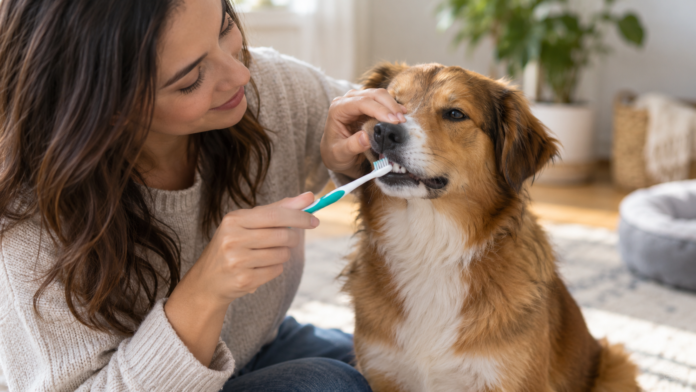
For home care, AVMA names regular brushing as the single most effective step dog parents can take for a dog’s teeth between professional cleanings. Daily brushing is best, though brushing several times a week can also be effective.
Many dogs can learn to accept brushing with patience and training, so it helps to build up slowly:
- Pick a calm, consistent time, such as after the evening walk.
- Start by gently lifting the lips and touching the teeth and gums, before a brush comes into the picture.
- Keep early sessions short, and stop while the pup is still relaxed.
- Follow each session with praise or a favorite game.
- Ask the vet which toothbrush and toothpaste suit the dog’s mouth.
A few seconds a day can grow into a minute or two with time. What counts early on is a comfortable routine.
Where Dental Chews Fit In
Brushing isn’t the only tool. Cornell University’s Riney Canine Health Center lists dental chews, dental diets, water additives, gels, and sprays as options that can help reduce plaque and tartar, either alongside brushing or when brushing isn’t possible.
Both Cornell and AVMA still put brushing first, and AVMA suggests talking with the vet about any dental products, chews, or diets under consideration.
Some chews are made specifically for daily oral care. A product like Bernie’s Charming Chompers for oral health has a ridged texture and comes in sizes matched to a dog’s weight, with directions that call for one chew a day. It’s meant to go alongside brushing, not replace it.
Whatever the chew, the label deserves a close read. Check the weight range, how many chews the directions allow per day, any age minimum, and the calories per chew, since chews add to everything else the dog eats that day.
Go Easy on Hard Chews
Chewing matters to dogs. Cornell’s guidance describes it as important for both dental health and enrichment, but it also warns that chewing hard objects can gradually wear down or fracture teeth.
The items Cornell flags for caution include bones, antlers, hooves, rawhide, and hard manufactured toys. Some of them can also damage or block the digestive tract.
A few habits help with any chew. Match it to the weight range on the package, stay nearby while the dog works on it, and take it away if it splinters, breaks into large pieces, or gets gulped instead of chewed.
Make Room for a Quick Mouth Check
A regular look inside the mouth makes it easier to learn what’s normal and spot changes sooner. Once a week, during a quiet moment, gently lift the lips and look at the teeth and gums.
AVMA recommends having the teeth checked before the yearly exam if any of these show up:
- Bad breath
- Broken or loose teeth
- Teeth that are discolored or covered in tartar
- Abnormal chewing, drooling, or dropping food
- Reduced appetite or refusal to eat
- Pain, bleeding, or swelling in or around the mouth
Cornell’s list adds swelling on the jaw or face and nasal discharge, which can be bloody.
AVMA notes that some dogs become irritable when they have dental problems, and that any change in behavior is worth a vet visit. It also cautions that a dog in pain may bite, so go gently.
Keep the Yearly Dental Exam
Home care covers the day to day, but a full picture of what’s happening below the gumline takes a veterinary exam. AVMA recommends having a dog’s teeth and gums checked by a veterinarian at least once a year, and Cornell notes that the vet may suggest more frequent exams based on age, breed, dental health, and medical history.
When a thorough professional dental cleaning is needed, it is performed under anesthesia. AVMA explains that most dental disease occurs below the gumline, and anesthesia allows a thorough cleaning and evaluation there, with the dog still enough for X-rays when they’re needed. It also notes that the American Veterinary Dental College doesn’t recommend anesthesia-free cleanings, since they can’t clean or inspect below the gumline.
Afterward, the vet can advise when to pick the home routine back up.
None of these habits takes long on its own. Together, a minute of brushing, a well-chosen chew, a quick look under the lips, and a yearly exam make oral care part of ordinary days, rather than something that only comes up when the breath gets hard to ignore.