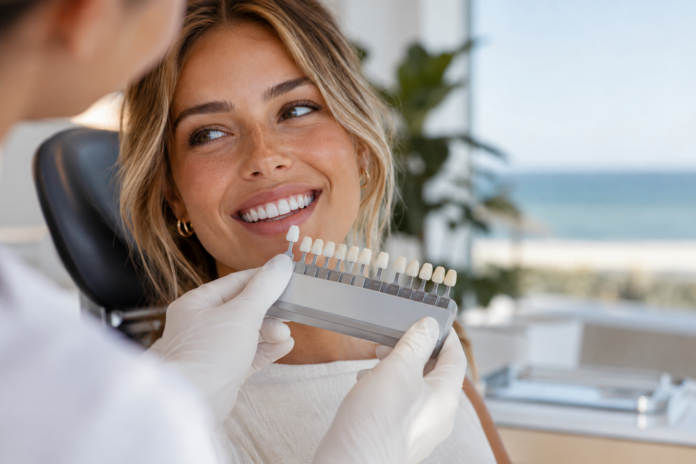
Beauty standards rarely stand still. What once represented glamour can eventually feel dated, while new ideas of attractiveness emerge from changing lifestyles, cultural influences and technology. In Australia, this evolution can be seen not only in fashion and skincare but also in cosmetic dentistry. Dental veneers, once associated primarily with dramatic celebrity smiles, are increasingly being considered within a broader philosophy of personal presentation: polished, healthy-looking and individual rather than artificially perfect.
This shift reflects something important about contemporary Australian beauty. The modern ideal is becoming less about creating an identical smile and more about creating one that complements a person’s face, personality and lifestyle.
From Hollywood White to Australian Naturalism
For decades, cosmetic dentistry was heavily influenced by the Hollywood smile: exceptionally white teeth, uniform shapes and conspicuous perfection. Social media accelerated this aesthetic, making highly symmetrical smiles visible everywhere from celebrity interviews to influencer feeds.
Yet beauty culture has begun moving in another direction. Fashion has increasingly embraced individuality, natural textures and personal expression, and cosmetic dentistry is following a similar path.
Today’s veneer treatments can be designed with subtle differences in shape, translucency and proportion. Rather than making every tooth look identical, dentists can consider facial proportions, lip movement, gum display and the natural characteristics of the patient’s existing teeth.
This is particularly relevant to Australian lifestyles, where beauty is often intertwined with an active, outdoors-oriented culture. A smile that looks natural in daylight, at the beach or during a casual conversation may be more appealing than one that appears excessively uniform.
Veneers Meet Personal Style
Fashion is fundamentally about proportion, balance and self-expression. A beautifully tailored outfit works because it suits the person wearing it, rather than simply because it is fashionable. The same principle can apply to cosmetic dentistry.
The role of porcelain veneers has consequently evolved beyond simply covering imperfections. Modern treatment planning can focus on how tooth shape interacts with facial structure. Rounded edges may create a softer appearance, while carefully controlled proportions can produce a more refined look. Colour selection can also be approached with greater subtlety, allowing patients to pursue brightness without necessarily choosing an unnaturally opaque shade.
This creates an interesting connection between dentistry and fashion. Just as clothing trends have moved from rigid rules toward personal styling, cosmetic dentistry can be increasingly personalised.
The goal is not necessarily to make someone’s smile immediately recognisable as a cosmetic treatment. In many cases, the most successful aesthetic work is the work that feels like a natural extension of the person’s appearance.
Lifestyle Is Changing What Patients Want
Modern Australian lifestyles are also influencing expectations around cosmetic dental treatment. People may want a smile that photographs well, but they also want it to function comfortably during everyday life.
Professionals may consider their appearance important during meetings, presentations and video calls. Social media users may become more conscious of how their teeth appear in photographs. Others may simply want to feel more confident when speaking or laughing.
These motivations illustrate why cosmetic dentistry cannot be separated completely from lifestyle. A smile exists within a person’s daily routines rather than inside a dental clinic.
However, aesthetics should not overshadow oral health. Veneers are generally an elective cosmetic treatment, and the suitability of treatment depends on factors such as tooth structure, bite, gum health and oral hygiene. A comprehensive dental assessment is therefore important before deciding whether veneers are appropriate.
The Influence of Social Media
Few forces have transformed modern beauty standards as profoundly as the smartphone camera.
High-resolution photographs, video calls and social platforms have made facial details more visible than ever. People can see themselves from numerous angles and compare their appearance with carefully curated images of others.
This has created both opportunities and challenges for cosmetic dentistry.
Digital technology can help dentists plan treatments more precisely, communicate potential outcomes and design restorations according to individual facial characteristics. At the same time, patients can become exposed to unrealistic expectations created by filters, lighting, editing and highly curated online imagery.
A digitally enhanced image is not necessarily a realistic blueprint for someone’s natural smile.
For that reason, responsible cosmetic dentistry requires conversation as much as technology. Patients should understand what can realistically be achieved and how proposed changes may affect their teeth, bite and long-term oral health.
Sustainability, Longevity and Informed Choices
Another emerging aspect of modern Australian lifestyle culture is a growing interest in longevity and conscious consumption. This can influence how people approach cosmetic treatments.
Rather than chasing every new aesthetic trend, patients may increasingly ask whether a treatment is durable, appropriate and compatible with their long-term goals.
Veneers require careful planning because they are not simply a temporary fashion accessory. Depending on the type of veneer and clinical circumstances, treatment may involve irreversible alteration of natural tooth structure. Maintenance, oral hygiene and regular dental examinations remain important after treatment.
This makes informed decision-making essential. A fashionable smile today should not come at the expense of a healthy mouth tomorrow.
Beauty Is Becoming More Personal
The emerging Australian beauty standard may therefore be less about perfection and more about harmony.
The future of cosmetic dentistry is likely to continue reflecting wider cultural changes: personalised fashion, natural-looking beauty, digital self-expression and an increasing interest in wellbeing. Instead of asking whether a smile looks like someone else’s, patients may increasingly ask whether it looks authentically like themselves.
That distinction matters.
A smile can be brighter without looking artificial. Teeth can be reshaped without erasing individuality. Cosmetic dentistry can enhance appearance while remaining grounded in responsible clinical care.
Ultimately, the most compelling beauty trend may be the move away from a universal definition of attractiveness. In an era shaped by social media, digital imaging and constant visual comparison, protecting individuality may be more valuable than pursuing perfection.
This is where dental health in the digital age becomes especially important. Technology can inspire, educate and improve cosmetic treatment planning, but it should never replace professional assessment or the fundamentals of healthy teeth and gums. The contemporary Australian smile is not simply a fashion statement; it is part of a person’s identity, wellbeing and everyday life.
The New Australian Beauty Standard: How Dental Veneers Are Evolving Alongside Fashion and Lifestyle Trends
Published on