

A facilities manager once told me the story that finally made me pay attention to matting warranties: she’d replaced the entrance mats at a busy retail location eighteen months in, filed a warranty claim, and got told the backing degradation wasn’t covered because it fell under “normal wear.” The manufacturer’s definition of normal wear turned out to mean anything short of the mat physically falling apart. That’s the gap most buyers don’t find out about until they’re already stuck with it.
Warranty terms on commercial matting are inconsistent in a way that most other facilities purchases aren’t. Buy a commercial HVAC unit or a fire door and you’re dealing with fairly standardized industry language. Buy floor matting and you’re reading fine print that varies wildly from one supplier to the next, often written to sound reassuring while covering very little.
So what should actually be in a mat warranty, and what tends to get left out?
Most commercial matting warranties fall into one of three categories, and knowing which one you’re looking at changes what you should expect. The first is a manufacturing defect warranty, which only covers flaws present at the point of sale, stitching failures, backing that separates right out of the box, that kind of thing. This is the narrowest coverage and usually the shortest, often 90 days to a year. The second is a performance warranty, which covers the mat holding up to a stated level of traffic or use over a defined period, generally the more useful category for a commercial buyer, since it actually addresses how the mat performs under real conditions rather than just whether it arrived intact. The third, and the one worth reading most carefully, is a pro-rated wear warranty, where the manufacturer replaces or credits part of the cost based on how much of the warranty period has elapsed. These sound generous until you calculate what a 20% credit on a three-year-old mat actually gets you toward a replacement.
None of these are inherently better or worse. The problem is buyers assuming “warranty” means the same thing across suppliers when it rarely does.
A few things worth checking before signing off on a matting purchase, especially for high-traffic commercial zones:
- Is the warranty tied to a specific traffic volume or usage level, or is it vague enough to be argued either way later
- Does it cover the frame or backing separately from the surface material, since these often fail at different rates
- What’s explicitly excluded, not just what’s covered. Exclusions tell you more about real-world durability than the marketing copy does
- Is there a documented cleaning or maintenance requirement to keep the warranty valid, and is it realistic for your facility to actually follow
- Does the warranty period match how long you actually expect to use the mat, or is it shorter than the mat’s realistic lifespan anyway
That last point catches more buyers than it should. A one-year warranty on a mat that typically lasts three to five years under normal commercial use isn’t really protecting much. It’s covering the period where failure was least likely to happen anyway.
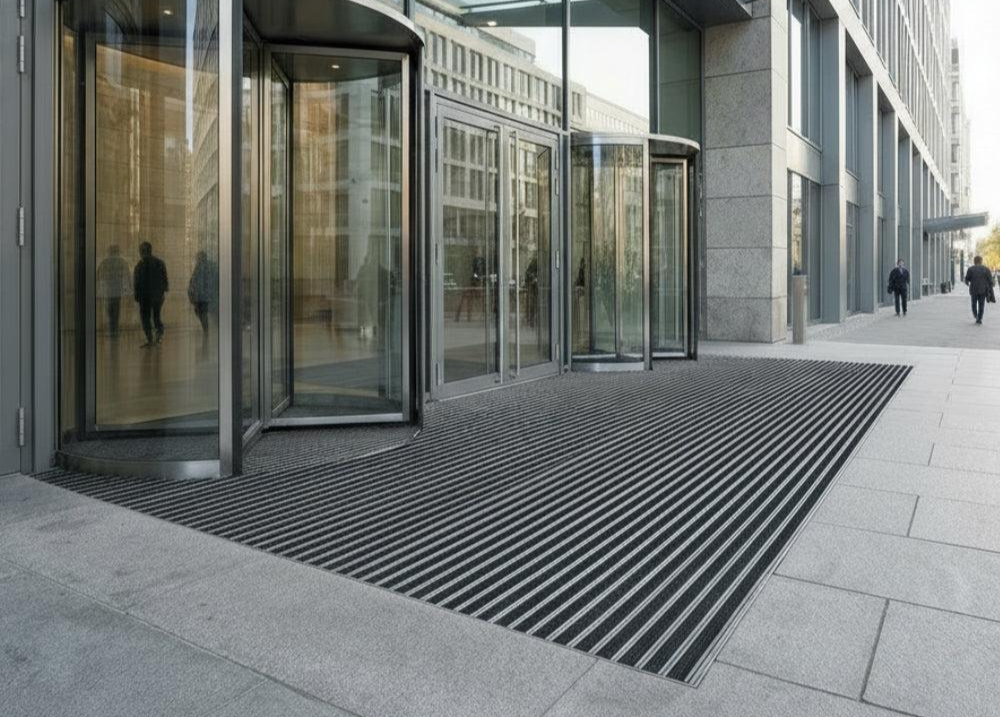
Aluminium-framed entrance matting tends to come with better warranty terms than fabric-only or rubber-backed alternatives, mostly because the frame construction is more standardized and easier for a manufacturer to stand behind. This is part of why commercial buyers increasingly lean toward framed systems for high-traffic entrances rather than loose-lay mats, even at a higher upfront cost. Suppliers like Ultimats, which build their aluminium entrance and barrier matting specifically for commercial durability, tend to offer clearer performance-based terms than what you’ll find on a generic mat bundled through a general facilities catalog, though it’s always worth confirming the specific terms for your order rather than assuming consistency across a supplier’s product line.
There’s also a timing question that doesn’t get discussed enough: when does the warranty clock actually start? Installation date and shipment date aren’t the same thing, and for large facilities ordering matting weeks or months before an opening or renovation, that gap can quietly eat into coverage before the mat has even touched the floor.
None of this means warranties are meaningless or that buyers should treat every supplier with suspicion. It just means the paperwork deserves the same scrutiny facilities teams already apply to bigger-ticket purchases. A mat is a small line item compared to flooring or HVAC, but a bad warranty on a mat that fails early ends up costing more in emergency replacement and liability exposure than the mat itself was worth in the first place.