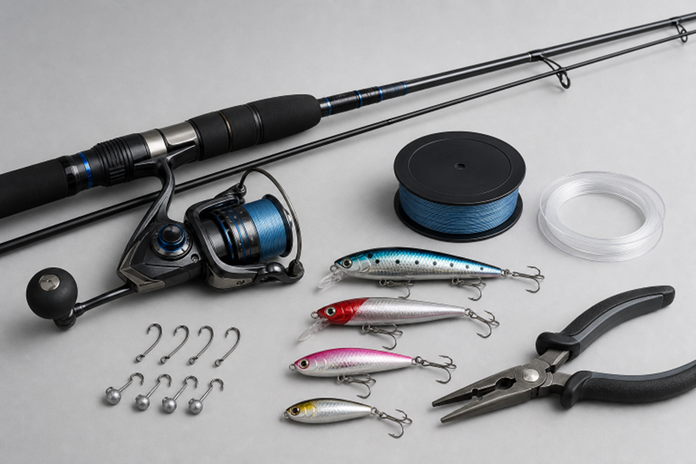

Key Takeaways
- Match the rod, reel, line, and leader to your target and fishing conditions.
- Choose rod power, action, and length based on your fishing method.
- Consider line capacity, drag, and balance when selecting a reel.
- Match lures, baits, and sinkers to the rod’s recommended range.
- Adjust your setup for surf, inshore, or offshore fishing.
- Inspect and maintain gear regularly to reduce saltwater corrosion.
- Check current fishing regulations, licenses, and seasonal restrictions.
- Complete a final gear, line, knot, and drag check before fishing.
Choosing the right saltwater fishing setup starts with understanding how your rod, reel, line, and terminal tackle work together. A balanced setup should match the species you plan to target, the fishing environment, and the techniques you expect to use. Factors such as water conditions, casting distance, lure or bait weight, and expected fish size can all influence which equipment works best.
Building a setup does not have to mean buying the most expensive gear available. The goal is to create a combination that feels comfortable, performs reliably, and suits your fishing style. Resources from Connley Fishing can help anglers explore equipment options and better understand how different components fit together. With a thoughtful approach, beginners and experienced anglers alike can build a saltwater setup that is practical, versatile, and ready for a range of fishing situations.
Start With The Fishing Plan
Before selecting tackle, identify the likely fish, location, expected fish size, and presentation. Consider the weight of the lure, bait, jig, or sinker, along with wind, current, water depth, and structure. A beach setup designed to cast a weighted bait differs greatly from an outfit used to work a small lure around mangroves.
Match The Rod To The Target
Rod selection comes down to power, action, and length. Power describes lifting strength, action describes where the rod bends, and length affects casting distance and leverage.
Choose Power, Action, And Length
- Light power: Useful for smaller lures and smaller inshore fish.
- Medium power: A versatile choice for many inshore presentations.
- Medium-heavy power: Better suited to larger lures, stronger current, and heavier cover.
- Heavy power: Appropriate for large baits, deep-water rigs, and powerful fish near structure.
Fast-action rods generally provide quick response for jigging, soft plastics, and firm hook sets. Moderate actions bend more progressively and can help keep pressure steady when fishing with moving baits with treble hooks. Shorter rods offer close-quarters control, while longer rods can improve casting distance and help manage line in the surf.
Choose The Right Reel
Match the reel to the rod’s power, the amount of line needed, and the fishing method. Spinning reels are practical for casting lures and baits from shore or inshore boats. Conventional reels are commonly used for heavier bait fishing, trolling, jigging, and bottom fishing. Reel size labels vary, so compare line capacity and drag specifications rather than relying on a number alone.
Mount the reel before committing to an outfit. Held near the reel seat, the combination should feel comfortable rather than noticeably tip-heavy or handle-heavy.
Pair The Line And Leader
Line and leader should match both the tackle and the environment. Braided line has a thin diameter and low stretch, which can help with long casts, deep water, and current. Monofilament is easy to handle and has more stretch. Fluorocarbon is often selected when anglers want a lower-visibility, abrasion-resistant leader.
- Use a lighter leader for open water and subtle presentations.
- Increase leader strength around rocks, docks, oyster beds, wrecks, and other abrasive cover.
- Use bite-resistant leader material when toothy fish are a realistic possibility.
- Inspect knots, line, and leader after a hard strike or fish.
Select Lures And Baits
Keep lure or sinker weight within the rod’s recommended range. Soft plastics work well when a slower, natural presentation is needed. Jigs help reach depth and hold in moving water. Topwater lures are useful when fish are feeding near the surface, while plugs can cover water and imitate baitfish. Natural bait remains a practical choice when scent and movement are important.
For example, a light inshore outfit may handle small soft plastics effectively, while a stronger boat setup may be needed for large live baits, heavy jigs, or deep-water sinkers.
Build For The Fishing Location
Beach And Surf
Longer rods can help with distance and line control. Match sinker weight to the surf and current, and bring pliers, a secure tackle bag, and a sand spike when conditions call for a stationary bait presentation.
Inshore Flats, Bays, And Mangroves
A lighter outfit reduces fatigue during repeated casting. Use enough leader strength for roots, dock pilings, rocks, and oyster edges, and choose lure profiles that resemble locally available forage.
Offshore And Deep Water
Prioritize line capacity, dependable drag performance, and gear that matches the method, whether trolling, bottom fishing, jigging, or fishing live bait. A setup that remains comfortable during a long fight is more useful than one that is simply oversized.
Use A Simple Gear Checklist
- Rod, reel, main line, and spare leader material
- Hooks, swivels, clips, sinkers, and backup lures
- Long-nose pliers, line cutters, and a dehooking tool
- A measuring device, gloves, drinking water, sun protection, and dry storage for licenses and electronics
- A freshwater bottle for a light rinse after the trip
Protect Saltwater Gear
Saltwater care begins when fishing ends. Rinse away loose salt and sand with gentle freshwater, dry rods and reels before storage, and inspect guides, hooks, knots, and metal hardware for damage or corrosion. Loosen the drag for long-term storage, replace worn line and rusty hooks, and have a reel serviced if its retrieve or drag begins to feel inconsistent.
Follow Current Fishing Rules
Saltwater regulations can vary by state, species, season, location, bag limit, size limit, and gear type. Check licenses, registrations, closures, and harvest rules before every trip. Federal planning information and recreational fishing guidance can help anglers understand when additional permits or requirements may apply.
When fishing in federal waters or targeting regulated species, review regional rules and fishing resources, as well as the regulations issued by the state where you launch or fish.
Avoid Common Setup Mistakes
- Using a rod that is too light for the lure, sinker, or target fish.
- Pairing an oversized reel with a small, light rod.
- Overfilling the spool or ignoring line-capacity guidance.
- Choosing a line only by breaking strength instead of diameter, abrasion resistance, and intended use.
- Using weak hooks, knots, or leader near heavy structure.
- Skipping a drag, line, and knot inspection before fishing.
Complete A Final Setup Check
- Confirm that the rod, reel, and line work together.
- Make sure the lure, bait, or sinker falls within the rod’s rating.
- Inspect the first several feet of the main line and the leader.
- Test the drag for smooth resistance.
- Pack required licenses, measuring tools, and safety equipment.
A balanced saltwater setup is not a fixed shopping list. It is a matched system built for a specific place, presentation, and fish. Select a compatible tackle, maintain it after every outing, and check the rules before you cast.