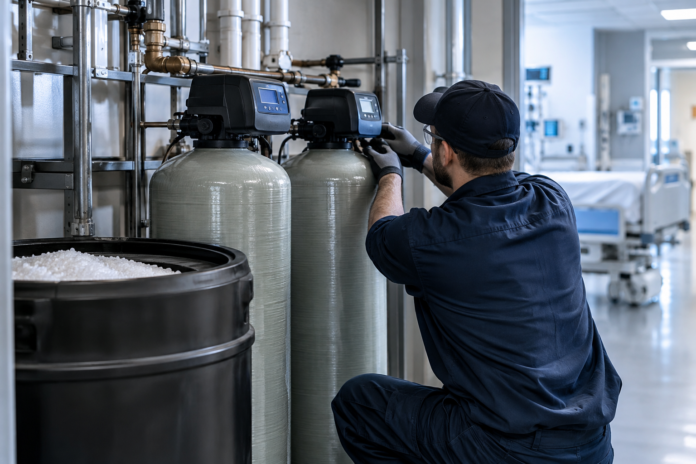

Healthcare facilities in Salt Lake City depend on reliable water quality for sanitation, laundry, equipment care, and daily operations. A commercial water softener helps control minerals that can affect fixtures, plumbing systems, and water-based equipment. When the unit stops working properly, facilities may notice signs that require professional repair.
Recognizing the need for commercial water softener repair Salt Lake City helps healthcare facilities address system issues before they affect important operations. Problems such as mineral buildup, poor water performance, and mechanical changes can indicate softener failure. This article explains the main signs that show when a healthcare facility needs water softener repair.
Operational and Water Quality Signs
Healthcare facilities in Salt Lake City need properly treated water for cleaning, laundry, and equipment maintenance. When a softener cannot control mineral levels, changes in daily operations may appear.
Unchanged Salt Levels
Salt in the brine tank should decrease during regeneration cycles. If levels remain unchanged, the unit may not draw brine correctly. This can allow minerals to pass through, affecting water quality, fixtures, cleaning areas, and connected equipment.
Limescale Accumulation
White mineral deposits on faucets, sinks, showerheads, and equipment can indicate that the softener is not removing minerals effectively. In healthcare facilities, limescale from poor softener performance may increase maintenance needs and affect systems requiring consistent water conditions.
Poor Soap Performance
Hard water minerals can prevent soaps and detergents from creating proper lather during cleaning tasks. When the softener fails, cleaning products may not perform effectively in patient areas, kitchens, and maintenance spaces. Proper water treatment helps support consistent sanitation procedures throughout the facility.
Stiff or Spotted Laundry
Healthcare laundry requires suitable water conditions for linens, gowns, and uniforms. Mineral residue can make fabrics feel rough, appear dull, or develop water spots after washing. A failing softener may allow these minerals to remain in laundry cycles. Over time, this can affect fabric condition and create additional laundry concerns.
Mechanical and Plumbing Red Flags
Water softener issues can also appear through mechanical and plumbing changes. These signs may indicate problems with internal components, regeneration cycles, or connected water systems.
Abnormal Water Levels
A brine tank that stays filled with standing water or does not drain correctly after a cycle may indicate a system problem. Poor drainage can prevent proper regeneration. When the treatment cycle fails, healthcare facilities may experience inconsistent water quality and reduced system performance.
Unusual Mechanical Sounds
Grinding, clicking, or loud humming sounds from the control valve or tank can signal softener component concerns. These sounds may occur when the system struggles during operation. Professional inspection can identify the cause of these issues and help restore reliable performance.
Reduced Water Pressure
Mineral restrictions can narrow plumbing passages and reduce water flow throughout a facility. This may affect fixtures and equipment that depend on a steady water supply. Maintaining proper treatment helps support dependable water flow for cleaning areas, utility spaces, and equipment connections.
Upward Utility Spikes
Scale buildup can reduce the efficiency of commercial water heaters and boilers by affecting heat transfer. These systems may require additional energy to maintain normal performance. Higher utility costs can indicate that mineral buildup is affecting connected equipment and overall system efficiency.
Timely Professional Repairs Help Maintain Water Systems
Professional commercial water softener repair in Salt Lake City helps healthcare facilities restore proper system performance. Experts can inspect the control system, brine operation, and regeneration cycle to identify issues.
Water softener repair can help facilities:
- Restore regeneration cycle performance
- Correct brine tank issues
- Improve water treatment consistency
- Reduce mineral-related equipment concerns
- Support reliable plumbing performance
Timely repairs help maintain dependable water conditions for sanitation, laundry, and healthcare equipment while supporting long-term system reliability.
Healthcare facilities in Salt Lake City depend on effective water treatment to support essential operations and equipment care. Changes in water quality, mineral buildup, and system performance can indicate that a softener needs professional repair. Addressing these signs early helps maintain reliable water conditions and protect important facility systems. A properly functioning water softener supports consistent performance throughout the healthcare environment.
Also Read: Healthcare Workwear And Infection Prevention: A Practical Guide