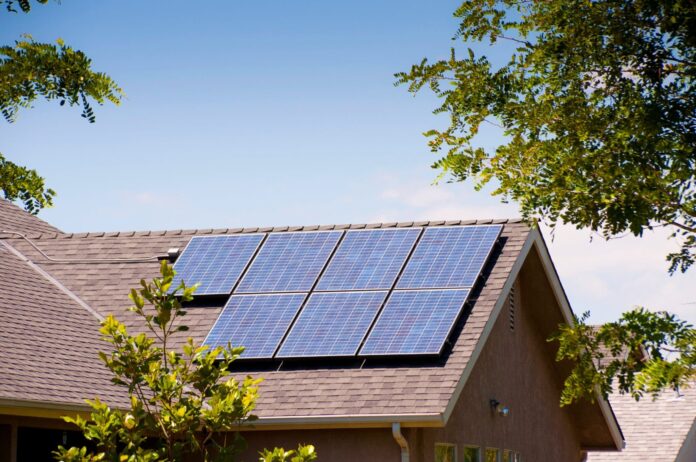

Nashville is a strong fit for home solar, but the best arrays here are planned around very local realities. Our hot, humid summers push panel temperatures high. Storms can arrive quickly with strong winds. Many neighborhoods have mature tree canopy and a mix of bungalow roofs, new construction, and additions. If you are considering residential solar panels, a practical plan starts at your roof and service panel, not at a generic checklist. The steps below focus on the constraints that matter most in Middle Tennessee and the design choices that respond to them, so your system performs well on real houses under real conditions.
Measure Your Roof’s Reality: Orientation, Pitch, and Space
Begin by mapping your roof as it actually is, not as it looks on a real estate listing. Note the azimuth of each plane (for example, southeast vs southwest), the roof pitch, and the location of dormers, vent stacks, and skylights that can create shade. Flush-mount racking usually follows the existing slope, so a 6/12 asphalt shingle roof will set the panel tilt around that angle. Arrays should respect code-required clearances near ridges and valleys to preserve firefighter pathways. On a hip roof, short rows may fit better around hips and vents than a single long row that later gets clipped by a flue shadow every afternoon.
If you have multiple usable planes, match production to your household’s schedule. Southeast arrays favor morning output, while southwest arrays can help during late-day air-conditioning peaks. On some corner lots, mixing planes improves total yield more than forcing everything onto a marginal south face. If you want to compare how components are arranged on a typical system, explore household solar panels from Green Wave Solar as a reference while you sketch your own roof layout.
Nashville Heat and Storms: Select Hardware That Endures
Panel efficiency falls as cell temperature rises, which is why Tennessee heat matters. Look for modules with favorable temperature coefficients and use racking that promotes airflow under the array. A small standoff that allows breeze beneath the panels can reduce heat soak on July afternoons. Stormwise, focus on mechanical attachment. Lag screws must hit rafters or purlins, and every roof penetration needs flashed, sealed mounts designed for your roofing material. On standing-seam metal, seam clamps avoid new holes entirely and can raise wind resistance when sized and spaced to the manufacturer’s chart.
Consider the rest of the balance of system as well. Stainless steel fasteners and anodized aluminum racking fare better in humid summers than painted hardware. Wiring should be secured with UV-rated clips and kept off abrasive shingles. In hail or high-wind events, a snug conduit run and a properly bonded racking assembly can prevent chafing and loosened fittings. If your lot is especially gusty, tighter rail spans and additional attachments can reduce uplift on long rows. Ground mounts are an alternative on shaded roofs, but weigh trenching, fencing, and mowing around posts against the structural simplicity of a roof array.
Shade Patterns and Roof Types: Match Inverters and Mounting
Nashville’s tree canopy brings comfort and character, but even a few minutes of branch shade across one module can pull down a whole string. If one plane sees shifting shadows from a chimney or a tall maple until midmorning, microinverters or DC optimizers can keep unshaded modules producing while one is affected. A string inverter may still be a good fit on a clear south face, where long, even rows minimize mismatch and reduce electronics on the roof. The trade-off is cost and complexity: module-level power electronics increase per-module expense and add more devices to monitor, but they often pay for themselves on dappled roofs.
Roof material also shapes mounting choices. On older asphalt shingles, low-profile flashed mounts limit uplift and reduce the chance of leaks. On standing-seam metal, non-penetrating clamps speed installation and preserve warranty coverage from the roofing manufacturer. Tile is less common here, but if you have it on an addition, specialized hooks and underlayment flashing are necessary. A realistic scenario: an East Nashville bungalow with north-south hips and a chimney stack may perform best with two shorter arrays on the west and south planes plus microinverters, rather than forcing a single long string under an afternoon chimney shadow.
Electrical Capacity and Code: Service Panel, Disconnects, and Shutdown
Before you size the array, check your main service panel. The busbar rating, main breaker size, and available breaker spaces determine whether a standard backfeed breaker fits or a panel upgrade or supply-side connection is smarter. An electrician can identify if your existing 100- or 150-amp panel will accept a solar breaker safely and whether moving high-draw circuits makes sense. Many utilities require a visible AC disconnect near the meter. Plan for its location early along with conduit routing to keep runs neat and to avoid awkward surface raceways across finished spaces.
Rapid shutdown is another design feature that affects hardware selection. Module-level electronics typically satisfy the requirement by de-energizing conductors at the array when the inverter or a switch is opened. Clear labeling on the service equipment, a combiner box when used, and the roof array boundaries help first responders. If future battery backup is on your wish list, reserve wall space for a battery cabinet, allow for a backed-up loads subpanel, and confirm that the chosen inverter is battery-ready. A new build in Nolensville, for instance, might combine a standing-seam roof with a battery-capable hybrid inverter and a tidy equipment wall in the garage to accommodate growth later.
Performance Tuning: Array Size, Tilt, and Seasonal Use
Many Nashville households see a summer spike from air conditioning and a shoulder-season dip in spring and fall. When you size the array, use 12 months of bills to understand kWh patterns and then decide whether to offset the annual load or target peak cooling months. Because snow accumulation is usually light here, flush-mount arrays on pitched roofs work well, and steeper winter-tilt frames are rarely necessary. On low-slope roofs, a modest tilt can improve summer airflow beneath modules and reduce pollen buildup without creating sail-like profiles in wind.
Don’t overlook the appliances that shape your load curve. A heat-pump water heater, variable-speed HVAC, or EV charging on a timer can smooth consumption and align it with afternoon solar output. If your roof capacity is limited by dormers or setbacks, prioritize higher-efficiency modules rather than adding a small, shade-prone wing that complicates wiring. Where trees cast unavoidable morning shade, a slightly larger array on a sunnier plane can beat a smaller, perfectly south-facing array obstructed by a neighbor’s oak until 10 a.m. This is a place where a shade study or even a simple time-lapse over a weekend pays off.
Monitoring and Upkeep for Middle Tennessee Conditions
Once your system is on, monitoring helps you spot small issues before they waste a season. Module-level monitoring can reveal a single connector that loosened during a storm or a branch that began shading one corner in June. After heavy weather, a quick ground-level inspection for lifted edge modules, loose conduit straps, or missing end caps is sensible. In spring, Nashville’s pollen layer can dull glass. A gentle rinse from the ground with a hose and a soft brush on an extension pole can restore output, but avoid walking on the roof and never spray near roof penetrations at an upward angle.
Critter guards along the array perimeter deter squirrels from nesting under panels and chewing insulation. Keep leaf litter and pine straw from building up under the lower row to protect airflow and reduce fire risk. If you plan a pruning cycle, coordinate it with expected growth to limit midseason surprises. Maintain records of equipment serial numbers, warranty terms, and installer drawings in one folder. A system that is aligned with Nashville’s heat, storms, shade, and housing stock should run quietly for years, and a few minutes of seasonal attention helps it do exactly that.