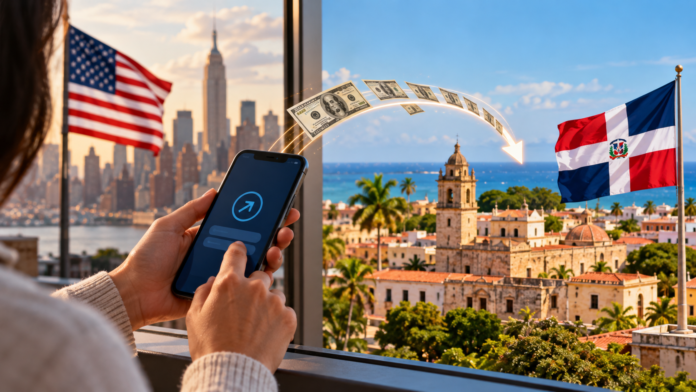

The Dominican Republic is one of the Caribbean’s largest remittance-receiving economies, with money sent from Dominicans living abroad representing a significant and growing share of national income. The United States is the primary source of these transfers, with large Dominican communities in New York, New Jersey, Florida, and Massachusetts sending billions of dollars annually to families across the island. Despite the high volume and the competitive market that has developed around this corridor, many senders are not getting the best available rates or using methods that best serve their recipients.
Here is what most senders do not know about sending money to the Dominican Republic from the USA.
1. The USD to DOP Exchange Rate Is the Most Important Cost Variable
The Dominican peso exchange rate applied by different transfer services varies enough on this corridor to produce meaningful differences in what recipients actually receive. The Dominican Republic remittance market is served by a competitive field of providers, and this competition has produced variation in both fees and exchange rates that makes comparison shopping worthwhile for senders of any amount. Comparing total cost including both the fee and the exchange rate margin, using the current mid-market USD to DOP rate as a reference point, gives senders the accurate comparison that fee-focused marketing is designed to prevent.
2. Safest Way to Send Money to the Dominican Republic
Safety is a primary concern for senders on this corridor, particularly given the importance of remittances to Dominican families who depend on them for essential household expenses. Western Union’s send money to the dominican republic from usa service applies bank-level encryption, real-time fraud monitoring, strict identity verification, and full regulatory compliance to every transaction, making it one of the most secure options available for USA to Dominican Republic transfers. The safest way to send money to the Dominican Republic is through a licensed and regulated transfer service with a proven track record on this specific corridor, strong data encryption that protects all transaction information, multi-factor authentication that prevents unauthorized account access, and fraud detection systems that identify suspicious activity before funds are released. Senders should avoid unregulated money transfer operators, informal cash arrangements, and services without clear regulatory standing, as these represent the primary sources of transfer fraud and loss on this corridor.
3. Remittances Are Economically Critical to Dominican Families
Remittances to the Dominican Republic represent one of the country’s largest sources of foreign income, exceeding tourism revenue in some years and serving as a primary economic lifeline for millions of households. The dependence of many Dominican families on regular remittances for essential expenses including food, housing, healthcare, and education means that delays, failed transfers, or higher-than-necessary costs have real consequences for recipients that go beyond the inconvenience of a suboptimal financial transaction.
4. Cash Pickup Remains Widely Used Despite Growing Digital Options
The Dominican Republic has a well-established remittance infrastructure that includes both cash pickup through agent locations and bank account delivery, but cash pickup remains widely used across the country including in areas with strong banking infrastructure. Cultural preference for cash, the convenience of immediate access without bank processing delays, and the accessibility of pickup locations in communities throughout the country all contribute to continued strong demand for cash pickup on this corridor. For senders whose recipients are outside major urban centers, the geographic coverage of the agent network is one of the most important practical service dimensions to evaluate before choosing a transfer service.
5. Bank Account Delivery Is Well Supported at Major Dominican Banks
Major Dominican financial institutions including Banco Popular Dominicano, Banreservas, Banco BHD León, Scotiabank Dominican Republic, and Banco Santa Cruz support international remittance deposits, and established transfer services offer bank account delivery to recipients with accounts at these institutions. For recipients with bank accounts who prefer digital delivery, bank deposit provides the convenience of receiving funds without traveling to a pickup location. Processing times for bank deposits to Dominican accounts vary by service and by receiving bank, with some services offering same-day or next-business-day delivery for transfers initiated during banking hours.
6. The Dominican Republic’s Time Zone Affects Transfer Processing Windows
The Dominican Republic operates on Atlantic Standard Time year-round, which puts it one hour ahead of Eastern Standard Time and two hours ahead of Eastern Daylight Time during US summer months. This time zone proximity to the US East Coast means that transfers initiated by East Coast senders during morning hours have the benefit of full Dominican banking hours for same-day processing, while West Coast senders initiating transfers in the afternoon may find that Dominican banking hours have already closed. For time-sensitive transfers, understanding the time zone relationship between your sending location and Dominican Republic banking hours helps you time the transfer to maximize the likelihood of same-day delivery.
7. Holiday Periods Create Increased Demand That Can Affect Processing
Major holiday periods including Christmas, New Year, Dominican Independence Day, and Semana Santa see significantly increased remittance volumes as Dominicans abroad send additional money to support family celebrations and gatherings. This increased demand can affect processing times and agent location wait times during peak periods, making it advisable to send before the peak holiday rush rather than at the last moment when volumes are highest. Cash pickup through agent networks is generally less affected by banking holiday constraints because many remittance agents operate extended hours during peak periods to accommodate increased demand.
8. Verification Status Affects Sending Limits on This Corridor
Transfer services apply sending limits that vary by account verification level, and the Dominican Republic corridor sees transfer amounts that can approach standard unverified limits for senders supporting multiple family members or covering significant expenses. Completing identity verification with your chosen service and building an established transfer history before large transfers are needed ensures that higher limits are accessible when required without processing delays at the point of transfer. Verified accounts also typically benefit from faster processing and in some cases better exchange rates that make the verification investment worthwhile for any sender who transfers regularly.