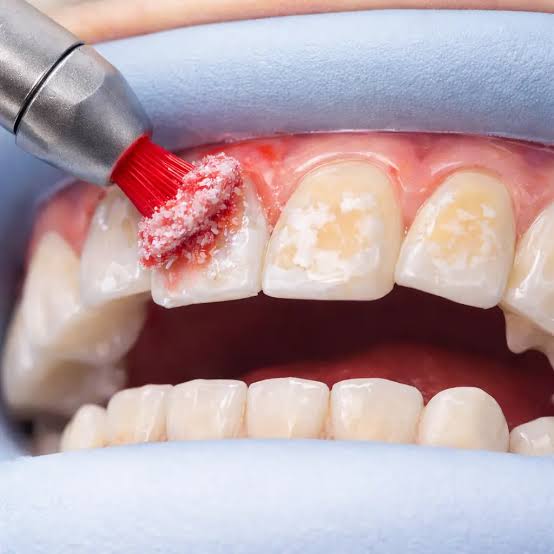

You look in the mirror and your eye goes straight to the white spots, brown marks, or patchy enamel that never seems to blend in with the rest of your smile. That kind of small cosmetic issue can feel bigger than it sounds. If you are exploring cosmetic dentistry in El Centro, CA, you may already brush well, avoid staining foods, and still feel frustrated because the problem is not on the surface in the way you hoped. If you have been hearing about resin infiltration or enamel microabrasion, the real question is not which one sounds better. It is which one fits the kind of stain or enamel change you actually have, what it costs you in time and money, and what kind of result you can reasonably expect.
Both treatments are conservative options used by a family and cosmetic dentist to improve the look of enamel defects and discoloration. One works by blending certain lesions from within. The other removes a very thin outer layer of enamel to reduce superficial defects. They are not interchangeable, and asking the right questions before treatment can save you from disappointment.
Resin infiltration and enamel microabrasion treat different enamel problems
The first question to ask is simple. What exactly is causing the spot or stain? Resin infiltration is often used for non cavitated white spot lesions, especially after braces or early enamel demineralization. It penetrates porous enamel and changes how light moves through the tooth, which helps the lesion blend in. Research discussing resin infiltration for white spot lesions shows promising esthetic improvement in the right cases. You can review a clinical overview of resin infiltration for enamel lesions for a closer look at how it works.
Enamel microabrasion is different. It combines a mild acid and abrasive compound to remove a thin outer enamel layer, which can help with shallow discoloration and some surface irregularities. It is often considered for fluorosis or superficial enamel stains. A published review on enamel microabrasion in esthetic dentistry explains why case selection matters so much.
If the stain is deeper than it looks, microabrasion may not do enough. If the surface is already thin or damaged, removing enamel may not be the best move. You want your dentist to tell you what the lesion is, how deep it appears, and why one option fits better than the other.
The depth of the defect shapes the result you can expect
This is where many people get tripped up. A tooth can look like it just needs polishing, but the color difference may be coming from inside porous enamel. That is why asking whether the defect is superficial or subsurface matters so much. If you skip that question, you risk paying for a treatment that improves the area only slightly or not at all.
You also want to know whether your case may need a combination approach. Some patients do well with microabrasion first and resin infiltration after, especially when there is both a surface stain and a deeper white spot component. Others may need whitening before treatment so the surrounding enamel and the treated area match more naturally. Cosmetic dentistry is often less about one perfect procedure and more about sequencing the right small procedures in the right order.
Conservative cosmetic dentistry still has limits and tradeoffs
Ask how much enamel is being altered, whether the result is reversible, and how long the improvement tends to last. Resin infiltration is minimally invasive, but it still changes the tooth structure by filling porous enamel with resin. Microabrasion is conservative too, but it removes a thin enamel layer permanently. That does not make either treatment unsafe when done properly. It means you deserve a clear explanation before you commit.
You should also ask about sensitivity, maintenance, and the chance that the spot may still be visible after treatment. Some lesions blend beautifully. Some become less obvious but do not disappear. That is not failure. It is honest cosmetic dentistry. The best outcome often comes from realistic expectations, not from chasing a perfect before and after photo.
A side by side look at resin infiltration and enamel microabrasion
| Point of Comparison | Resin Infiltration | Enamel Microabrasion |
| Best for | White spot lesions and subsurface enamel porosity | Superficial stains, mild fluorosis, shallow surface defects |
| Main method | Low viscosity resin penetrates porous enamel | Acid abrasive slurry removes a thin outer enamel layer |
| Enamel removal | Minimal removal | Yes, limited surface removal |
| Immediate esthetic change | Often noticeable when lesion depth is suitable | Often noticeable when discoloration is shallow |
| Limits | Less effective for deep stains or cavitated lesions | Less effective for deeper subsurface defects |
| Common question to ask | Will the lesion blend fully or only partially? | How much enamel needs to be removed? |
White spot lesion treatment works best when diagnosis comes first
If you are comparing options for resin infiltration and microabrasion, ask to see the area under good lighting, magnification, and dry isolation. Dry teeth often reveal the true borders and depth of a lesion better than a quick glance in a wet mouth. Ask for photos. Ask whether the spot is active decay, arrested demineralization, fluorosis, trauma related discoloration, or something else. Different causes can look similar to you and still call for very different treatment.
Cost matters too. A lower cost treatment is not a bargain if it leaves you unhappy and needing another procedure later. On the other hand, a more advanced option is not automatically better if your stain is shallow and could respond well to simpler care. This is where a skilled provider in cosmetic tooth stain treatment earns your trust by saying no to overtreatment.
Three steps you can take before saying yes
Ask for a precise diagnosis. Do not settle for “it is just a spot.” Ask what caused it, how deep it is, and whether it is on the surface or within the enamel.
Ask to compare outcomes, not just procedures. The better question is not “Which treatment do you do more often?” It is “What result should I expect in my case, and what will still show afterward?”
Ask about sequencing. Whitening, remineralization, microabrasion, and resin infiltration may work better in a planned order. If more than one step is recommended, ask why each step comes before the next.
The right treatment plan should feel clear and grounded
You do not need to guess your way through enamel defects or cosmetic spots. You need a plan that matches the tooth in front of you, not a generic script. When you ask the right seven questions about cause, depth, enamel loss, expected result, sensitivity, longevity, and treatment order, the decision gets easier. A thoughtful family and cosmetic dentist can help you choose the least invasive option that still gives you a result you feel good about.