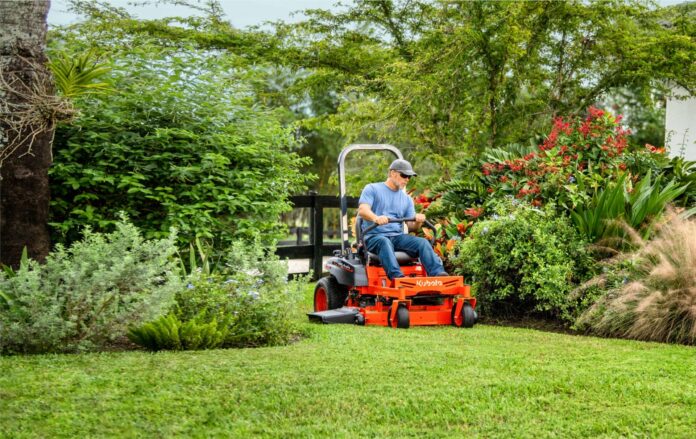

Not all lawns are created equal. While open, rectangular yards are relatively easy to maintain, many residential and commercial properties include trees, flower beds, fences, playgrounds, retaining walls, ponds, and winding pathways that complicate every mowing session. In these landscapes, efficiency depends less on engine power and more on maneuverability.
That’s where a zero turn mower stands apart. Designed to pivot around its own axis, this type of mower dramatically reduces unnecessary passes while making it easier to trim around obstacles with precision. If you’re maintaining a property with numerous landscape features, exploring a zero turn mower can help you find models that combine exceptional maneuverability, battery-powered performance, wide cutting decks, and comfortable operator controls for demanding mowing conditions.
After more than a decade working on residential estates, commercial properties, and municipal landscapes, I’ve found that homeowners often underestimate how much time is lost making repeated turns. On obstacle-filled lawns, turning efficiency frequently matters more than top mowing speed.
Why Complex Lawn Layouts Demand Better Maneuverability
A lawn with multiple landscape elements requires constant changes in direction.
Common obstacles include:
- Mature trees
- Decorative flower beds
- Landscape lighting
- Mailboxes
- Garden paths
- Outdoor furniture
- Play equipment
- Shrub borders
Traditional riding mowers often require multiple back-and-forth corrections to navigate these features, increasing mowing time and fuel or battery consumption.
How Zero Turn Steering Changes Lawn Maintenance
Unlike conventional riding mowers, zero turn models independently control each drive wheel.
This allows the mower to:
- Rotate within its own footprint
- Perform tight 180-degree turns
- Minimize uncut grass
- Eliminate wide turning circles
- Improve trimming precision
- Reduce unnecessary repositioning
The result is smoother navigation through intricate landscapes without repeatedly reversing or overlapping passes.
Why Obstacles No Longer Slow Down Your Mowing Routine
Every obstacle creates additional turning points.
On conventional tractors, these turns often involve:
- Slowing down
- Backing up
- Repositioning
- Making corrective passes
A zero turn mower simplifies these transitions by allowing operators to move seamlessly around trees, planting beds, and curved borders.
For properties with dozens of landscape features, these small time savings accumulate significantly throughout the season.
How Zero Turn Mowers Improve Overall Cutting Consistency
Efficient navigation doesn’t just save time—it also produces a cleaner-looking lawn.
Because operators maintain smoother mowing patterns, they experience:
- More uniform stripe alignment
- Fewer missed patches
- Reduced wheel marks
- Cleaner edge transitions
- Better overlap control
Maintaining consistent mowing patterns contributes to healthier turf while enhancing curb appeal.
Zero Turn Mower vs. Traditional Lawn Tractor
Choosing between mower styles depends largely on property layout.
| Zero Turn Mower | Traditional Lawn Tractor |
| Exceptional maneuverability | Larger turning radius |
| Ideal for obstacle-rich landscapes | Better suited for open lawns |
| Faster directional changes | More reversing required |
| Excellent trimming precision | More follow-up trimming needed |
| Greater mowing efficiency | Simpler learning curve |
For properties with multiple obstacles, the productivity advantage becomes increasingly noticeable.
Property Types That Benefit Most from Zero Turn Mowers
Not every lawn requires a zero turn mower, but certain landscapes benefit substantially.
Ideal applications include:
- Large suburban properties
- Estate homes
- Landscaped commercial grounds
- Parks
- Apartment communities
- Schools
- Golf course maintenance
- Properties with mature trees
These environments often involve numerous obstacles that reward greater maneuverability.
Features That Maximize Performance Around Obstacles
Several design elements enhance mowing efficiency.
Look for features such as:
Dual Independent Drive Systems
Independent wheel control creates true zero-radius turning capability.
Wide Cutting Decks
Larger decks reduce the total number of mowing passes while maintaining productivity.
Comfortable Suspension Seating
Reduced operator fatigue improves focus during extended mowing sessions.
Battery-Powered Operation
Modern battery-powered models provide quieter performance, lower maintenance requirements, and consistent torque without engine emissions.
Best Practices for Efficient Obstacle Navigation
Experienced operators develop mowing patterns before starting.
For maximum efficiency:
- Mow the perimeter first.
- Trim around major obstacles individually.
- Establish consistent overlapping passes.
- Use gradual joystick or steering lever movements.
- Avoid abrupt acceleration near landscaping.
- Finish detailed edging after mowing.
Planning the mowing route reduces unnecessary turning and improves productivity.
Common Mistakes That Reduce Mowing Efficiency
Even advanced equipment performs poorly when used incorrectly.
Avoid these common mistakes:
- Driving too quickly around obstacles.
- Making sudden steering corrections.
- Ignoring blade maintenance.
- Mowing wet grass.
- Overlapping excessively.
- Neglecting tire pressure consistency.
Routine maintenance contributes as much to cutting quality as operator technique.
Maintaining a Zero Turn Mower for Long-Term Performance
Keeping the mower in excellent condition ensures reliable maneuverability.
Recommended maintenance includes:
- Inspect blades regularly.
- Clean grass buildup beneath the deck.
- Monitor tire inflation.
- Check steering response.
- Maintain battery health according to manufacturer recommendations.
- Tighten loose hardware periodically.
The Outdoor Power Equipment Institute (OPEI) recommends following routine maintenance schedules to maximize equipment performance and operational safety.
The National Association of Landscape Professionals (NALP) also emphasizes proper mowing practices and equipment maintenance as key contributors to healthier, more attractive turf.
How to Decide If a Zero Turn Mower Is Right for Your Property
A zero turn mower is an excellent investment if your property includes:
- Numerous trees
- Curved landscape beds
- Decorative hardscaping
- Multiple fenced sections
- Frequent directional changes
- More than one acre of maintained turf
The more complex the landscape becomes, the more noticeable the efficiency gains.
Frequently Asked Questions
Are zero turn mowers difficult to learn?
Most new operators become comfortable after a few practice sessions. Smooth steering inputs and gradual acceleration help build confidence quickly.
Can zero turn mowers mow close to trees and flower beds?
Yes. Their tight turning capability allows operators to trim much closer to obstacles, reducing the amount of follow-up work required.
Are battery-powered zero turn mowers powerful enough for large properties?
Modern battery-powered models provide impressive torque and runtime for many residential and light commercial applications, particularly when properly matched to property size.
Do zero turn mowers save time?
Yes. Their ability to eliminate wide turns and reduce overlapping passes often results in noticeably shorter mowing sessions on obstacle-rich properties.
Are they suitable for steep hills?
Some slopes may be better suited for traditional self-propelled walk-behind mowers or specialized equipment. Always follow manufacturer recommendations regarding maximum operating slope.
Final Thoughts: Maneuverability Is the Real Productivity Upgrade
Complex lawns demand more than raw cutting power—they require equipment capable of moving efficiently through constantly changing terrain. Trees, landscape beds, fences, and decorative features quickly expose the limitations of conventional riding mowers.
A zero turn mower transforms the mowing experience by combining exceptional maneuverability, cleaner cutting patterns, and significant time savings. Whether maintaining a large residential property or professionally landscaped grounds, the ability to navigate obstacles with precision leads to healthier turf, improved appearance, and a more efficient lawn care routine throughout the growing season.