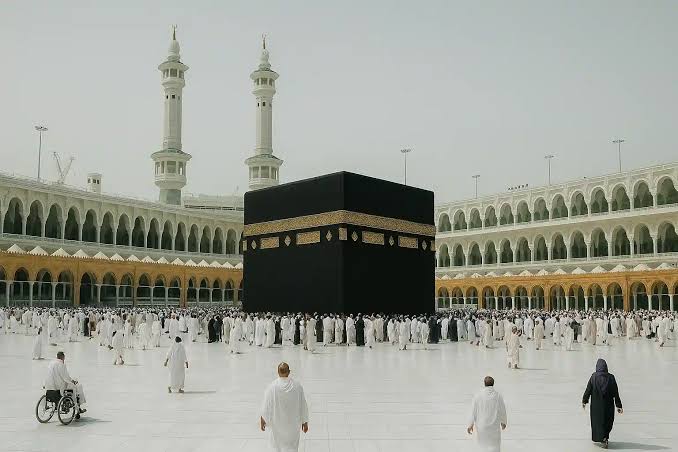

Somewhere along the way, the holiday changed. Where a fortnight by the pool was once the height of a good break, more of us now want a trip that leaves a mark, a journey that means something rather than one that simply passes the time. Wellness retreats, digital detoxes, slow travel and “purposeful” trips are all having their moment, each of them a quiet reaction to lives that feel a little too full and a little too fast. Yet the idea of travelling for something greater than a change of scenery is far from new. For millions of people around the world, and a steadily growing number here in Britain, it takes the form of a pilgrimage known as Umrah.
You can see the shift in the numbers as well as the mood. Interest in Umrah Packages has climbed year on year among British travellers, and the profile of who is going has broadened well beyond what many would expect. Young professionals, families with children, retired couples and first-time pilgrims are all making the journey, often fitting it around work and school holidays much as they would any other trip abroad. What was once seen as a once-in-a-lifetime undertaking is increasingly something people plan more than once, and talk about openly with friends and colleagues who may never have considered it before.
So what is Umrah?
For readers unfamiliar with it, Umrah is a pilgrimage to the holy city of Makkah in Saudi Arabia, often called the “lesser pilgrimage” to set it apart from Hajj, the larger pilgrimage that every able Muslim hopes to make once in a lifetime. The distinction matters. Hajj takes place on fixed dates in the Islamic calendar and draws well over a million people to the same place at the same time. Umrah, by contrast, can be performed at almost any point in the year, which makes it far easier to plan around ordinary life.
The rites themselves are surprisingly simple and take only a few hours to complete. Pilgrims circle the Kaaba, the cube-shaped building at the heart of the Grand Mosque, seven times; they walk seven times between two small hills in an act that retells an ancient story of faith and perseverance; and they finish by cutting a lock of hair. Many then travel on to Madinah, the second holiest city in Islam, to spend a few quiet days praying at the Prophet’s Mosque. The whole trip, from touchdown to homecoming, usually lasts somewhere between a week and a fortnight.
A trip built on intention
What makes Umrah interesting, even to those outside the faith, is that it is the original trip with a purpose. There is no itinerary to cram, no checklist of landmarks to tick off, no quiet pressure to be seen in the right restaurant or to bring home the right photograph. The entire journey is built around a single intention, and everything else falls away around it.
In an age of packed diaries and endless scrolling, that kind of focus is precisely what a lot of travellers say they are missing. We book trips to escape, then spend them glued to the same screens we were trying to get away from. Strip away the religious framing for a moment and you are left with something almost everyone recognises: the wish to step out of ordinary life, slow right down, and come home feeling a little different from the person who left. Umrah offers exactly that, and it has been doing so for centuries.
What the journey feels like
Pilgrims tend to describe the first sight of the Kaaba as the moment that stays with them for good, the point where months of anticipation suddenly become real. Standing shoulder to shoulder with people from every corner of the earth, speaking dozens of languages yet moving together as one, is an experience that is genuinely hard to put into words. Rich and poor, young and old, stripped of the usual markers of status, everyone is there for the same reason and, in the men’s case, dressed in the same simple white cloth.
Madinah, by contrast, is remembered for its calm. It is a gentler, greener city where the pace drops, the crowds thin and there is time simply to sit and reflect. Ask almost anyone who has been and you tend to hear the same thing: it is less a holiday than an experience that quietly reorders your sense of what matters, and one that lingers long after the tan from an ordinary break would have faded.
A country opening its doors
There is a practical reason the trend is growing, too. Saudi Arabia has spent the past few years opening up to visitors in a way that would have seemed unlikely a decade ago. Where the country was once effectively closed to tourists, it now actively welcomes them, and pilgrims are among the first to feel the benefit.
That means a trip built around worship no longer has to end there. Travellers can extend their journey to explore corners of the country that were, until recently, all but off-limits. Near the oasis town of AlUla stand the tombs of Hegra, carved into towering sandstone by the same Nabataean civilisation that built Petra across the border in Jordan. In Jeddah, the old quarter of Al-Balad is a maze of coral-stone houses and carved wooden balconies that once sheltered pilgrims arriving by sea. Add mountains, desert and a long stretch of Red Sea coast, and you have a country where faith and discovery, long kept firmly apart, increasingly sit side by side on the same trip.
The pull of Ramadan
Timing, though, is everything. While Umrah can be performed throughout the year, no period carries quite the same significance as Ramadan, the month of fasting observed by Muslims worldwide. Performing the pilgrimage during Ramadan is considered especially rewarding, and for that reason it is comfortably the busiest and most sought-after time to go. The holy sites fill to capacity, hotels near the mosques book out months in advance, and prices climb accordingly.
That surge in demand is exactly why the more organised travellers plan so far ahead. Those hunting for Cheap Ramadan Umrah Packages tend to book early in the year, or even the year before, while flights and rooms are still reasonably priced and the best-located hotels are still available. Leave it late and the same trip can cost a good deal more, if it can be found at all. For anyone set on travelling at the spiritual high point of the Muslim calendar, a little forward planning is the difference between a comfortable, affordable journey and a stressful, expensive scramble.
Planning it from the UK
For British travellers, the good news is that the journey is far more straightforward than it once was. The winter months, roughly November to March, bring the most comfortable weather, with mild days and cool evenings that make the walking involved much easier, particularly for older pilgrims. Ramadan, as we have seen, draws the largest crowds, while the quieter weeks of late autumn and winter tend to offer the best value of the year.
The paperwork has eased considerably as well. Visa rules have been relaxed, and women are now able to travel for Umrah without a male guardian, a change that has opened the door to many who previously could not go. There are still permits to arrange and health requirements to meet, but none of it is the obstacle it used to be.
Because the trip pulls together flights, visas, permits and hotels close to the holy sites, most people still choose to book through a specialist rather than piece it all together themselves. UK-based operators such as Islamic Travel Agency arrange the whole journey from start to finish, handling the admin, the bookings and the finer details so the traveller can concentrate on the reason they are going in the first place. For a trip with this much riding on it, that peace of mind is worth a great deal.
Who is going now
Perhaps the most striking part of the story is who is making the journey. The image of the elderly pilgrim, saving quietly for decades for a single trip, no longer tells the whole picture. Today it is just as likely to be a young couple marking a milestone, a family travelling together during the school holidays, or a group of friends going as one. Converts to Islam, often making the trip for the very first time, form a growing share too.
Social media has played its part. Pilgrims share their experiences openly, and those quiet, powerful images of the Grand Mosque at night have introduced the journey to audiences who might otherwise never have come across it. For a generation that increasingly values experiences over possessions, a trip defined entirely by meaning rather than luxury has an obvious and lasting appeal.
The souvenir you can’t pack
We tend to measure most holidays in photographs and fridge magnets, in the tan we bring back and the restaurants we tried. A pilgrimage is measured in something far less tangible: the quiet sense of having done a thing that mattered, and of having returned a little changed by it. As more of us go looking for trips that offer more than a change of scenery, it is worth remembering that the most meaningful journey of all has been happening, steadily and without fuss, for centuries. And for British travellers, it has never been more within reach.
Author bio
This article was contributed in partnership with Islamic Travel Agency, a UK-based Hajj and Umrah travel operator helping British Muslims make the journey to Makkah and Madinah.