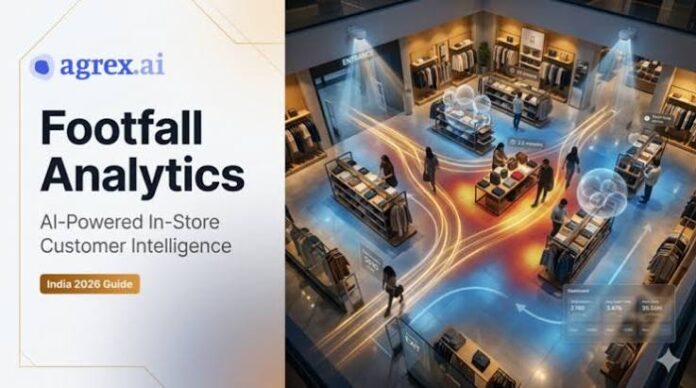

The retail industry in 2026 is more data-driven than ever before. As customer expectations continue to evolve and competition intensifies, retailers are increasingly relying on advanced technologies to understand shopper behavior, optimize store operations, and maximize revenue. Among the most impactful tools driving this transformation are the footfall counter and retail video analytics.
Gone are the days when retailers could rely solely on sales figures to measure store performance. Today’s leading brands understand that sales data only tells part of the story. To truly understand what influences purchasing decisions, retailers need visibility into customer traffic, engagement patterns, dwell times, and in-store behavior. This is exactly where a footfall counter and retail video analytics deliver value.
By combining accurate visitor tracking with advanced behavioral insights, these technologies help retailers make smarter decisions, improve customer experiences, and stay ahead of the competition. Let’s explore why leading retailers depend on footfall counter solutions and retail video analytics in 2026.
The Growing Need for Retail Intelligence
Retail has become increasingly complex. Customers now expect personalized experiences, seamless store layouts, faster service, and convenient shopping journeys.
At the same time, retailers face challenges such as:
- Rising operational costs
- Increased competition from e-commerce
- Changing consumer preferences
- Higher expectations for customer service
- Demand for real-time business insights
To address these challenges, retailers need reliable data that goes beyond basic sales reports.
A footfall counter provides accurate visitor traffic information, while retail video analytics offers a deeper understanding of customer behavior. Together, they create a complete picture of store performance and customer engagement.
Understanding the Role of a Footfall Counter
A footfall counter is designed to track the number of people entering and exiting a store. Modern systems use AI-powered cameras, 3D sensors, and advanced tracking technologies to achieve highly accurate visitor counts.
Retailers use a footfall counter to measure:
- Daily and weekly visitor traffic
- Peak shopping hours
- Seasonal trends
- Store occupancy levels
- Conversion rates
These insights help businesses understand customer demand and optimize operational strategies.
For example, if a store receives 10,000 visitors in a month but sales remain stagnant, management can investigate factors affecting conversion rates.
However, while a footfall counter provides valuable traffic data, it does not explain how customers behave once they enter the store. This is where retail video analytics becomes essential.
What Makes Retail Video Analytics So Valuable?
Retail video analytics uses artificial intelligence and computer vision technology to analyze customer movement and interactions inside the store.
Instead of simply counting visitors, retail video analytics helps retailers understand:
- Customer movement patterns
- Dwell times
- Product engagement
- Queue lengths
- Shopping journeys
- High-traffic and low-traffic zones
These insights allow retailers to make informed decisions that improve customer experiences and increase profitability.
In 2026, retail video analytics has evolved beyond basic surveillance, becoming a strategic business intelligence tool used by some of the world’s most successful retailers.
1. Improving Conversion Rates Through Better Insights
One of the primary reasons leading retailers depend on a footfall counter and retail video analytics is the ability to improve conversion rates.
A footfall counter helps retailers determine how many people enter the store, while sales data shows how many make purchases.
For example:
- 5,000 visitors enter a store.
- 1,000 customers complete a purchase.
- Conversion rate = 20%.
If conversion rates are lower than expected, retail video analytics can help identify why.
Retailers can discover:
- Areas customers avoid
- Products receiving attention but not sales
- Checkout bottlenecks
- Ineffective store layouts
These insights help businesses remove obstacles and improve the customer journey, leading to higher sales conversions.
2. Optimizing Store Layouts for Better Performance
Store design has a direct impact on customer behavior.
A footfall counter provides traffic volume data, but retail video analytics reveals exactly how customers navigate through the store.
Retailers can identify:
- Popular pathways
- Frequently visited sections
- Dead zones
- Congested areas
Using this information, businesses can:
- Reorganize product displays
- Improve aisle layouts
- Enhance customer flow
- Increase visibility of key products
Leading retailers in 2026 are continuously refining their store environments based on data generated from retail video analytics rather than relying on assumptions.
3. Enhancing Customer Experience
Customer experience remains one of the most important factors influencing retail success.
A positive shopping experience increases customer satisfaction, loyalty, and repeat visits.
By combining a footfall counter with retail video analytics, retailers can identify areas where customers encounter friction.
Examples include:
- Long checkout queues
- Crowded sections
- Poor product accessibility
- Confusing store navigation
Addressing these issues creates a smoother shopping journey and encourages customers to spend more time in the store.
Satisfied customers are also more likely to return and recommend the store to others.
4. Smarter Workforce Management
Labor is one of the largest operational expenses for retailers.
A footfall counter provides valuable information about traffic patterns throughout the day, week, and year.
Managers can use this data to:
- Schedule employees during peak periods
- Avoid overstaffing during slower hours
- Improve workforce efficiency
Meanwhile, retail video analytics monitors queue lengths and customer service interactions.
Together, these technologies help retailers allocate staff more effectively while maintaining high service standards.
This improves operational efficiency and reduces unnecessary labor costs.
5. Measuring Marketing and Promotional Success
Retailers invest heavily in advertising, promotions, and in-store campaigns.
Understanding whether these efforts are generating results is critical.
A footfall counter helps measure the impact of marketing campaigns by tracking changes in visitor traffic.
For example:
- Did a holiday promotion increase store visits?
- Did a local advertising campaign drive more foot traffic?
However, attracting visitors is only part of the equation.
Retail video analytics reveals how customers interact with promotional displays and featured products.
Retailers can evaluate:
- Customer engagement levels
- Time spent near displays
- Promotional effectiveness
These insights help improve future marketing campaigns and maximize return on investment.
6. Leveraging Heatmaps and Customer Journey Analysis
One of the most powerful features of retail video analytics is heatmap technology.
Heatmaps visually represent customer activity within a store.
They help retailers identify:
- High-engagement areas
- Product hotspots
- Low-traffic zones
- Customer movement patterns
Combined with footfall counter data, heatmaps provide a detailed understanding of customer journeys.
Retailers can then optimize product placement and merchandising strategies to increase sales opportunities.
7. Supporting Data-Driven Decision Making
Perhaps the biggest reason leading retailers rely on a footfall counter and retail video analytics in 2026 is the ability to make decisions based on real data.
Instead of relying on intuition, retailers can answer critical business questions such as:
- Which store locations perform best?
- Which products attract the most attention?
- What times generate the highest customer traffic?
- Where should inventory be allocated?
- How effective are current merchandising strategies?
Data-driven decision-making reduces risk and enables retailers to adapt quickly to changing customer preferences.
The Future of Footfall Counter and Retail Video Analytics Technology
The capabilities of footfall counter systems and retail video analytics continue to advance rapidly.
In 2026, many solutions now offer:
- AI-powered customer tracking
- Real-time analytics dashboards
- Predictive traffic forecasting
- Automated reporting
- Occupancy monitoring
- Advanced customer behavior analysis
As artificial intelligence becomes more sophisticated, retailers will gain even deeper insights into customer preferences and shopping patterns.
This will allow businesses to deliver more personalized experiences and further improve operational performance.
Conclusion
The retail landscape in 2026 demands smarter, faster, and more informed decision-making. Leading retailers recognize that understanding customer behavior is essential for staying competitive and driving growth.
A footfall counter provides accurate visitor traffic data, while retail video analytics uncovers valuable insights into customer movement, engagement, dwell times, and shopping behavior. Together, these technologies empower retailers to optimize store layouts, improve customer experiences, enhance workforce management, measure marketing effectiveness, and increase conversion rates.
As the retail industry continues to evolve, businesses that leverage footfall counter solutions and retail video analytics will be better positioned to meet customer expectations, improve operational efficiency, and achieve sustainable revenue growth.
FAQs
1. What is a footfall counter?
A footfall counter is a technology solution that tracks the number of people entering and exiting a retail store, helping businesses measure visitor traffic and store performance.
2. What is retail video analytics?
Retail video analytics uses AI-powered video technology to analyze customer behavior, movement patterns, dwell time, engagement levels, and store traffic flow.
3. Why are footfall counters important in 2026?
A footfall counter helps retailers understand customer traffic trends, calculate conversion rates, optimize staffing, and make data-driven business decisions.
4. How does retail video analytics improve store performance?
Retail video analytics provides insights into customer behavior, helping retailers optimize layouts, improve customer experiences, reduce bottlenecks, and increase sales opportunities.
5. Can footfall counters and retail video analytics work together?
Yes. A footfall counter measures visitor traffic, while retail video analytics explains how customers behave inside the store, providing a complete view of store performance.
6. What are retail heatmaps?
Heatmaps generated by retail video analytics visually show where customers spend the most time, helping retailers identify high-engagement and low-engagement areas.
7. How do these technologies help increase revenue?
By combining footfall counter data and retail video analytics, retailers can improve conversion rates, optimize staffing, enhance customer experiences, and make smarter decisions that contribute to higher sales and profitability.