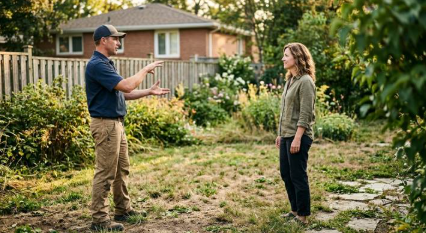

By a landscape design industry contributor. You have three proposals for your backyard renovation, and they might as well be for three different projects. One is a single page with a final number. Another is a detailed spreadsheet that’s ten pages long. The third is somewhere in between, but with a price tag that’s 40% higher than the first. This is a common and frustrating experience. It leaves you wondering what’s a fair price and who you can actually trust.
The confusion often comes from comparing the final number instead of the underlying value. A lower bid might omit crucial steps like soil amendment or proper drainage, leading to costly fixes later. A higher bid could include premium materials and a more robust warranty. The goal is to understand what you are paying for. A professional C&H Landscaping denver landscape contractor should provide a transparent breakdown that lets you compare apples to apples. This is especially true in Colorado, where water-wise design is not just a trend but a necessity. The University of Colorado Boulder is even studying turfgrass alternatives, backed by a grant from the Colorado Water Board, to address local water use and urban heat. A thoughtful bid will reflect this kind of regional expertise.
Quick answer: Landscape proposals vary because of four main factors: the detailed scope of work, the quality of materials, the skill and insurance of the labor force, and the company’s overhead and design process. The cheapest bid is often not the best value. A fair comparison requires you to look past the total price and analyze the line-item details for each phase of the project.
What’s inside
· How is labor calculated (and why shouldn’t you choose the cheapest)?
· What are the hidden signs of a quality proposal?
· How do Colorado’s climate and soil affect a landscape bid?
· Frequently Asked Questions About Landscape Bids
How is labor calculated (and why shouldn’t you choose the cheapest)?
Labor is often the largest and most variable cost in a landscape bid, reflecting the team’s skill, insurance coverage, and legal employment status. A low labor rate might seem like a great deal, but it can be a significant red flag. It often indicates that a company is cutting corners on things that protect you, the homeowner, from liability. The price of labor is not just about the wage paid to a worker; it includes many other essential business costs.
Understanding the local market provides important context. In the Denver metro area, the average hourly wage for building and grounds maintenance workers was $21.87 as of May 2025, according to the U.S. Bureau of Labor Statistics. This sector is a meaningful part of the local economy, representing 2.8% of all employment in the area, per the same BLS report. A professional company uses this baseline wage and then adds costs for payroll taxes, workers’ compensation, and general liability insurance. These are not optional expenses for a legitimate business.
❝ A good rule of thumb is that the “loaded” labor rate a company charges is often 1.5 to 2.5 times the direct wage paid to an employee. This multiplier covers the critical overhead of insurance, taxes, equipment maintenance, and other business costs that are not itemized on your invoice.
When a bid comes in with a labor rate that seems too good to be true, it probably is. It may signal that the crew is uninsured or misclassified as independent contractors to avoid paying for insurance. If an uninsured worker gets injured on your property, you could be held financially responsible for their medical bills and lost wages. Choosing a bid based on the lowest labor cost transfers the financial risk from the contractor directly to you. It’s a gamble that rarely pays off in the long run.
What are the hidden signs of a quality proposal?
A quality proposal demonstrates professionalism through its detail, transparency, and the processes it outlines for the project. You can spot a superior bid by looking for a granular scope of work, verifiable credentials like insurance certificates, and a clear plan for handling unforeseen issues. It moves the conversation from just the final price to the long-term value and stability of the finished landscape.
The most telling part of any bid is the “Scope of Work” section. A vague, one-line description is a major red flag. A professional bid will break down each major component of the project into its constituent parts, detailing materials and methods. This level of detail protects you from corner-cutting. For example, a patio installation isn’t just about laying pavers; it’s about the foundation that ensures it won’t heave and buckle after a few Colorado winters.
| Vague Proposal Item | Detailed Proposal Item |
| “Install new paver patio.” | “Excavate 8 inches for 400 sq. ft. patio. Install and compact 6-inch road base gravel foundation. Install 1-inch sand setting bed. Lay specified paver model. Install edge restraint. Sweep polymeric sand into joints.” |
| “Plant new trees and shrubs.” | “Supply and install 5 x 2-inch caliper Autumn Blaze Maple trees. Amend soil with compost. Install root barrier. Stake and mulch each tree. Provide 1-year plant warranty.” |
| “Install irrigation system.” | “Install 4-zone drip and spray irrigation system with smart controller. Specify head types (e.g., Hunter MP Rotator) and valve models. Include backflow preventer and rain sensor as per local code.” |
Beyond the scope, ask for documentation. Request a current Certificate of Insurance showing both general liability and workers’ compensation coverage. This is non-negotiable. It protects you from financial risk if property is damaged or a worker is injured. A contractor who cannot produce this instantly is not operating a legitimate business. This is part of the overhead that contributes to fair labor pricing. While Denver wages are distinct, the national median pay for grounds maintenance workers was $19.27 per hour in May 2025, according to the U.S. Bureau of Labor Statistics, and a professional company’s rates will properly account for wages, insurance, and taxes on top of that base.
❝ One of the most important questions to ask a potential contractor is: “How do you handle change orders?” The answer reveals their professionalism. A verbal agreement is not enough. There should be a formal, written process where any change to the scope, whether it adds or subtracts cost, is documented and signed by both you and the contractor before the work is done. This prevents surprise bills at the end of the project.
Finally, a quality proposal often includes what is not included. This shows foresight and honesty. Exclusions might list things like permit fees, major rock excavation, or private utility locating. Seeing this in a bid means the contractor is thinking ahead and setting clear expectations from the start.
How do Colorado’s climate and soil affect a landscape bid?
A landscape built for the Colorado Front Range must account for intense sun, dramatic temperature swings, and challenging soil. A detailed proposal will reflect these local realities with specific materials and construction methods. A generic bid that could be for any state is a sign that the contractor may not be prepared for the region’s unique demands, potentially leading to a project that fails within a few years.
The most critical factor for any hardscaping, like a patio or retaining wall, is the freeze-thaw cycle. Colorado’s weather can go from 60 degrees to below freezing in a single day. This causes moisture in the ground to expand and contract, which can heave and destroy improperly installed stonework. A quality bid will specify a deep, compacted gravel base, typically 6 to 8 inches, for patios. A cheaper bid might only list a 4-inch base, which is simply not enough to ensure long-term stability in this climate. The line item for “base preparation” is where you see the difference between a patio built to last and one that will need to be redone.
❝ The most expensive patio is the one you have to replace in five years. Along the Front Range, that failure almost always starts with an inadequate base and a failure to address the native soil. Ignoring this step is the most common, and costly, shortcut.
Beyond the temperature swings, much of the Denver area has expansive clay soil, sometimes called bentonite. This soil swells significantly when wet and shrinks as it dries, putting immense pressure on anything built on it. A professional proposal will include line items for “soil amendment” or “structural fill,” which involves removing some of the native clay and mixing in organic matter or replacing it with more stable material. This is a non-negotiable step for healthy plants and stable hardscapes. If a bid doesn’t mention how it will handle the soil, ask directly.
Finally, a Colorado-centric bid will demonstrate a smart approach to water and sun. It should specify water-wise or native plants that thrive in the semi-arid climate. For irrigation, look for details on drip systems for garden beds and efficient rotator-style sprinkler heads for any turf areas. A proposal that just says “install irrigation” is too vague. Similarly, for structures like pergolas or decks, the intense high-altitude UV light will quickly degrade cheap materials. A bid specifying cedar, redwood, or high-quality composite materials shows an understanding of what it takes to build for longevity here.
Frequently Asked Questions About Landscape Bids
What is a reasonable deposit for a landscape project? A typical deposit is between 10% and 30% of the total project cost, used to cover initial material orders and secure your spot on the schedule. Be cautious of any contractor asking for more than 50% upfront. Large initial payments can be a red flag, as a financially stable company should not need to use your deposit to fund its basic operations or cover previous debts. A phased payment schedule tied to project milestones is a common and fair practice.
How long should a landscape installation take? This depends entirely on the project’s complexity, but a quality proposal should provide a projected timeline with key phases. A simple planting job might take a few days, while a full outdoor living space could take several weeks. Ask how the contractor handles weather delays, material availability, and what the communication plan will be. A professional will have a clear process for keeping you informed.
Does a more expensive bid guarantee better quality? Not automatically, but a significantly cheaper bid often signals compromises. A higher price should be justified by superior materials, a more experienced crew, comprehensive insurance, and a detailed design process. Ask a higher-priced bidder to walk you through their line items. Their ability to explain the value behind the numbers is often a good indicator of their professionalism and the quality you can expect.
What is the difference between a landscape designer and a landscape contractor? A landscape designer focuses on the planning and creative vision, creating the blueprint for your space based on your needs and the site’s conditions. A landscape contractor is the builder who executes that plan, managing the crew and construction. Some companies, often called design-build firms, have both capabilities in-house. This can streamline communication and ensure the final build is true to the original vision.
Are 3D renderings really necessary for my project? For simple projects, they may not be. But for any project involving multiple hardscape elements, elevation changes, or significant investment, they are invaluable. A 3D rendering allows you to visualize the final outcome, including material textures, plant sizes at maturity, and how the space will function. It is the best tool for catching potential issues and making changes on paper, which is far cheaper than making them once construction has begun.
The Bottom Line: A Bid Is a Blueprint for Risk
Choosing a landscape contractor is less about comparing final prices and more about comparing business philosophies. The numbers on a bid are simply the result of hundreds of small decisions about materials, labor, and, most importantly, risk. A low bid often gains its advantage by transferring risk to you, the homeowner, through inadequate insurance, shallow foundations, or a failure to address Colorado’s challenging soil and climate. A professional bid, by contrast, includes the costs of mitigating those risks upfront.
The proposal is your best window into a contractor’s operational maturity. A vague scope of work suggests a reactive, problem-prone process. A detailed plan for base preparation, soil handling, and change orders demonstrates foresight and control. You are not just buying a patio or a planting bed; you are hiring a project manager. The document they provide is the primary evidence of their ability to manage complexity, communicate clearly, and protect your investment from predictable failures.
About the author
C H Landscaping is a family-owned landscape design and construction firm based in Denver. Since 2005, their team has specialized in creating custom outdoor living spaces for homeowners across the Denver Metro area, Boulder, and Castle Rock. Their work encompasses the full project lifecycle from design to installation, including hardscaping, planting, and irrigation systems tailored to Colorado’s unique climate. This integrated design-build approach ensures a cohesive process from initial concept to the finished landscape.