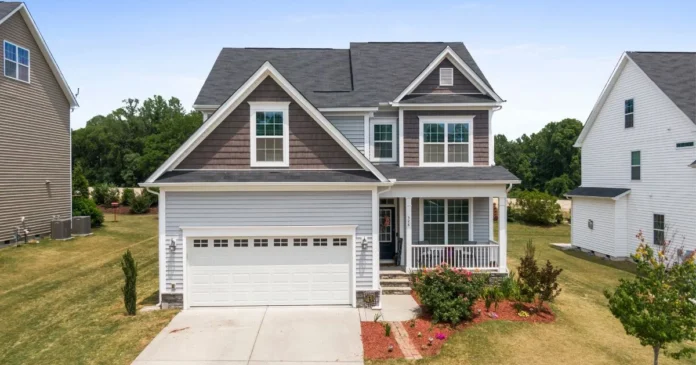

Fiber cement, engineered wood and metal panel systems are among a number of alternatives to have won share from vinyl cladding over the past two decades. Vinyl, however, still accounts for a larger proportion of residential cladding replacement work than any single product and it continues to do so on cost grounds that persist over a full cycle of ownership.
For contractors, estimators and architects alike, determining where vinyl siding is advantageous over other exterior covering materials is key. The oft-held view that vinyl is ‘inexpensive’ must be examined carefully within the scope of the entire project cost over the lifetime of the covering. Will vinyl’s betterments outweigh the costs associated with its recommendation?
The installed cost equation, not the material cost
While the cost of the material itself accounts for less than half the difference in cost between vinyl and other claddings, the major cost difference is in the labor to install. Because vinyl siding panels are very light and can be cut with a utility knife or even a very fine tooth blade, they can be hung by one person. They lock into place without the need for face fasteners, allowing for very fast installation of most 2-story elevations.
Fiber cement siding requires respirators, scoring saws or fine tooth blades, two man lifts for long planks, and special nailing patterns which can exact a harsh penalty for haste. Engineered wood siding generally falls somewhere in the middle on labor required for siding installation. When costing a job out honestly, labor can easily outweigh the material for jobs over a single story.
Where the savings evaporate
Of course, there are complex elevations that erode some of that cost advantage. Trim detail, heavy gauge trim, multiple gables, unusual conditions such as bay windows and stone returns can cause a lot of J-channel and receiver detail. Accurate cutting of these aspects can cause a significant increase in labor on complex facades. In these cases, the cost difference between vinyl and engineered wood could justify a different product.
Durability that depends on grade selection
It’s also worth noting that very thin panels of vinyl siding are typically sold at very low price points and may give vinyl a poor reputation. While thicker vinyl siding panels are now available, the vast majority of units on the market today have a thickness ranging from 0.035 inches to greater than 0.052 inches. The rigidity and resulting wind load of these very thin panels can cause problems with typical construction details. In addition, thin panels also have a tendency to flex and reveal any minor imperfections in the sheathing beneath. This can cause the siding to appear to sag or become distorted in raked light.
Titanium dioxide and acrylic capstock are two other variables to consider. Modern vinyl siding uses a lot more titanium dioxide than it did in the 1990s to create a wider selection of colors. In addition, the use of acrylic capstock to topcoat the paint film has greatly improved the fade resistance of the siding. Darker colors especially have become a common offering of most siding manufacturers.
- Specify a minimum panel thickness of 0.044 inches for standard residential work, and heavier for exposed coastal or high-wind sites.
- Check the wind rating against local code, not against the manufacturer’s headline number, which often assumes ideal fastening.
- Confirm the warranty covers fade with a defined delta E limit rather than vague language about excessive discoloration.
Weather performance and the assembly behind the panel
This does not mean that vinyl sidings are watertight, but rather that they are designed as a rainscreen, that is, to allow the bulk of the water to run off, and then to allow whatever penetrates between the siding panels to drain from the underlying layers and dry out. Most failures with vinyl sidings occur below the siding, i.e., as a failure of water management in the layers below.
Panels should be hung loose on the nails to allow for thermal expansion and contraction, typically exceeding 1/2 inch on long runs of siding over the summer and winter months. Nailing tight to the framing will cause the panel to buckle and appear to fail. The weather resistant barrier, weep holes, flashing around penetrations, and proper drainage plane down to the foundation are critical to the siding’s weather resistance. Because so much of that detailing is invisible once the panels are hung, homeowners weighing vinyl siding in Durham, North Carolina are best served by a crew that treats the drainage plane as carefully as the finished elevation.
Comparing the practical trade-offs
| Criterion | Vinyl | Fiber cement | Engineered wood |
| Typical service life | 30 to 40 years | 40 to 50 years | 25 to 35 years |
| Repainting required | Never | Every 10 to 15 years | Every 7 to 12 years |
| Impact resistance | Moderate, brittle in cold | High | High |
| Individual panel repair | Straightforward with a zip tool | Difficult | Moderate |
| Weight on structure | Low | High | Moderate |
Maintenance economics over a thirty-year hold
That annual wash to protect from dirt build-up, plus occasional checks for any caulk failure, in the form of a line item in the client’s annual budget for their home, is how the cost of vinyl siding develops over time. Compare that to the various cycles of repainting, needed to maintain a painted finish of cladding, which when multiplied out over a thirty-plus year time frame will exceed the original installed cost of the siding itself.
This is particularly relevant for clients such as rental portfolio owners and people who are planning to be in a house for the long term and want to budget for the predictable running costs of a house as opposed to one-off capital costs.
Appearance has stopped being the weak point
Deep profiles, long panels to minimize joins, and a variety of styles such as vinyl shakes, scallops and vertical board-and-batten have made big strides to close the aesthetic performance gap with other cladding materials. Even flatness performance is now improved with an Insulated Backing System (IBS) integrated into some vinyl siding products.
Matching product to method
Show the profiles with examples of complete wall assemblies, noting the different approaches to achieve an installation. Point out that with a full tear-off and re-sheathing of the house, one can also consider an insulated panel and corresponding rigid furring. An overlay on an already sound existing cladding has its own limitations regarding thickness and reveal.
This has to be clearly outlined in the sales contract prior to work commencing so that the client’s expectations are clearly outlined and they see what you have designed will look like when complete.