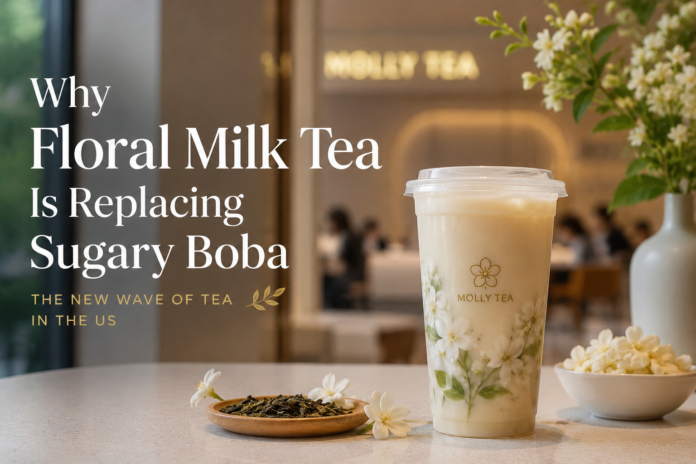

Walk into a US tea shop in 2026 and the drink getting ordered most isn’t brown sugar boba anymore. It’s a pale, jasmine-scented milk tea, light on sugar, often with no tapioca at all. American boba culture is moving from sweet and chewy toward fragrant and tea-forward — and a wave of Chinese tea brands is driving the change.
What floral milk tea actually means
Floral milk tea starts with a real tea base — usually green, white, or oolong — scented with flowers instead of syrup. Jasmine leads, joined by osmanthus, white champaca, and gardenia. The tea is blended with fresh milk for a light, aromatic cup that tastes of the leaf and the bloom rather than pure sweetness.
The contrast with classic bubble tea is the whole point. Brown sugar milk tea and Taiwanese-style boba are rich, sweet, and built around chewy tapioca pearls. Floral milk tea flips that: tea first, lower sugar, and usually no boba unless you add it.
Why drinkers are moving away from sugary boba
The shift follows a bigger change in what people want from a drink. At Expo West 2026, the signal from US buyers was clear — shoppers are no longer chasing extreme sweetness and want cleaner, lighter options instead.
A few forces are behind it:
- Sugar control is now the default. Ordering at 30% or 50% sugar is normal, and a tea-forward cup holds its flavor when you cut the sugar far better than a syrup-heavy one does.
- Wellness shapes Gen Z and millennial habits. Younger drinkers still treat boba as an affordable everyday treat, but more of them reach for green and white tea bases, oat or almond milk, and lighter formulas.
- Aroma sells the cup. Newer menus lean on tea blends infused with floral notes for a multi-sensory experience, not just a sugar hit.
The Chinese tea brands driving the change
This style belongs to a category often called new-style Chinese tea (新中式茶饮), and several brands carried it onto US streets quickly. HEYTEA, Tiger Sugar, and Chagee each expanded the market, but the clearest example of the floral wave is Molly Tea.
Molly Tea and the jasmine wave
Molly Tea (茉莉奶白) was founded in 2021 in Shenzhen and built its name on jasmine — the brand name itself echoes mòlì, the Chinese word for the jasmine flower. It opened its first US store in Flushing, Queens in 2024 and has since reached Brooklyn, the San Francisco Bay Area, Chicago, Boston, Houston, Bellevue, Las Vegas, and Los Angeles, as part of a network of more than 2,000 stores worldwide.
Its signature drink shows the formula plainly: high-mountain jasmine, scented through a careful multi-step process, then blended with fresh milk — floral, clean, and noticeably less sweet than a standard shop’s milk tea. If you want to see how a fully floral lineup is built, the Molly Tea Menu breaks down each drink, its flower base, and how sweet it runs.
How to order a floral milk tea
If you’re used to sweet boba, a few simple choices make the switch easy:
- Start with jasmine or osmanthus. Jasmine milk tea is the gateway flavor; osmanthus, often paired with Longjing (Dragon Well) green tea, is softer and honey-like.
- Set sugar to 30–50%. These drinks are built to taste full at lower sugar, so dialing it down costs you nothing.
- Treat boba as optional. Most floral milk teas come without tapioca by default. Add pearls only if you want the chew.
- Try a cheese foam cap once. A salted cheese layer over jasmine green tea adds body without heavy sweetness.
Is the floral shift here to stay?
The signs point to staying power, not a passing fad. The drivers behind it — lower-sugar demand, plant-based milk, and the cultural pull of East Asian tea brands — are structural rather than seasonal. As more new-style Chinese tea shops open across US cities, floral milk tea is moving from a niche order to a default menu category.
For drinkers, the takeaway is simple. The next great boba might not be sweet or chewy at all. It might just smell like jasmine.
Frequently asked questions
What is floral milk tea?
A tea-forward drink made from green, white, or oolong tea scented with real flowers such as jasmine or osmanthus, blended with milk, lower in sugar, and often served without tapioca pearls.
Is floral milk tea healthier than regular boba?
It’s usually lower in sugar and frequently skips tapioca, so a typical cup is lighter. Sweetness still depends on the sugar level you choose at the counter.