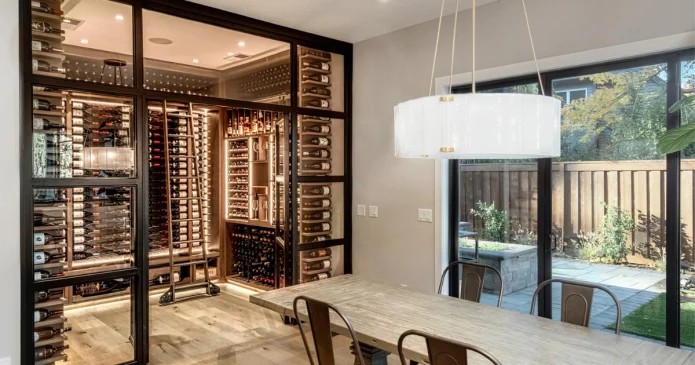

Climate-controlled wine storage adds a refined and practical feature to a home, but it also creates environmental demands that ordinary living spaces do not usually require. Wine can respond poorly to repeated temperature swings, excessive warmth, inconsistent humidity, and unstable airflow over long periods. A room that feels comfortable to people may still be unsuitable for bottles intended to remain stored for months or years. That is why an HVAC contractor matters when homeowners create dedicated wine storage. Proper planning helps the room maintain more stable conditions instead of depending on the same heating and cooling strategy used throughout the rest of the house.
Where Climate Control Begins
- Why Wine Storage Requires More Consistency Than Everyday Rooms
Most areas of a home can tolerate normal temperature changes throughout the day without creating major concerns. A living room may warm slightly in the afternoon and cool again at night, while bedrooms may shift with occupancy and thermostat schedules. Wine storage works differently because repeated environmental changes can affect how bottles age over time. A room located near exterior walls, beneath a staircase, in a basement, or beside a frequently used living area may experience conditions that make climate control more difficult than homeowners initially expect. An HVAC contractor can evaluate how heat enters the room, where air movement may be weak, and whether the existing home system can consistently maintain the required conditions. Homeowners who schedule service with Setpoint Heating and Cooling may begin to recognize that creating wine storage is not simply about installing shelves in a cool room. It requires a comfort strategy designed around stability, long-term storage, and the specific conditions within that enclosed space.
- How an HVAC Contractor Helps Manage Temperature Without Overcooling the Home
One of the main challenges with climate-controlled wine storage is that the room may need to remain cooler than surrounding living areas. Trying to achieve that temperature by lowering the thermostat for the entire home can make bedrooms, kitchens, and other spaces uncomfortable while also increasing unnecessary system operation. An HVAC contractor helps homeowners avoid that mismatch by considering whether the wine room needs dedicated temperature control or a separate conditioning approach. This matters because the goal is not merely to make the storage area cold. It is to maintain a predictable temperature without forcing the rest of the house to follow the same setting. The contractor can evaluate room size, insulation, door sealing, heat exposure, and equipment requirements before recommending how the space should be conditioned. Better planning allows the wine room to operate according to its own needs while the rest of the household remains comfortable. That separation makes the storage feature easier to manage and helps prevent one small room from changing heating and cooling decisions for the entire property.
- Why Humidity Control Matters Alongside Temperature
Temperature is often the first concern homeowners think about when planning wine storage, but humidity also deserves attention. An environment that becomes too dry or too damp can create different storage concerns over time. This means a cooling system cannot be judged only by whether the thermostat reaches a chosen temperature. The HVAC plan also needs to consider how the room handles moisture, how often equipment cycles, and whether conditions remain stable throughout seasonal changes. An HVAC contractor can evaluate the relationship between cooling and humidity instead of treating them as separate issues. This matters because aggressive cooling without proper moisture management may create a room that feels cold but still does not provide the balanced environment homeowners intended. Door openings, nearby plumbing, basement conditions, and outdoor weather can all influence humidity levels. Better HVAC planning considers those factors early so the room is not constantly reacting to environmental changes. When temperature and humidity are managed together, homeowners gain a storage area that is more consistent and easier to trust throughout the year.
- How Insulation and Air Sealing Support Climate-Controlled Storage
Climate control works more effectively when the room itself helps maintain stable conditions. Poor insulation, gaps around doors, unsealed penetrations, and exterior exposure can allow heat and moisture to enter the storage area faster than the cooling equipment can manage them. An HVAC contractor can help homeowners understand how these building conditions affect system performance before equipment is selected or installed. This is important because even well-planned climate control can struggle when the room continually loses conditioned air or absorbs heat from surrounding spaces. Wine rooms built beneath stairs, inside converted closets, or along exterior walls may each require different consideration depending on how much heat surrounds them. Better insulation and air sealing reduce sudden environmental changes and allow the conditioning system to operate more steadily rather than constantly correcting temperature loss. When the storage envelope and HVAC strategy work together, the room becomes easier to control and less dependent on excessive runtime. That combination supports more predictable conditions while helping the system serve the space more efficiently over the long term.
Why Better HVAC Planning Makes Wine Storage More Dependable
An HVAC contractor matters when homeowners add climate-controlled wine storage because these rooms require greater environmental consistency than ordinary living spaces. Temperature, humidity, airflow, insulation, and room sealing all influence whether the storage area performs as intended over time. Contractor guidance helps homeowners avoid overcooling the rest of the house, reduce unstable conditions, and choose a climate strategy that matches the actual room. When the storage area and HVAC system are planned together, the result is easier to manage and more reliable through seasonal changes. A thoughtful comfort plan allows the wine room to support long-term storage instead of becoming simply another cool space inside the home.