
Business networks rarely stay the same for long. New employees, cloud applications, wireless technologies, and connected devices continue to increase the demands placed on network infrastructure.
Companies that build with only today’s requirements in mind often face expensive upgrades much sooner than expected. That is why many IT managers and contractors focus on scalable cabling systems from the beginning.
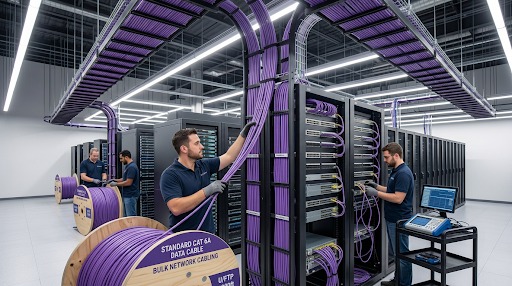
Investing in Cat6a cable allows enterprises to create a structured network that supports current operations while remaining prepared for future growth.
Why Scalability Matters
A scalable network is designed to expand without major changes to its core infrastructure. As organizations open new offices, add workstations, or introduce bandwidth intensive applications, the existing cabling should continue to support these additions with minimal disruption.
Enterprise environments also experience changing technology cycles. Video conferencing, cloud computing, virtualization, and smart building systems all increase network traffic. A structured cabling system that is planned for growth helps businesses reduce future installation costs and maintain consistent network performance.
Instead of viewing cabling as a short term purchase, experienced network planners treat it as a long term investment that supports multiple generations of networking equipment.
Cat6A Meets Modern Enterprise Needs
Cat6a bulk cable has become a preferred option for many enterprise installations because it provides greater bandwidth and improved performance for demanding network environments. Compared with earlier cable categories, it offers better protection against crosstalk and supports 10 Gigabit Ethernet over the full standard channel distance.
These capabilities make it suitable for office campuses, educational institutions, healthcare facilities, and large commercial buildings where dependable connectivity is essential. As more organizations deploy Wi-Fi 6 and Wi-Fi 6E access points, IP surveillance systems, and high performance servers, cabling that supports higher data rates becomes increasingly valuable.
Selecting the right cable today can help reduce the need for disruptive recabling as network requirements continue to evolve.
Plan the Infrastructure Carefully
Successful enterprise networks begin with thoughtful planning rather than simply purchasing hardware. Contractors and IT teams should evaluate both current operations and expected future growth before installation begins.
A well planned project should consider:
- The number of network outlets required today and in the future.
- Equipment room and network closet locations.
- Cable pathways that simplify maintenance.
- Patch panel organization and cable labeling.
- Support for Power over Ethernet devices across the facility.
Taking time to plan these details improves installation efficiency and creates a structured network that is easier to manage throughout its lifecycle.
Core Elements of a Scalable Design
Every enterprise network includes several components that work together to deliver reliable connectivity. Understanding their relationship helps organizations make informed infrastructure decisions.
Structured Cabling
A structured cabling system creates an organized foundation that simplifies expansion, maintenance, and troubleshooting as the business grows.
Network Distribution
Properly planned distribution areas reduce cable congestion and allow switches, patch panels, and horizontal cabling to operate efficiently.
Cable Management
Organized routing, clear labeling, and well designed pathways make future upgrades faster while reducing the chance of accidental service interruptions.
Room for Expansion
Leaving additional pathway space and spare cable capacity allows new departments, equipment, or technologies to be added without major reconstruction.
Prepare for Future Technologies
Enterprise networks continue to evolve as businesses adopt faster wireless standards, cloud platforms, artificial intelligence applications, and connected devices. While active equipment can be upgraded over time, the cabling infrastructure is expected to remain in service for many years. Choosing a solution that supports higher performance today helps reduce the need for disruptive upgrades later.
Experienced network designers also recommend following ANSI/TIA structured cabling practices during installation. Maintaining proper bend radius, separating data cables from electrical wiring, and testing every cable after termination all contribute to long term reliability. These practical steps help preserve signal quality and reduce maintenance costs throughout the life of the network.
Build a Dependable Supply Strategy
Large enterprise projects often require thousands of feet of network cable delivered on schedule. Delays in material availability can slow construction and increase labor costs. For this reason, many contractors and procurement teams establish relationships with trusted suppliers of wholesale Ethernet cables to maintain consistent product availability across multiple phases of a project.
Beyond pricing, organizations should also evaluate product quality, certification, conductor material, and manufacturer support. Selecting dependable materials from the start helps create a network that performs consistently while remaining easier to maintain and expand.
Summary
Building a scalable enterprise network requires more than installing faster switches or expanding internet bandwidth. A dependable structured cabling system forms the foundation that supports every connected device, application, and business operation.
Cat6A bulk cable provides the performance, bandwidth, and flexibility many organizations need as their networks continue to grow. When combined with careful planning, quality installation practices, and a long term infrastructure strategy, it helps businesses create reliable networks that are prepared for future technologies and changing operational demands.