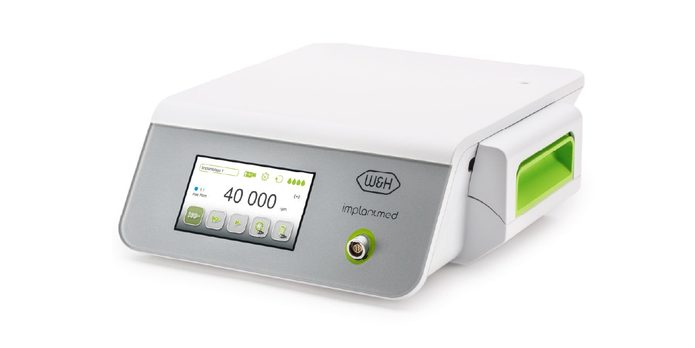

Ask any implantologist who has placed hundreds of fixtures over a career, and they will tell you the drill used to be the loudest, least predictable variable in the operatory. Torque wandered. Speed drifted. Feedback from the handpiece was mostly guesswork, and the surgeon adapted through experience rather than precision instrumentation. That reality has changed. Dedicated implant motors have replaced repurposed general-purpose drills in serious surgical practices, and the difference is not incremental. It is a structural upgrade in how force, speed, and feedback reach the osteotomy. This article compares the two approaches directly, focusing on what the surgeon feels at the handpiece, what the patient experiences during healing, and what the practice sees on the balance sheet. The contrast is sharper than most clinicians appreciate before they make the switch.
The Limits of Traditional Drilling Systems
General-purpose surgical drills were designed for a broader mandate than implant placement. They deliver a range of speeds, accept a variety of contra-angles, and handle everything from bone recontouring to endodontic access. That versatility is also their weakness. Torque control is often coarse, calibrated in broad bands rather than precise increments, and feedback to the operator is limited to what the ear and hand can interpret. In dense mandibular cortical bone, the difference between a stalled bur and a stripped osteotomy can be a matter of a few Newton-centimeters, and traditional units frequently lack the resolution to catch it.
Speed stability under load presents a similar problem. When the bur meets resistance, RPM sags, and unless the motor compensates instantly, the cutting behavior changes mid-osteotomy. Surgeons develop workarounds through experience, but workarounds are exactly the compensations that guided implant workflows are trying to eliminate. The specification of a treatment plan that presumes an accurate 800 RPM at 35 Ncm loses meaning if the tool cannot deliver those numbers reliably.
What a Dedicated Implant Motor Delivers Differently
A modern implant motor is engineered around a single objective: predictable delivery of the exact speed and torque prescribed by the drilling protocol, from initial pilot drill to final tap or fixture insertion. The motor senses load in real time and adjusts power to maintain the selected RPM, which means the surgeon feels the tissue rather than the tool struggling against it. Torque limits are set precisely, and the machine reports the actual torque achieved during insertion, giving quantitative primary stability data that a general-purpose drill simply cannot provide.
Programmable Protocols and Repeatability
Most dedicated units store protocols per implant system, so the operator selects the fixture line and steps through the sequence at correct speeds and torques without pausing to reconfigure. This matters more than convenience suggests. Consistent protocol execution across cases produces consistent osteotomy quality, which translates into more consistent osseointegration outcomes. Every step reduces the number of small decisions the surgeon has to make manually, and every reduction lowers the chance of an oversight.
Integrated Torque Verification for Primary Stability
Primary stability at the moment of placement is the strongest predictor of implant survival, and knowing the actual insertion torque is central to assessing it. Dedicated implant motors provide a numeric readout at insertion, letting the surgeon make an informed decision about immediate loading versus delayed loading based on data rather than tactile impression. Traditional drills do not offer this, and the alternative, a separate manual torque wrench, is slower and introduces its own variability.
Concrete Differences the Surgeon Notices Immediately
The shift in daily experience is tangible from the first case. A pilot drill that would previously stall in dense cortical bone advances at commanded speed. A tapping step that once required careful hand pressure completes at exactly the prescribed torque and stops automatically when the target is reached. Reverse rotation, useful for retrieving a stuck instrument or unscrewing a healing abutment, engages instantly from the foot pedal rather than requiring a mode change.
Coolant delivery integrates with the motor rather than depending on a separate pump. Irrigation flow rate scales with the drilling stage, high during aggressive cutting and lower during fine finishing, and the surgeon sets it once in the protocol rather than adjusting mid-procedure. Plovio and other manufacturers focused on the surgical segment build these coordinated systems as a single console, and the integration eliminates the small friction points that accumulate over a day of cases.
Downstream Effects on Patient Outcomes and Practice Economics
Better osteotomies mean better healing. When bone is cut at controlled speed with adequate irrigation and no thermal overshoot, the surface remains biologically active and receptive to fixture integration. Studies tracking implant failure rates consistently correlate temperature excursions during preparation with early failure, and precise motor control is one of the strongest levers a surgeon has over that variable.
For the practice, the economic case builds through fewer complications and better case throughput. Complications from thermal necrosis or over-torqued insertions are expensive to manage, often requiring explantation, grafting, and re-placement months later. Even a small reduction in the failure rate pays back the equipment investment within a manageable timeframe. Beyond failures, faster and more confident procedures mean more cases fit into a surgical day without compromising quality, which improves both revenue and the surgeon’s own workload sustainability.
Deciding When and How to Make the Transition
Clinics still relying on general-purpose drills usually delay the transition for two reasons: the perceived cost and the disruption of learning a new console. Both concerns deserve honest examination. Cost is real, but the calculation should include the price of complications avoided, the value of guided workflow compatibility, and the resale or trade-in value of existing equipment. Disruption is genuine but short. Most operators become fluent with a new motor within a week of regular use, particularly when the manufacturer provides on-site training and pre-loaded protocol libraries.
For clinicians uncertain about the timing, a practical intermediate step is running a small pilot period with a rented or demo unit during a series of routine cases. Comparing torque readings, procedure times, and post-operative healing between the two systems on similar cases removes the abstraction from the decision and turns it into a data-supported choice.
The Case for Purpose-Built Surgical Motors
Traditional drills served a generation of implantologists well, but they were never designed for the precision demands of modern implant dentistry. Dedicated implant motors deliver measurable improvements in torque accuracy, speed stability, irrigation control, and workflow integration, and those improvements compound into better patient outcomes and stronger practice economics. The question is no longer whether the technology justifies itself but when the timing is right for a given clinic to commit. Practitioners who make the change consistently report that they underestimated the difference until they experienced it, and few return to the old workflow willingly. Purpose-built tools produce purpose-worthy results, and in implant surgery that difference is worth investing in.