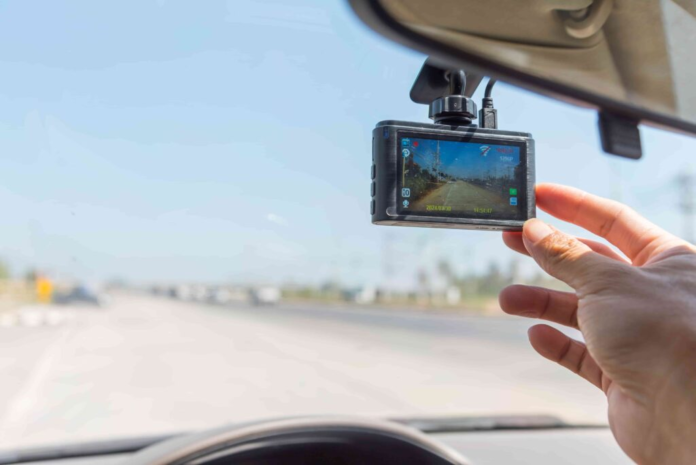

Most drivers who install dashcams are thinking about one scenario: the other driver does something wrong, the camera catches it, and the footage proves their case. That is a reasonable expectation, and it plays out regularly in accident claims across the country. What those drivers are not thinking about — and what defense counsel will be thinking about immediately — is that the same footage can be requested, subpoenaed, and used against them. Anyone navigating car crash attorneys in Colorado or anywhere else should understand this before they assume their dashcam is simply an asset.
The camera records everything. That is the point of having one. It is also the source of the problem when what it recorded is more complicated than a clear-cut liability scenario.
What Gets Preserved Automatically — and What Does Not
The dashcam market has fragmented into devices with very different recording and preservation behaviors, and understanding what your specific camera does is not optional if you are involved in a crash.
Most consumer dashcams record on a continuous loop, overwriting the oldest footage when the storage card fills. Depending on the card size and video resolution, this loop can complete in as little as two to four hours. A crash that happens in the afternoon may have no recoverable footage from the morning if no one physically secured the device before the loop completed. This is the most common preservation failure in dashcam evidence — not intentional deletion, but simple loop overwriting while the driver is dealing with everything else that happens after a collision.
Modern vehicles with integrated ADAS — advanced driver assistance systems — add a different category of automatic recording. Tesla’s dashcam records continuously from multiple exterior cameras when a USB storage device is installed and configured correctly. The Event Data Recorder logs speed, brake application, steering input, and driver interaction with autopilot features in the seconds before and during impact. Sentry Mode records activity around a parked vehicle. Collectively, these systems can produce a detailed, multi-angle reconstruction of an accident that is far more comprehensive than a single forward-facing aftermarket camera.
Other manufacturers have similar capabilities at various levels. Lane departure systems, forward collision warning sensors, and automatic emergency braking all generate data logs. Many drivers do not know these logs exist, let alone that they can be requested through discovery.
What Defense Counsel Will Request
When litigation follows a serious accident, the discovery process gives both sides broad access to relevant evidence. Defense counsel representing the other driver — or more precisely, the other driver’s insurance company — will issue discovery requests that specifically address electronic and video evidence.
These requests typically cover dashcam footage from all cameras on the vehicle, EDR data downloaded from the vehicle’s black box, ADAS system logs and sensor data, GPS data from the dashcam or vehicle navigation system, and any cloud-synced footage from vehicles that transmit recordings remotely. For Tesla vehicles, this can extend to a subpoena to the manufacturer for vehicle telemetry data that the driver may not even have direct access to.
The scope is broader than most drivers expect. It is not limited to footage of the accident itself. Defense counsel will request footage from the period leading up to the crash — looking for evidence of speed, following distance, lane position, phone use, or any other behavior that could support an argument that the driver claiming injury contributed to the accident. In states with comparative fault rules, including Colorado, this matters enormously. Reducing the plaintiff’s recovery by establishing partial fault is a standard defense strategy, and dashcam footage that shows the plaintiff traveling above the speed limit for the twenty minutes before the crash is exactly the kind of evidence that supports it.
The I-70 Corridor Problem
Colorado’s I-70 mountain corridor creates a specific context worth understanding. Dashcam adoption among Colorado drivers is higher than the national average, partly because mountain driving conditions — variable weather, steep grades, difficult passes — make video documentation feel like basic risk management. Drivers on that corridor are dealing with conditions that frequently produce disputed liability scenarios: ice patches, sudden weather changes, reduced visibility, trucks losing control on grades.
When liability is genuinely contested on a mountain highway, both sides have an interest in every piece of electronic evidence available. The dashcam footage that a driver installed to protect themselves becomes a document that both sides want access to. Defense counsel in serious mountain corridor accidents will typically request dashcam footage, EDR data, and any available GPS records as a standard first step.
The contested nature of conditions on I-70 also means that footage gets interpreted through argument, not just observation. Wide-angle dashcam lenses make objects appear further away than they were. Speed is difficult to accurately read from dashcam footage without reference points. These technical characteristics give both sides room to argue about what the footage actually shows — which is why expert analysis is often necessary to translate raw footage into credible evidence.
The Spoliation Risk in Deleting Your Own Recording
Spoliation is the legal term for destroying, altering, or failing to preserve evidence that is relevant to anticipated litigation. Courts take it seriously, and the consequences of a finding of spoliation can be severe — ranging from adverse inference instructions that tell a jury to assume the destroyed evidence would have been unfavorable, to monetary sanctions, to in extreme cases the dismissal of claims or defenses.
The risk for dashcam owners is straightforward: once an accident occurs and litigation is reasonably anticipated, you have a duty to preserve all evidence relevant to that litigation. Allowing a dashcam to continue its normal loop recording — which overwrites existing footage — after you know that footage is relevant to a claim you intend to pursue or defend, can constitute spoliation.
Intentional deletion is the obvious case, but it is not the only one. A driver who takes their dashcam out of the car and stores it in a drawer while the loop continues, not thinking about the footage, may be found to have failed their preservation duty just as surely as one who deliberately deleted the file. Courts are increasingly aware of how dashcam storage works, and “I didn’t realize it was recording over the footage” is not a reliable defense.
The practical step is immediate: after any accident that might result in a claim, physically remove the SD card from the dashcam, write-protect it if possible, and do not allow any device to record over it. Make a copy before handling the original further. If the dashcam records to the cloud, document that you have not deleted or altered any cloud-stored footage and preserve access to it.
When Your Footage Shows Something You Were Not Expecting
The scenario that catches drivers off guard is discovering that the footage they assumed would help them actually shows something unflattering — a following distance that was shorter than it should have been, a speed that was above the limit, a moment of distraction.
This discovery puts a driver in an uncomfortable position. The footage exists. It is potentially subject to discovery. Deleting it after realizing what it contains is the kind of intentional spoliation that courts treat most harshly. The less damaging path — and the legally correct one — is to preserve the footage and work with an attorney to understand its full context before making any decisions about how it factors into the claim.
A qualified attorney will assess what the footage actually shows when analyzed properly, whether the technical characteristics of the recording affect interpretation, how the footage interacts with other evidence available from both vehicles, and whether the overall evidentiary picture still supports the claim despite the complications.
Footage that appears damaging in isolation sometimes becomes less significant when placed alongside EDR data, the other vehicle’s telematics, weather records, or road condition documentation. Footage that appears clearly favorable can still be challenged on technical grounds if the chain of custody was not handled correctly.
The Asymmetry Most Drivers Do Not Consider
Installing a dashcam creates an evidence obligation that most drivers have not thought through. The footage belongs to you, but once litigation is anticipated, your control over it is substantially limited. You cannot selectively preserve the clips that help you and allow the ones that do not to loop off the card. You cannot delete footage and claim the device malfunctioned. You cannot provide edited footage to your attorney without creating serious chain-of-custody problems.
The asymmetry is real: the footage you installed to protect yourself is now an asset you are obligated to preserve, produce if requested, and defend as authentic. That is a different relationship with your dashcam than most drivers have when they mount the device and forget about it.
The best position after any serious accident is to preserve everything, assume it will be requested, and contact an attorney before making any decisions about what to do with it. The Denver car accident lawyers at Zaner Law handle cases involving dashcam and electronic evidence throughout Colorado, including disputes over ADAS data, EDR downloads, and footage preservation in mountain corridor accidents on I-70 and beyond.