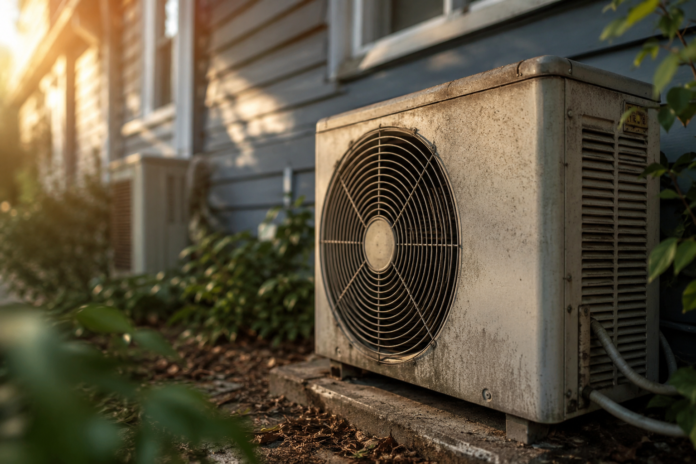

Most homeowners think about their air conditioner twice a year: when it breaks and when they get the summer electric bill. The problem is that by the time the bill arrives, the damage is already done. An aging AC unit doesn’t fail dramatically. It just quietly gets less efficient, month after month, and your wallet covers the difference without you ever connecting the two.
This isn’t about replacing something that technically still works. It’s about understanding what “technically still works” is actually costing you, because that number is probably higher than you’d guess.
The Energy Bill Line Nobody Reads Carefully
Heating and cooling are genuinely massive energy draws. According to the U.S. Energy Information Administration’s 2020 Residential Energy Consumption Survey, more than half of a household’s annual energy consumption, about 52%, goes to just two things: space heating and air conditioning. That’s more than lighting, water heating, refrigerators, and every other appliance combined.
So when your AC starts losing efficiency, it’s eating into the single largest slice of your home’s energy budget. Even a modest drop in performance, say 15% less efficient than when the unit was new, hits harder than most people expect because the starting number is so large.
The uncomfortable part? Most homeowners never notice until the unit either fails completely or someone replaces it and they see the difference in the first month’s bill.
What Age Actually Does to an AC Unit
Efficiency loss isn’t linear in aging air conditioners. It tends to accelerate. Compressor wear, refrigerant degradation, coil buildup, and micro-failures in the electrical components all compound over time. A unit running at 85% of its original efficiency in year eight might be at 68% by year thirteen, not 77% as a straight-line graph would suggest.
Here’s a rough framework for thinking about it. Call it the Age-Cost Reckoning:
| Unit Age | Estimated Efficiency vs. Original | Likely Status | Recommended Action |
| 0 to 7 years | 90 to 100% | Peak performance if maintained | Annual tune-up only |
| 8 to 12 years | 75 to 89% | Gradual wear beginning | Tune-up plus component inspection |
| 13 to 16 years | 55 to 74% | Noticeable cost creep | Repair vs. replace assessment |
| 17 years or older | Below 55% | End of useful life | Budget for replacement |
These ranges aren’t arbitrary. They reflect what HVAC technicians observe consistently across service calls: units older than 13 years that have skipped regular maintenance tend to run significantly longer cycles to reach the set temperature, which means the compressor runs more and you pay more.
A concrete example: picture a home in a humid Southern climate running a 14-year-old 3-ton unit for six hours a day from May through September. That unit, originally rated at 14 SEER, may now be performing closer to a 10 or 11 SEER equivalent due to accumulated wear. The difference in operating cost between a 14 SEER and a 10 SEER unit over a full cooling season can run to several hundred dollars, and that’s without a single breakdown.
The Three Signals Most Homeowners Dismiss
There’s a pattern that comes up repeatedly when technicians talk to homeowners after a system failure. Almost every person says, in one form or another, “It was running fine.” What they mean is it was running. Not fine.
“The average lifespan of a residential air conditioning system is somewhere between 10 to 15 years,” said Clint Newsome, owner of Albany Air Conditioning and Heating Co., in an interview with Carrier. “Homeowners can extend that with consistent maintenance, but eventually the cost curve works against them.”
The signals that precede a decline in performance are easy to overlook individually. Grouped together, they’re a clear pattern:
- Longer cycles to reach the set temperature. If your unit used to cool the house in 20 minutes and now it takes 35, that’s a performance drop, not just a hot day.
- More frequent filter clogs. A struggling system pulls harder, which means debris accumulates faster on the filter.
- Inconsistent temperatures between rooms. When a unit can’t maintain pressure through the ductwork efficiently, the rooms farthest from the air handler feel it first.
Each of these, on its own, might look minor. Together, they’re telling you the system is working harder than it should and you’re paying for every extra minute of that effort.
If you’re already seeing two or three of these and your unit is past the decade mark, a service call is the right move before the problem escalates. Homeowners in the Lee County area looking at a unit showing these signs can start with a professional diagnostic from a local provider. A call to opelika ac repair specialists like Caswell Air can catch declining components before they trigger a full breakdown, which tends to happen on the hottest day of the year.
What You Can Do Right Now
Not every solution involves writing a large check. Some of the most effective steps are cheap or free, and a few of them compound over time.
The U.S. Department of Energy notes on its Energy Saver resource page that homeowners who adjust their thermostat 7 to 10 degrees Fahrenheit for 8 hours a day can save up to 10% per year on their heating and cooling costs. A programmable or smart thermostat automates that shift without requiring you to remember to do it every day.
Beyond the thermostat, here’s a checklist worth running through once a season:
- Replace or clean your air filter. Every month during peak cooling months, not every three.
- Check the outdoor condenser unit for debris, overgrown plants, or obstructed airflow. The unit needs at least two feet of clearance on all sides.
- Look at your supply vents. Closed or blocked vents in unused rooms don’t save energy; they create pressure imbalances that stress the system.
- Schedule a professional tune-up before peak cooling season, not during it when technicians are booked solid.
- Ask your technician about the age and SEER rating of your current unit. If they can’t tell you, that’s a problem on its own.
The tune-up point deserves extra weight. Most AC failures that happen in July could have been caught in April. Preventive maintenance is genuinely cheaper than emergency repair, and far cheaper than a rushed replacement decision made when you have no air conditioning and temperatures are above 95 degrees.
Knowing When to Stop Repairing and Start Planning
There’s a decision heuristic that HVAC professionals use consistently: if a repair costs more than half the price of a comparable new unit, and the existing unit is more than ten years old, replacement is almost always the better financial choice. The repair buys you time on a depreciating system. The replacement resets the clock.
That doesn’t mean panic-buying the moment something goes wrong. It means having a realistic picture of where your unit sits on its lifespan curve so that when the conversation about replacement comes up, you’re ready to make it on your terms rather than under pressure.
Your AC is the hardest-working appliance in your home. Treating it that way, with consistent maintenance, early diagnostics, and honest assessment of its age and performance, is what separates the homeowners who pay steadily for comfort from the ones who pay a spike every few years for a crisis.