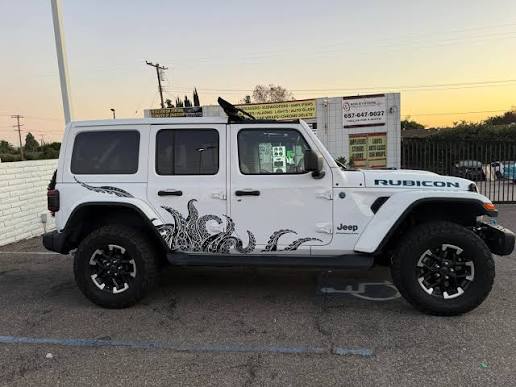

Upgrading to larger jeep tires is one of the most popular ways to improve a Wrangler, Gladiator, or other Jeep build. Bigger tires can add ground clearance, improve off-road traction, create a stronger stance, and help the vehicle handle rocks, ruts, mud, sand, and uneven trails with more confidence. But larger tires also affect much more than appearance.
Before moving up in tire size, Jeep owners need to think about clearance, wheel fitment, suspension height, gearing, braking, steering feel, power delivery, and daily drivability. A tire upgrade that looks great in photos may not perform well if it rubs, strains the drivetrain, or makes the Jeep feel sluggish on the road.
The best tire setup is the one that matches how the Jeep is actually used. A daily driver that sees light trails may not need the same tire size as a rock-crawling build or overland rig loaded with gear. Planning the full setup before buying tires can help prevent expensive changes later and create a Jeep that feels balanced on pavement and capable off-road.
Clearance Requirements for 33–37 Inch Setups
Clearance is the first major consideration when upgrading tire size. Larger tires need room to turn, flex, and move through the suspension cycle without rubbing fenders, bumpers, control arms, sway bar links, inner liners, or pinch seams. A tire may clear while parked but still rub during steering, braking, trail articulation, or suspension compression.
For many Jeep owners, 33in tires are a practical first upgrade. They can improve ground clearance and off-road traction without requiring extreme modifications. Depending on the Jeep model, trim, wheel offset, and tire width, 33s may fit with a leveling kit, mild lift, aftermarket fenders, or minimal trimming. This size is popular for daily drivers because it offers a noticeable upgrade while keeping road manners comfortable.
Moving into 34s and 35s usually requires more planning. 34 inch tires can give a Jeep a stronger trail-ready stance and better obstacle clearance, but they may need a suspension lift, proper bump stop spacing, and wheels with the right offset and backspacing. Tire width matters too. A narrow 34 may fit more easily than a wider tire with the same diameter.
A 35-inch setup is one of the most common choices for lifted Wranglers and Gladiators. It improves approach angle, breakover clearance, and tire contact patch while still being realistic for many daily-driven Jeeps. However, 35s often require a quality lift, proper alignment, stronger steering components, and careful wheel fitment to avoid rubbing.
For 37-inch tires, supporting upgrades become even more important. This size can deliver serious trail capability, but it adds weight and stress to the drivetrain, axles, steering, brakes, and suspension. Jeep owners running 37s should consider lift height, fender clearance, axle strength, gearing, wheel bearings, spare tire carrier strength, and braking performance.
Wheel size and offset play a major role in every setup. A 17-inch wheel is popular because it leaves plenty of sidewall for airing down and off-road flex. Proper backspacing helps clear suspension components while keeping the tire positioned correctly under the Jeep. Too much poke can increase stress and throw debris, while too much inward fitment can cause rubbing.
Gear Ratio and Powertrain Adjustments
Larger tires change the effective gear ratio of a Jeep. As tire diameter increases, the engine has to work harder to turn the wheels. This can make the Jeep feel slower off the line, reduce throttle response, affect transmission shift points, and lower fuel economy. The larger and heavier the tire, the more noticeable these changes become.
With 33-inch tires, many Jeeps can remain close to stock drivability, especially if the factory gearing is already favorable. However, the impact depends on engine, transmission, axle ratio, tire weight, and driving conditions. A Jeep with taller factory gearing may feel more sluggish after the upgrade than one with shorter gears.
With 34-inch and 35-inch tires, re-gearing becomes more important to consider. Proper axle gearing helps restore power delivery, improve low-speed control, and reduce strain on the transmission. Off-road, the right gear ratio can make crawling smoother and reduce the need for excessive throttle. On the highway, it can help the Jeep hold gears more confidently, especially when climbing hills or carrying extra weight.
For 37-inch tires, re-gearing is often strongly recommended. Large tires can significantly change drivability, especially when paired with heavy wheels, bumpers, armor, winches, rooftop tents, or camping gear. Powertrain adjustments help keep the Jeep from feeling underpowered and can reduce long-term stress on components.
Braking should also be part of the conversation. Larger tires add rotational mass, which can increase stopping distances and make the brakes work harder. Some builds may benefit from upgraded brake pads, rotors, or complete brake kits, especially if the Jeep is heavily loaded or used in steep terrain.
Steering and suspension components also experience more stress with larger tires. Ball joints, tie rods, drag links, track bars, control arms, and shocks may need attention depending on tire size and use. A Jeep on 35s or 37s that sees regular trail use should be checked for steering stability, alignment, and component strength.
Do not overlook the spare tire. A larger spare may require an upgraded tire carrier, relocation bracket, or reinforced tailgate setup. The added weight of a larger wheel and tire can stress factory mounts over time, especially on rough roads.
Upgrading to larger Jeep tires can transform capability, stance, and confidence, but the best results come from planning the full build. Clearance, fitment, gearing, braking, steering, and suspension all work together. When the tire size matches the Jeep’s setup and purpose, the vehicle feels better on the trail and remains enjoyable on the road.