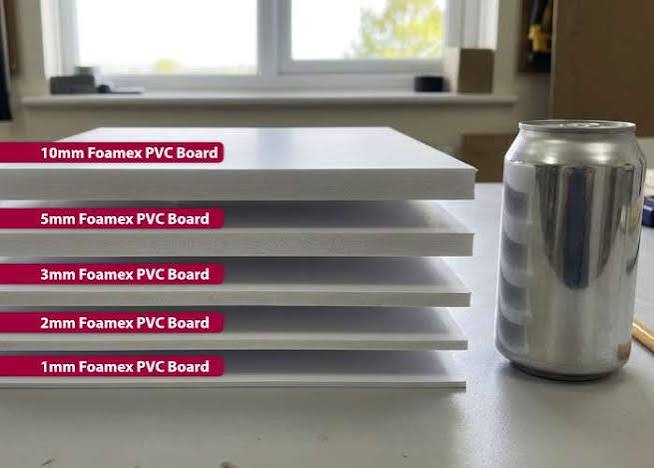

Choosing a printed display board involves more than selecting a size and uploading artwork. The thickness of the material can influence how the finished sign handles, how it is mounted and whether it remains suitable for its intended environment. A small indoor information panel has different requirements from a large outdoor sign exposed to changing weather. Understanding these differences helps businesses select a board that meets practical needs without adding unnecessary weight or expense.
1. Understand Why Board Thickness Matters
Foamex is a rigid PVC foam material with a smooth surface suitable for printed graphics, photographs, text and branding. Although different thicknesses may look similar after printing, their physical performance varies. 10mm Foamex Board is generally considered when a project requires greater rigidity and a more substantial panel. Its additional thickness makes it relevant for larger signage, construction-site displays and installations where a firm board structure is important.
However, thickness should not be treated as the only measure of durability. The dimensions of the finished panel, the number of fixing points and the conditions in which it will be displayed all influence performance.
2. Consider Where the Display Will Be Installed
The intended location should influence the material specification from the beginning. Indoor signs are generally protected from direct rainfall and strong winds, whereas outdoor displays experience changing temperatures, moisture and other environmental conditions.
A 5mm foamex board can provide a useful middle ground for many retail signs, exhibition panels and business displays. It offers more rigidity than a thinner alternative without moving to the additional thickness of a heavier panel.
For outdoor installations, the choice depends on exposure and mounting arrangements. A sign positioned beneath a covered entrance has different requirements from one fitted to an exposed boundary or construction site. The fixing method must also account for wind pressure and the weight of the finished panel.
3. When Is a Thicker Board Worth Considering?
There are situations where additional rigidity becomes more important than keeping the material as light as possible.
For example, a large promotional panel may need to maintain a flat appearance across a wider surface. If the material is too flexible for its dimensions, unsupported areas may bow or appear uneven. A thicker specification can help reduce this concern, provided the panel is properly supported.
Construction environments also have particular requirements. Site information boards, directional signage and external branding panels may remain installed for extended periods. Their material and fixing arrangements need to suit the location, expected exposure and relevant safety requirements.
A thicker board is not automatically suitable for every large installation. Very large panels may still require a frame, backing structure or additional fixing points.
4. Check the Available Finishing Options
The finish affects the appearance and everyday usability of a printed sign. Different environments may call for different surface treatments.
Common options include:
- Matt lamination: Creates a less reflective surface, useful in brightly lit interiors.
- Gloss lamination: Produces a brighter finish that can give colours and images more visual impact.
- Crystal lamination: Provides another finishing option where the desired appearance differs from standard matt or gloss.
- Dry-wipe lamination: Allows suitable printed boards to be written on and wiped clean.
The choice should relate to the display’s purpose. A promotional graphic intended to remain unchanged may need a different finish from an information board where details are updated regularly.
5. Think About How the Board Will Be Mounted
A printed panel needs a suitable installation method. Depending on the surface and display dimensions, options may include screw fixings, drilled holes, standoff fittings or appropriate mounting adhesives.
For larger signs, mechanical fixings are often worth considering because they can provide a more secure connection when correctly selected for the wall or supporting structure.
Before production, the position of drilled holes should be confirmed. Fixing points placed too close to an edge can create unnecessary stress around the holes. The wall material, panel weight and exposure to wind should also be considered.
10mm Foamex Board can be specified for installations requiring additional material rigidity, but it does not replace the need for suitable supports and fixings.
6. Match the Material to the Display Budget
Choosing the thickest available material for every project can increase costs without necessarily improving the finished result. The more practical approach is to match the specification to the display’s actual requirements.
A smaller indoor poster may not need the same thickness as an exterior business sign. Similarly, a temporary promotional panel may have different priorities from a permanent information display.
A 5mm foamex board may be sufficient for many medium-sized applications where a balance between rigidity and manageable weight is required. The final decision should consider the panel dimensions, installation method, expected lifespan and finishing requirements.
Businesses ordering multiple signs can also consider whether every panel needs identical specifications. Different sections of a display may have different structural demands.
7. Prepare Artwork With the Final Dimensions in Mind
Material selection is only one part of producing a professional sign. Artwork preparation also affects the finished result.
Before sending files for printing, check the following:
- The document dimensions match the required finished panel size.
- Images have sufficient resolution for the intended print dimensions.
- Important text and logos are positioned away from cutting edges.
- Bleed is included where required.
- The artwork is supplied in the requested print-ready format.
- Single-sided or double-sided printing has been selected correctly.
Custom cutting, drilled holes and lamination should also be considered before the artwork is finalised. Planning these details early helps avoid adjustments after production has started.
Conclusion
Selecting a suitable display board involves balancing rigidity, weight, dimensions, finishing and installation requirements. A thicker material can be valuable for demanding applications, but its suitability depends on the complete display arrangement rather than thickness alone. Businesses planning printed signage can compare specifications and finishing choices through Foamex Printing Company to identify an option that matches their project requirements.
Author Bio: Nimesh Kerai
Nimesh Kerai is the Printing Expert at Foamex Printing Company, London. He has been in the printing industry for quite a few years, which reflects in the skill with which he executes each project. He has played a significant role in the company’s reputation as one of the highest-quality foamex printers in the vicinity. He often shares his far-reaching industry knowledge with curious readers through engaging blogs.