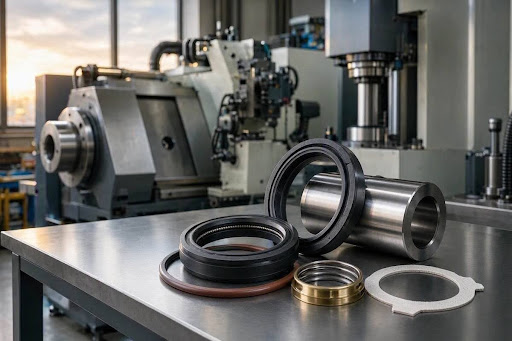

Oil seals are essential mechanical components that prevent lubricant leakage and protect machinery from dust, dirt, and moisture. In Malaysia, they are widely used in automotive systems, industrial machinery, manufacturing equipment, and agricultural applications. These components help reduce friction-related damage, maintain smooth operations, and extend equipment service life.
Understanding the main components of Oil Seals Malaysia helps businesses select suitable products for their machinery. Each component performs a specific function, from retaining lubricants to preventing contamination. Knowing how these parts work together enables Malaysian industries to improve equipment reliability and reduce maintenance costs.
What Are the Key Components?
Oil Seals Malaysia consist of several components designed to maintain effective sealing between moving and stationary surfaces. Their construction depends on operating temperature, shaft speed, lubricant type, and environmental conditions.
The following sections explain seven important oil seal components and their functions. Understanding these parts helps equipment owners and maintenance professionals choose suitable seals for different industrial and automotive applications.
1. Sealing Lip
The sealing lip is a critical component that makes contact with the rotating shaft. Its primary function is to retain oil or grease inside machinery while preventing external contaminants from entering. Proper contact helps minimise leakage without creating excessive friction.
Sealing lips are commonly made from elastomers such as nitrile rubber (NBR) and fluoroelastomer (FKM). Material selection depends on operating temperature, lubricant compatibility, and shaft speed. In Malaysia’s hot and humid climate, choosing a suitable sealing lip helps maintain reliable performance and reduces premature wear.
2. Metal Case
The metal case provides structural support and helps the oil seal maintain its shape during installation and operation. It is commonly manufactured from steel and supports the elastomer body within the housing.
Metal cases improve stability in applications involving vibration and mechanical stress. Depending on the design, the case may be partially exposed or completely covered with rubber. Selecting the appropriate construction ensures a secure fit and helps prevent seal deformation during machinery operation.
3. Garter Spring
The garter spring is a circular spring fitted around the sealing lip in many conventional oil seals. It maintains radial pressure against the shaft, helping the lip retain effective contact as normal wear occurs.
Garter springs are commonly manufactured from spring steel or other suitable materials. Their main benefits include:
- Maintaining consistent sealing pressure.
- Supporting lubricant retention.
- Compensating for minor sealing lip wear.
- Improving sealing reliability during operation.
A damaged or displaced spring can reduce sealing effectiveness. Regular inspection helps identify potential problems before they cause significant lubricant leakage.
4. Outer Surface
The outer surface of Oil Seals Malaysia fits into the machinery housing and helps hold the seal securely in position. It also prevents leakage between the seal’s exterior and the housing bore.
Oil seals may have rubber-covered or metal outer surfaces. Rubber-covered designs can accommodate minor housing variations, while metal surfaces provide dimensional stability in suitable applications. Correct sizing and careful installation are essential to prevent movement, damage, and leakage around the seal.
5. Secondary Lip
The secondary lip provides additional protection in oil seals designed with this feature. It commonly acts as a dust lip, preventing dirt, moisture, and other contaminants from reaching the primary sealing area. Similar to Gasket Malaysia solutions, it contributes to equipment protection, although its specific function depends on the seal design.
Secondary lips are particularly useful in agricultural machinery, vehicles, and industrial equipment operating in dusty environments. However, additional contact with the shaft may increase friction. Choosing the correct design helps balance contamination protection and operational efficiency.
6. Elastomer Body
The elastomer body in Oil Seals Malaysia forms the flexible structure of the seal. It supports the sealing lip and helps the seal adapt to its housing while maintaining the required shape during operation.
Common elastomer materials include:
- Nitrile rubber (NBR): Suitable for many general oil-sealing applications.
- Fluoroelastomer (FKM): Often selected for higher temperatures and demanding fluid compatibility requirements.
- Silicone rubber: Used in applications requiring specific flexibility and temperature characteristics.
The right material depends on the lubricant, operating temperature, and working environment. Selecting a suitable elastomer helps improve durability and reduce replacement frequency.
7. Reinforcement Elements
Reinforcement elements improve the structural strength and stability of oil seals. These may include metal inserts, supporting rings, or other integrated features that help the seal resist deformation.
Such elements are valuable in machinery exposed to vibration, mechanical stress, and demanding operating conditions. Their design must provide sufficient strength without compromising the flexibility required for effective sealing. Some oil seals use an integrated metal case to provide the necessary reinforcement.
Why Rely on Sunseal Enterprise?
Sunseal Enterprise Sdn. Bhd. provides quality sealing products and industrial parts for various applications in Malaysia. The company focuses on helping customers find suitable components for their machinery and equipment.
Quality products are essential for preventing leakage, reducing wear, and maintaining reliable machinery performance. The supplier aims to meet customer requirements with dependable sealing solutions.
By choosing suitable products and replacement parts, businesses can reduce maintenance issues and improve equipment durability. Sunseal Enterprise supports industrial and automotive needs with a focus on product quality and reliability.
Conclusion
Understanding Oil Seals Malaysia components is essential for preventing lubricant leakage and protecting machinery from contamination across Malaysia’s automotive and industrial sectors. The main components include the sealing lip, metal case, garter spring, outer surface, secondary lip, elastomer body, and reinforcement elements. Each contributes to effective sealing and dependable equipment performance.
When selecting oil seals, businesses should consider material compatibility, shaft dimensions, operating temperature, and environmental conditions. Proper installation and regular maintenance also help extend service life. Understanding these components allows Malaysian industries to choose suitable oil seals, reduce equipment downtime, and maintain efficient machinery operations.