
The Engineering Shift in Waterfront Property Design
Traditional marine construction historically relied on timber pilings or concrete footings to secure private and commercial access points. However, coastal developers and estate owners increasingly face structural challenges stemming from unpredicted water level variations and accelerated material decay.
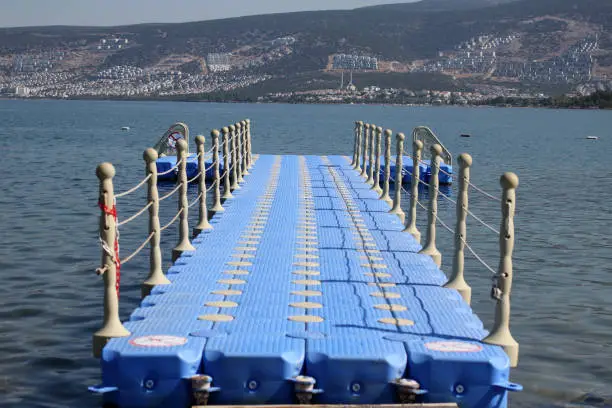
Fixed piers remain static, creating severe operational limitations during environmental shifts. In contrast, modular High-Density Polyethylene (HDPE) floating dock systems offer dynamic buoyancy, adapting seamlessly to changing aquatic environments.
Key drivers shifting engineering preferences toward modular HDPE infrastructure include:
- Accelerating weather volatility requires highly adaptable marine structures.
- Rising labor and equipment costs for periodic underwater pile maintenance.
- Strict regional ecological regulations prohibiting toxic chemical leaching into aquatic ecosystems.
Structural Resilience Against Water Level Fluctuations
Fixed timber or concrete structures suffer when subject to significant tidal variations—the periodic rise and fall of coastal or inland water levels caused by gravitational forces. During extreme high tides, stationary decks risk submersion or uplift failure from wave energy impacting the deck underside.
Conversely, during extreme low tides, stationary structures leave berthed vessels stranded or suspended excessively from mooring lines. Modular floating docks maintain constant freeboard height relative to the water surface.
- Floating docks move vertically along guide pilings or rigid mooring slide brackets.
- Watercraft maintain stable alignment with dock fenders regardless of water height.
- Vessel topsides avoid impact damage against sub-surface structural framing during sudden drawdowns.
Core Material Science: HDPE vs. Traditional Wood and Aluminum
When evaluating long-term waterfront infrastructure, material density and tensile strength—the maximum resistance of a material to fracture under stretch—dictate system longevity. Unlike untreated lumber that warps or aluminum alloys prone to saltwater electrolysis (chemical breakdown caused by electrical currents between dissimilar metals), high-grade marine HDPE resists chemical degradation and impact stress. For instance, commercial modular floating dock systems manufactured by specialists like Hisea Dock utilize high-density polyethylene reinforced with 19mm-thick connecting lugs (heavy-duty structural connection points) and curved anti-skid surfaces (engineered textured top patterns preventing slippage), extending operational lifespan by up to 30% over conventional stationary structures while requiring zero chemical preservation treatments.
Material performance under marine exposure varies significantly across structural types:
- Pressure-treated timber: Vulnerable to marine borers, moisture absorption, structural rot, and severe surface splintering.
- Structural aluminum: High initial strength, but susceptible to galvanic corrosion and weld joint fatigue from cyclic wave action.
- Marine-grade HDPE: Non-porous polymer resistant to ultraviolet (UV) degradation, chemical solvents, saltwater corrosion, and severe torsional stress.
The engineered matrix of marine HDPE incorporates UV stabilizers directly into the polymer during extrusion. This prevents brittleness and surface chalking under continuous solar radiation.
Furthermore, the structural elasticity of HDPE allows modular units to absorb localized wave impacts through micro-flexure, rather than transferring strain directly into rigid connection joints.
Lifetime Cost Analysis and Maintenance Needs
Assessing the total cost of ownership requires evaluating long-term operational outlays alongside initial capital procurement. Traditional fixed piers incur substantial recurring maintenance expenses throughout their operational lifecycle.
Wood docks demand surface sealing, pressure washing, board replacement, and underwater pile remediation every three to five years. Aluminum docks require routine weld inspections and sacrificial anode replacements to mitigate marine corrosion.
Maintenance protocol comparison over a 20-year operational lifecycle:
- Traditional Wood Piers: Require 4–6 major refinishing cycles, periodic structural board replacement, and expensive pile restoration.
- Aluminum Piers: Require routine non-destructive testing of weld joints, hardware replacements, and anti-corrosion treatments.
- Modular HDPE Docks: Require zero chemical sealants, routine surface washing with fresh water, and minimal hardware adjustments.
Consequently, while initial capital expenditure for HDPE systems aligns closely with high-end timber or aluminum, operational expenditure over 15 to 20 years drops substantially.
Key Design Considerations for Waterfront Homeowners & Developers
Designing a resilient waterfront facility requires analyzing localized site hydrology and structural access needs. Sheltered lakes, tidal estuaries, and open bays present distinct hydrodynamic challenges.
Modular HDPE pontoons allow custom configuration tailored precisely to specific shoreline geometries. Interlocking units can form I, L, T, or U-shaped layouts without requiring heavy marine machinery during assembly.
Primary engineering design considerations include:
- Hydrodynamic exposure: Assessing local wave period, fetch length, and tidal current velocity.
- Load distribution: Calculating combined dead load (dock weight) and live load (passengers, gear, temporary equipment).
- Safety engineering: Incorporating curved safety corners (rounded structural edge geometries designed to prevent impact injuries) across perimeter edges.
Modular systems also provide future-proofing capabilities. Property owners can reconfigure or expand the footprint if vessel dimensions change or access requirements grow.
Customization for Recreational Watercraft
Modern waterfront estates frequently accommodate varied watercraft, ranging from deep-draft motor yachts to personal watercraft (PWCs) and kayaks. Accommodating diverse craft requires tailored docking configurations.
Drive-on floating docks eliminate the need for complex mechanical boat lifts powered by shore electrical infrastructure. Integrated roller assemblies allow craft to idle directly onto the elevated floating platform.
Key operational benefits of integrated PWC and drive-on modules:
- Immediate dry-docking protection without mechanical winch operation.
- Complete prevention of marine biofouling on craft hulls while berthed.
- Simplified launching mechanics utilizing gravity and natural hull buoyancy.
Environmental Impact and Shoreline Ecology
Installing fixed pile foundations requires heavy pile-driving equipment or underwater excavation. These activities disrupt benthic substrate, release suspended solids, and cause acoustic disturbance to marine life.
Furthermore, coastal environmental regulations increasingly restrict the use of chemically treated timber due to leaching hazards that endanger marine habitats. Modern waterfront design prioritizes chemically inert materials; as detailed in public chemical safety registries for high-density polyethylene (HDPE), the polymer does not release toxic compounds into aquatic ecosystems and maintains absolute stability against salt, hydrocarbons, and ultraviolet radiation.
Ecological advantages of modular HDPE floating systems include:
- Minimal benthic footprint when secured via elastic tethering or slide-pile brackets.
- Complete recyclability at the end of product service life, supporting circular construction practices.
- Non-porous surfaces that prevent absorption of fuel oils, grease, or ambient aquatic contaminants.
Key Takeaways
| Area | Key Takeaway | Impact/Data |
| Lifecycle Cost | Eliminate recurring maintenance and chemical treatments | +30% lifespan; zero 15–20yr sealing costs |
| Tidal Resilience | Deploy floating buoyancy for tidal shifts | Prevents submersion and hull damage |
| Eco-Compliance | Bypass pile-driving and toxic leaching | 100% recyclable; zero toxic release |
| Operations | Integrate drive-on dry-docking modules | Eliminates mechanical lifts and biofouling |
Final Verdict: Selecting the Right System for Your Property
Selecting optimal waterfront infrastructure requires balancing site-specific environmental conditions, long-term operational budgets, and structural adaptability. While traditional fixed piers offer traditional architectural aesthetics, their rigid structures and high maintenance demands create long-term financial liabilities.
Modular HDPE floating docks deliver superior dynamic resilience, zero chemical degradation, lower total lifecycle costs, and minimal ecological disturbance.
Property Owner & Developer Evaluation Checklist:
- Assess localized hydrodynamic conditions (tidal range, wave energy, seabed composition).
- Project 15-to-20-year operational expenditure, factoring in recurring maintenance and material replacement.
- Review environmental permitting restrictions regarding underwater pile driving and treated lumber usage.
- Evaluate required load capacities and specialized docking needs for personal watercraft or recreational boats.