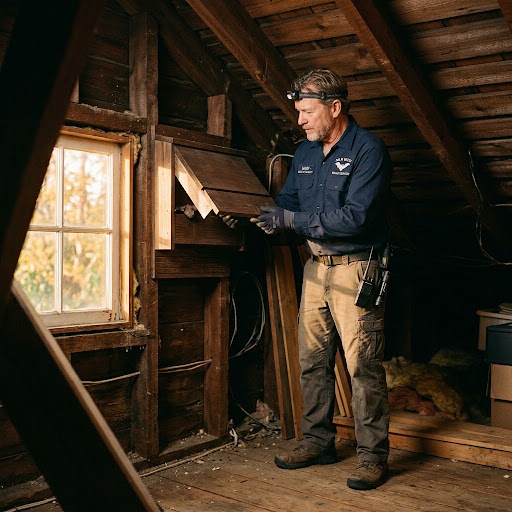

Bats have a way of moving in without ever being invited. One day, everything seems normal. The next, you’re hearing faint scratching in the attic, spotting strange droppings near your vents, or catching a whiff of an odor you can’t quite place. For homeowners across Palm Beach, this scenario plays out more often than most people realize, especially as South Florida’s warm climate and abundant insect population make attics and rooflines prime real estate for these winged tenants.
While bats play an important role in the local ecosystem by controlling mosquito populations, they’re far less welcome once they’ve claimed a corner of your home. Left unaddressed, a small colony can grow quickly, leading to property damage, health concerns, and a level of stress no homeowner wants to deal with.
This post breaks down how bats find their way into homes, why acting quickly matters, and what Palm Beach Wildlife Services does differently to make the process safe, humane, and hassle-free.
How Do Bats Get Into Homes in the First Place?
Bats are remarkably skilled at squeezing into small spaces. A gap as narrow as three-eighths of an inch, roughly the width of a pencil, is enough for a bat to slip through. Common entry points include:
- Loose or damaged roof shingles
- Gaps around chimneys and vents
- Cracks in fascia boards or soffits
- Openings where utility lines enter the home
- Unscreened attic vents
Once inside, bats look for dark, warm, and undisturbed spaces to roost. Attics are ideal because they mimic the caves and hollow trees bats naturally prefer. A single bat finding its way in is rarely the end of the story. Bats are social creatures, and one entry point can quickly turn into a colony of dozens.
Why Timing Matters More Than Most Homeowners Realize
Many homeowners wait to address a bat problem, assuming it’s a minor inconvenience that will resolve on its own. Unfortunately, the opposite tends to happen. The longer bats remain in a structure, the more significant the consequences become.
Guano buildup is one of the most immediate concerns. Bat droppings accumulate quickly in attics and can create unpleasant odors, attract insects, and pose respiratory risks when disturbed. Structural damage follows close behind, as accumulated waste can corrode insulation, wood, and drywall over time.
There’s also the matter of reproduction cycles. Female bats typically give birth to a single pup once a year, often during the late spring or early summer months. This is a critical detail because many wildlife removal methods can’t legally or ethically be used during maternity season, as it would separate flightless pups from their mothers. Waiting too long to address a bat issue can mean waiting even longer for a resolution, simply due to seasonal restrictions.
What Makes Professional Removal Different From DIY Solutions
It’s tempting to search for a quick fix online, but bat removal is one of those situations where good intentions can backfire. Bats are protected under Florida law, meaning it’s illegal to kill, harm, or exterminate them. Homeowners who attempt DIY solutions, like sealing entry points while bats are still inside, risk trapping animals within the structure, leading to worse odors, secondary pest issues, and potential legal consequences.
Professional wildlife technicians take an entirely different approach, one built around exclusion rather than extermination. This process typically involves:
- A thorough inspection to identify all active and potential entry points
- Installation of one-way exclusion devices that allow bats to leave but not re-enter
- Monitoring the colony until all bats have safely relocated
- Sealing entry points permanently once the space is confirmed empty
- Cleaning and sanitizing affected areas to remove guano and reduce health risks
This method respects both the animals and the integrity of the home, resolving the issue for good rather than offering a temporary patch.
Signs Your Palm Beach Home Might Have a Bat Problem
Not every bat colony announces itself immediately. Some of the more subtle signs homeowners should watch for include:
- Small dark stains near roof edges or vents (often caused by body oils as bats squeeze through gaps)
- A musty, ammonia-like smell coming from the attic
- Faint squeaking or rustling sounds around dusk, when bats become active
- Bat droppings resembling large grains of rice, often found near entry points or attic insulation
Spotting even one of these signs is a strong indicator that a professional inspection is worth scheduling sooner rather than later.
Why Palm Beach Homeowners Trust Palm Beach Wildlife Services
Every home is different, and so is every bat colony. That’s why a one-size-fits-all approach rarely works when it comes to wildlife exclusion. Bat removal handled the right way protects your family’s health, preserves your home’s structure, and gives you lasting peace of mind, without harming the animals involved. Palm Beach Wildlife Services builds every solution around the specific layout of your home, the size of the colony, and the time of year, ensuring the process is both effective and compliant with Florida wildlife protection laws.
Beyond exclusion, the team also focuses on prevention. Sealing entry points is only half the equation. Identifying why bats were drawn to a particular structure, whether it’s a gap in construction, a poorly ventilated attic, or nearby food sources, helps prevent future colonies from forming in the same location.
Ready to Reclaim Your Home?
Living alongside bats might sound manageable in theory, but in practice, most homeowners find the reality far less charming. Between the noise, the odor, and the potential damage to your home’s structure, waiting rarely pays off.
If you’ve noticed signs of bats in your Palm Beach home, the smartest next step is a professional inspection. Palm Beach Wildlife Services offers experienced, humane, and legally compliant solutions designed to give your home back to you, not the bats. Reach out today to schedule an assessment and take the first step toward a quieter, cleaner, and bat-free home.
Frequently Asked Questions
Is it legal to remove bats from my home myself?
No. Bats are a protected species in Florida, and it’s illegal to kill or harm them. Removal must be done through humane exclusion methods, ideally handled by trained professionals.
How long does the bat exclusion process usually take?
Timelines vary depending on colony size and time of year, but most exclusions take anywhere from a few days to a couple of weeks to ensure all bats have safely left before sealing entry points.
Will removing bats damage my roof or attic?
No. Professional exclusion focuses on sealing existing gaps rather than creating new damage, and any necessary repairs are typically minor compared to the cost of long-term bat activity.
What time of year is best for bat removal?
Outside of maternity season (typically spring through early summer), exclusion can be performed at almost any time. Palm Beach Wildlife Services can advise on the best timing based on your specific situation.