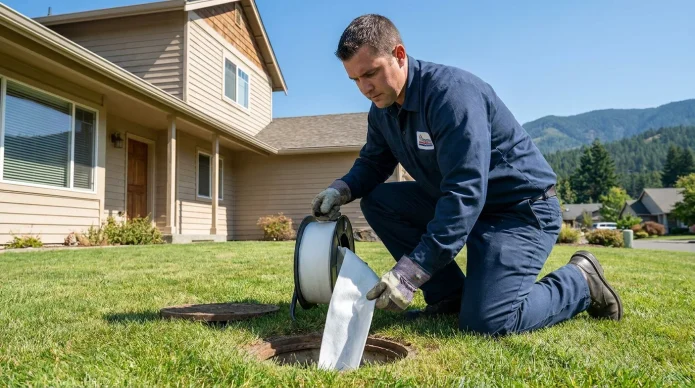

Sewer problems have a way of announcing themselves at the most inconvenient times slow drains that keep coming back, gurgling toilets, or that unmistakable odor outdoors. Many homeowners still picture backhoes and torn-up lawns when they hear “sewer repair,” but trenchless methods can often restore a failing pipe with far less disruption. This article breaks down what trenchless repair actually is, where it shines, where it falls short, and how to prepare if you’re considering it for your home.
Why Sewer Lines Fail (and How to Spot the Early Signs)
Most residential sewer laterals are out of sight and out of mind until age, shifting soil, heavy vehicle loads, or tree roots exploit a weak point. Clay and cast iron pipes are especially vulnerable after decades in the ground. Warning signs include repeated main-line clogs, multiple fixtures backing up at once, wet or unusually green patches in the yard, sinkholes, sewage odors, and water bills that creep up without explanation. A professional video inspection is the fastest way to confirm what’s going on and where.
If a camera reveals cracks, offset joints, or root intrusions, you’ll discuss options: spot repair, full replacement, or trenchless rehabilitation. Because permitting, materials, and even pipe depths vary neighborhood by neighborhood, it can help to consult a trusted Philadelphia, PA Plumber for area-specific guidance on feasibility and local code requirements.
How Trenchless Sewer Repair Works
“Trenchless” generally refers to techniques that rehabilitate or replace the pipe with minimal excavation. Two common approaches are cured-in-place pipe (CIPP) lining and pipe bursting.
With CIPP lining, a resin-soaked liner is inserted into the existing pipe and expanded to conform to the interior. The resin cures into a hard, seamless “pipe within a pipe,” sealing cracks and joints while resisting future root intrusion. This is especially useful when the host pipe still has enough structural integrity to support a liner. Pipe bursting, by contrast, uses a bursting head that splits the old pipe while simultaneously pulling in a new high-density polyethylene (HDPE) pipe of equal or larger diameter. Bursting is ideal when the host pipe is too deteriorated to hold a liner, or when upsizing for better flow is desirable.
When Trenchless Is and Isn’t the Right Fit
Trenchless methods shine when you want to avoid disrupting landscaping, driveways, sidewalks, or mature trees. If only a short section is damaged, a spot repair may still be the most economical fix, but longer runs through sensitive areas often favor trenchless. That said, not every scenario qualifies. Severe sags (bellies), significant collapses, or sections with multiple tight bends can complicate lining. Bursting requires adequate space for entry and exit pits and a clear path free of nearby utilities. Local codes and the location of the public connection point (like a city main or shared lateral) also affect what’s allowed.
A thorough pre-job assessment including a camera inspection, locating utilities, and measuring pipe diameter and slope helps determine if lining or bursting is feasible. Expect a frank discussion about risks, access points, and any unknowns discovered during inspection.
What to Expect During the Process
Most trenchless projects follow a clear sequence. First comes cleaning: high-pressure jetting or mechanical cutting removes roots and buildup so the camera can see the entire run. Next, the technician re-inspects the line, mapping out defects and measuring lengths. For CIPP lining, the crew prepares the liner and resin, places it via an access point (often a cleanout), inflates it to match the pipe’s diameter, and cures it using ambient air, hot water, or steam curing times vary by resin and temperature. For bursting, the crew excavates small launch and reception pits, sets up the puller, and replaces the pipe in one or more pulls.
After installation, they perform a final camera inspection to confirm a uniform cure or a clean joint-to-joint replacement, and they reconnect any branch lines as needed. Many homeowners are surprised that, in qualifying cases, the work can often be completed within a day or two, with minimal restoration afterward compared to open-trench replacement.
Questions to Ask Before You Hire
Because trenchless methods rely on specialized equipment and training, it’s worth interviewing more than one provider. Ask which trenchless techniques they regularly perform and why they recommend one over the other in your situation. Request a copy of the pre- and post-repair camera footage for your records. Confirm how they’ll handle branch connections, what access points they’ll need, and whether they’ll coordinate permits and inspections. It’s also wise to clarify what’s covered if hidden issues appear during cleaning or excavation, such as unsupported sections or unmarked utilities.
In some cities, you may encounter familiar companies that have recently rebranded. For example, homeowners might see the name Ring The Bell Plumbing, Heating & Drains referenced alongside its prior name, John Snyder Plumbing & Heating. If you recognize the old name from past work in your area, the rebrand can help you verify you’re speaking with the same team and ensure continuity of service.
Aftercare and Long-Term Maintenance
Once your line is rehabilitated or replaced, a few habits can protect the investment. Treat the sewer like the single drain it is: avoid flushing wipes labeled “flushable,” grease, or hygiene products. If tree roots were involved, consider root-resistant plantings near the lateral and keep deep-rooted species farther away. Homes with older branch lines may benefit from periodic maintenance jetting to keep everything open. If you had a liner installed, store the video and job documentation; buyers and home inspectors appreciate proof of the work, and it can help avoid duplicate repairs down the road.
Choosing between trenchless rehabilitation, spot repairs, and open-trench replacement isn’t one-size-fits-all. A methodical approach camera first, options second will help you match the fix to the underlying problem, your property layout, and local requirements. With clear expectations and the right questions, you can resolve a failing sewer line with far less mess, stress, and disruption to your daily routine.