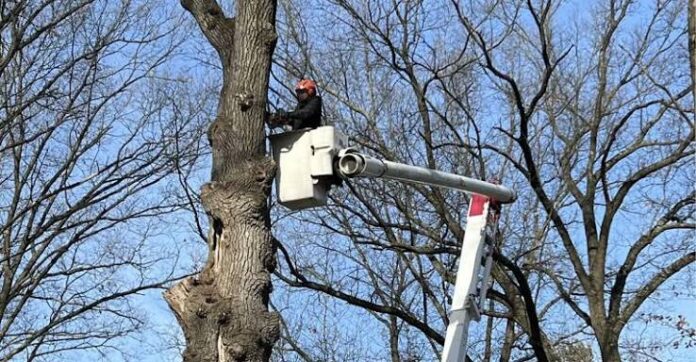

In Grand Rapids and across Kent County, a quiet winter day can turn into a property-safety issue when wet snow, freezing rain, wind, and saturated ground put extra stress on trees. Homeowners who spot problems early have more time to make thoughtful decisions before a limb falls on a roof, blocks a driveway, or creates a hazard near a sidewalk.
When a tree is already dead, split, uprooted, or leaning toward a structure, homeowners comparing options for tree removal in Grand Rapids MI can turn to Big Chipper Tree Service. This locally owned Grand Rapids company has served West Michigan and Kent County since 1986, with certified-arborist leadership, hazardous-tree removal capabilities, pruning services, and emergency response for difficult jobs near homes and other structures.
Why Grand Rapids Trees Face Seasonal Stress
West Michigan trees may face several kinds of stress in a single season. Heavy, wet snow and freezing rain add weight to branches. Wind pushes against crowns, trunks, and root systems. Then spring storms can arrive while the soil remains wet, which can reduce a tree’s ability to stay firmly anchored. This matters in established neighborhoods throughout Grand Rapids, Ada, Wyoming, Rockford, Grandville, and nearby communities where mature trees often grow close to homes, garages, streets, and overhead lines.
Public safety also matters beyond a single yard. The City’s forestry guidance for street trees and right-of-way permits states that trees in the grassy area between a sidewalk and the street may require city approval before any pruning or removal work begins.
Complete a Pre-Season Tree Check
Do a visual inspection from the ground in fall, late winter, and after major storms. Do not climb the tree or use a ladder to reach large limbs. Instead, walk around the tree slowly and take photos of anything that appears unusual.
- Look for dead branches, hanging limbs, broken tops, or branches resting on other limbs.
- Check where large limbs join the trunk for cracks, gaps, or bark that appears compressed.
- Watch for cavities, mushrooms, soft wood, missing bark, or obvious decay around the trunk.
- Look at the base for new leaning, lifted soil, exposed roots, or a widening crack in the ground.
- Note branches that contact a roof, scrape siding, extend over a driveway, or approach utility lines.
- Compare current photos with older ones if you have them, especially after a storm.
Know Which Problems Need Fast Action
A tree can appear stable during calm weather but become dangerous when ice, wind, or soaked soil increases the load on a weak area. Treat a split trunk, a tree resting on a structure, lifted roots, a blocked access route, or any branch near a power line as an urgent situation. Keep people away from the area and contact the utility provider when wires may be involved.
Deadwood, weak branch unions, an excessive lean, and heavy limbs over play areas or parking spaces deserve prompt evaluation, even if they are not immediate emergencies. Smaller dead branches or minor clearance issues may be manageable through routine maintenance, but a large tree should be assessed before homeowners assume a cut is safe.
Pruning Before Winter: What Helps and What Can Hurt
Selective pruning can remove dead, damaged, rubbing, or poorly placed branches before winter weather exposes a weak point. It can also improve a tree’s structure and reduce the chance that compromised limbs will break. The goal, however, is not to make a tree smaller at all costs. Removing too much live growth can stress the tree and encourage weak replacement shoots. Topping—cutting major limbs back to stubs—can leave large wounds and lead to poor branch structure as the tree grows.
Timing matters, too. Grand Rapids homeowners should avoid trimming oak trees between April and September, when fresh cuts can increase the risk of oak wilt. Pruning outside this period can help reduce that risk, though the right timing may vary by tree and situation. For trees with complex forms, visible decay, or limbs overhanging structures, the safest approach depends on the tree’s species, age, condition, and location.
What to Do During Snow and Ice Events
- Stay indoors when branches are bending, moving sharply, or making cracking sounds.
- Move vehicles and keep people away from trees carrying heavy snow or ice when it is safe to do so.
- Do not strike, shake, or pull loaded branches. The movement can cause sudden breakage.
- Stay clear of any limb that touches or appears close to a power line.
- Follow local alerts and the National Weather Service office serving Grand Rapids as conditions change.
- Wait until the storm has passed before beginning a property inspection.
How to Inspect a Tree After a Storm
Safety comes before cleanup. First, look from a safe distance for downed wires, hanging limbs, gas odors, blocked exits, roof damage, and trees that have shifted at the base. If a wire may be hidden under branches, leave the area and report it rather than trying to move debris.
- Photograph damage before moving branches or arranging cleanup.
- Check roofs, gutters, fences, vehicles, and driveways for visible damage.
- Identify hanging limbs that could fall later, even if the main tree remains standing.
- Do not operate a chainsaw unless you have appropriate training, protective equipment, and a safe work area.
- Arrange a professional assessment for large, split, leaning, partially uprooted, or structurally damaged trees.
When Removal May Be Necessary
Removal may be the safest option when a tree is dead, has a major crack in its trunk, shows severe decay, or has lifted substantially from the soil. It may also be necessary when the tree cannot be restored without leaving an unacceptable risk to people or property. A large broken limb can create a dangerous tear and compromise the tree’s long-term stability. Even when damage is not immediately visible, the tree’s condition may continue to deteriorate over time. The extent of the damage and the tree’s overall stability should therefore be carefully assessed. Signs such as continued leaning, movement at the base, or worsening cracks may indicate that the risk is increasing. A qualified assessment can help determine whether the tree can be safely retained or whether removal is the safest course of action.
When Pruning, Cabling, or Monitoring May Be Better
A healthy tree with a single damaged limb may recover after careful pruning, especially when the rest of the tree is sound. A qualified professional can assess the damage and determine whether pruning is appropriate. Trees with structural weaknesses may also be candidates for cabling or bracing when a professional evaluation supports that approach. These measures can help address certain concerns, but their suitability depends on the tree’s condition and location. Monitoring may be reasonable when a defect is minor and located in a low-use part of the property. Regular observation can help identify changes that may call for a fresh assessment. Removal is generally the stronger choice when serious decay, root failure, or a high-risk lean makes the tree unreliable. In those cases, the potential hazard may outweigh the benefits of retaining the tree.
Storm Cleanup, Insurance Records, and a Year-Round Plan
Before work begins, save photos, videos, estimates, invoices, and debris-disposal records. Write down the storm date and affected areas of the property. Ask whether emergency work is needed to prevent further damage, and confirm who will handle logs, brush, stump work, and final cleanup.
Late Winter and Spring
Look for damage hidden by snow, then check for soil heaving, root movement, and branches weakened by winter weather. Schedule appropriate pruning before new growth makes limbs heavier.
Summer and Fall
Watch for drought stress, pests, deadwood, and branches over patios or play areas. In fall, inspect trees before snow arrives, clear nearby roof and gutter debris, and plan needed work before severe weather limits access.
Frequently Asked Questions
Should homeowners remove ice from branches?
Usually not. Shaking or striking an ice-covered limb can make it break unexpectedly. Keep clear of the area and allow conditions to improve.
Can a homeowner cut a tree near a power line?
No. Trees and power lines create a serious electrocution hazard. Keep away from the tree and contact the utility provider or a qualified tree professional.
Does every storm-damaged tree need to be removed?
No. The right response depends on the damage, the tree’s health, its structure, and what it could strike if it fails. Some trees can be safely pruned or supported.
Conclusion
A year-round tree care plan helps Grand Rapids homeowners identify hazards before winter weather or spring storms make them worse. Regular inspections, safe pruning, and prompt professional assessments can protect people and property while preserving healthy trees whenever possible. When severe damage makes a tree unsafe, timely removal can help reduce further risks.