
Toy aisles change faster than almost any other retail category. What was trending last winter is already clearance-priced by spring.
Cutting through that churn takes more than following whatever’s viral. It means looking at which trends are backed by real developmental value and which are just clever marketing.
Sensory Play Isn’t a Fad, It’s a Correction
For years, toy design leaned heavily toward flashing lights, loud sounds, and screen integration. The pendulum has swung hard in the other direction, and it’s sticking.
Parents are increasingly gravitating toward squishy sensory toys that offer tactile engagement without batteries, apps, or noise. The appeal isn’t nostalgia. It’s a growing awareness that quiet, hands-on play supports focus in ways that overstimulating toys don’t.
Retailers have taken notice. Sensory-focused product lines have expanded significantly over the past two years, moving from a niche category to a mainstream shelf staple.
Building Toys Are Having a Renaissance
Open-ended building sets never fully went away, but they’ve re-entered the cultural conversation in a bigger way recently. Part of that comes from renewed interest in screen-free, imagination-driven play.
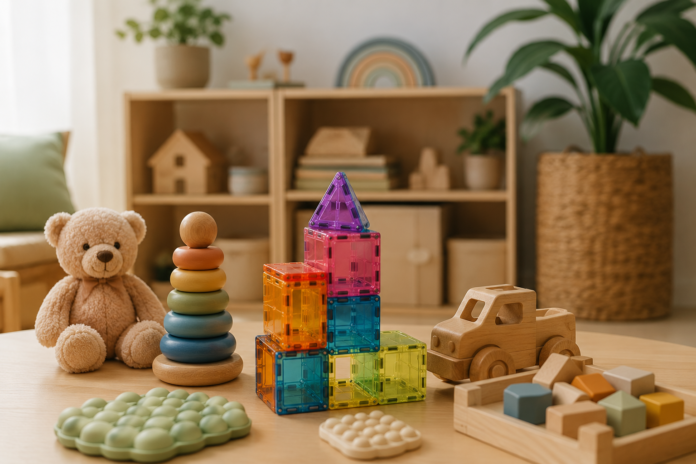
A well-designed set of Jelly Blox play sets illustrates why this category keeps resurging. There’s no single “correct” way to use it, which keeps kids engaged far longer than toys with one fixed outcome.
Educators have echoed this shift too, pointing to open-ended construction play as one of the more reliable ways to build early problem-solving skills without it feeling like a lesson.
Minimalism Is Reshaping Toy Shelves at Home
The “more is better” approach to toy collections has quietly fallen out of favor among a lot of parents. Instead, there’s growing interest in smaller, more intentional collections of toys that actually get used.
This mirrors a broader minimalism trend that’s shown up in home design, wardrobes, and now children’s spaces. Fewer toys, chosen more carefully, tend to get more consistent engagement than an overflowing bin nobody digs through.
Parents making this shift often report calmer playrooms and, somewhat surprisingly, less begging for new toys at the store. Kids seem to value what they have more when there’s less competing for attention.
Character-Driven Toys Are Becoming More Design-Conscious
Character licensing used to mean slapping a popular face on a generic product. That approach is fading as brands invest more in genuinely thoughtful character design.
The toys performing best right now tend to pair a strong character with real craftsmanship, not just recognizable branding. Parents notice the difference in quality even when kids are drawn in purely by the character itself.
This shift has pushed licensed and character-based toy lines to compete on the same durability and design standards as unbranded options, which is a meaningfully higher bar than the category used to hold itself to.
Multi-Generational Appeal Is Quietly Driving Sales
A growing number of best-selling toys share one trait: they appeal to the adult buying them almost as much as the child receiving them. That overlap isn’t accidental.
Design-forward toys with genuine aesthetic appeal are increasingly marketed with parents’ taste in mind, not just a child’s immediate interest. A toy that looks good on a shelf tends to survive longer in a household than one that doesn’t.
This dynamic explains a lot of the current shift toward better materials, more considered color palettes, and design details that read as intentional rather than purely functional.
Durability Is Becoming a Selling Point Again
For a while, toy durability took a back seat to novelty and price. That’s shifting as parents grow more conscious of both cost and environmental impact.
Toys built to survive years of handling, rather than a single season, are increasingly marketed as a feature rather than an afterthought. That shift reflects consumer demand as much as manufacturing trends.
Reviews and parent forums have become noticeably more focused on longevity questions: does it hold up, does it survive being dropped, will it still work in two years. That’s a meaningfully different conversation than the one happening five years ago.
Nostalgia Toys Are Getting a Modern Update
Classic toy categories, trucks, building blocks, plush characters, haven’t disappeared. If anything, they’re getting reintroduced with modern materials and better design thinking behind them.
This isn’t just marketing nostalgia to parents who grew up with similar toys. It reflects a genuine recognition that some toy formats never needed reinventing, just refining.
The result is a toy market that increasingly blends familiar, tested concepts with better craftsmanship and more thoughtful design details than the originals had.
What This Means for Parents Shopping Right Now
None of these trends require an overhaul of what’s already in the toy bin at home. They’re more useful as a lens for evaluating new purchases going forward.
Ask whether a toy invites open-ended play, whether it’s built to last, and whether it earns a spot in an increasingly curated collection. Those three questions cut through most of the marketing noise pretty quickly.
Toy trends will keep shifting, as they always do. But the underlying shift toward quality, durability, and genuine engagement over flash looks like it has real staying power this time.
That’s a trend worth following, long after the current cycle of viral toy videos has faded from everyone’s feed.
The toys that outlast a single shopping season tend to share these same underlying qualities, regardless of what’s trending at any given moment.
Keep those fundamentals in mind, and most future toy purchases end up feeling less like a gamble and more like an informed decision.
That’s really the shift underway across the whole category right now. Less chasing trends, more recognizing which ones were worth paying attention to in the first place.
The next shopping trip probably doesn’t need a complete rethink. Just a slightly sharper eye for what actually holds up once the novelty wears off.
That small shift in perspective tends to save money, reduce clutter, and, more often than not, lead to toys that stick around long enough to matter.