
Key Takeaways
- Coloring can significantly reduce stress and anxiety levels.
- Engaging in coloring activities promotes mindfulness and enhances focus.
- Regular coloring sessions can boost creativity and improve overall mental well-being.
Introduction
In today’s fast-paced digital era, stress and overwhelm can feel ever-present. Many adults seek simple yet effective strategies to unwind and recharge. Surprisingly, an activity often associated with childhood, coloring, has emerged as a powerful method for reducing stress, promoting mindfulness, and fostering creativity among adults across the globe.
Studies highlight the effectiveness of creative activities, such as coloring, in promoting emotional well-being. Coloring engages the mind, encouraging both relaxation and a sense of playfulness. Rediscovering this practice can introduce calming moments into busy daily routines and offer much-needed relief from mental fatigue.
Healthcare professionals now recognize coloring as a valuable component for self-care routines. With the accessibility of adult coloring books and digital coloring apps, individuals can easily incorporate these calming sessions whenever they have a spare moment.
For those seeking an anxiety-reducing habit that feels creative rather than clinical, coloring offers a rewarding, approachable pathway. Its low barrier to entry, affordability, and portability make it one of the easiest wellness activities to add to a daily schedule.
The Science Behind Coloring and Stress Reduction
Coloring is more than just a form of recreation; it physically affects the brain. As people focus on filling in patterns and shapes, their brain’s relaxation response activates, similar to the process experienced during meditation. According to research summarized by the Mayo Clinic Health System, creative activities such as coloring promote mindfulness and distract from troubled thoughts, helping calm the nervous system and lower stress hormones.
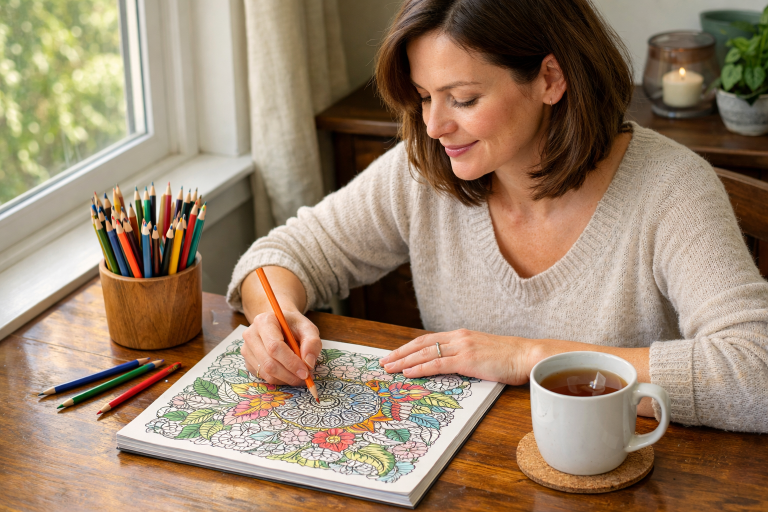
When attention shifts from daily anxieties to the present activity, the mind has fewer resources to dwell on negative or intrusive thoughts. Coloring demands concentration on color selection, shape, and staying within the lines, simple yet immersive details that promote a meditative state of mind. In time, these effects can cumulatively help decrease overall anxiety levels and support better emotional regulation.
Coloring as a Mindfulness Practice
Mindfulness involves maintaining awareness of the present moment, a state achieved when coloring. Each stroke and color choice pulls attention gently into the here and now. Unlike many activities that encourage multitasking, coloring rewards single-minded focus. This acts as a break from screens and the constant flow of digital notifications, which can be mentally exhausting.
The patterns and repetitive actions in coloring echo activities found in traditional meditation, such as focused breathing or chanting. The consistency of line work within designs fosters a rhythmic, calming effect. Over time, practicing mindfulness through coloring can make it easier to bring that awareness into other areas of life, which in turn positively affects overall stress management and emotional well-being.
Boosting Creativity Through Coloring
Beyond relaxation, coloring acts as a catalyst for creativity. Experimenting with color palettes, blending techniques, and pattern combinations helps individuals break out of habitual ways of thinking. This creative engagement encourages self-expression and problem-solving skills that transfer to personal and professional contexts.
A study referenced by Healthline found that adult coloring enhances creative skill development while also lowering stress. Regular creative activities strengthen neural pathways involved in innovative thinking, thereby improving performance on tasks that require brainstorming, planning, or adaptability.
Participants of adult coloring report greater willingness to experiment and take creative risks after just a few sessions. This sense of creative liberation helps many break free from perfectionist tendencies, allowing a more open, playful approach to both art and work projects.
Incorporating Coloring into Daily Life
Beginning a coloring practice is easy and requires minimal preparation. To ensure long-term success and sustained mental health benefits, try these practical strategies:
- Set Aside Time: Choose a consistent time each day, such as after dinner or before bed, to dedicate to coloring. Even ten minutes can make a noticeable difference.
- Create a Comfortable Space: Designate a peaceful area with good lighting and minimal distractions for your coloring sessions. This helps reinforce a positive, relaxing atmosphere.
- Select Appealing Materials: Invest in high-quality coloring books and coloring tools such as colored pencils, markers, or gel pens. The tactile pleasure of using quality materials can enhance your experience and motivation.
- Join a Community: Whether online or in person, coloring groups offer inspiration, accountability, and opportunities to share your progress. Community interaction can offer encouragement and fuel creative growth.
Another way to expand your coloring habit is by exploring apps and digital coloring platforms, many of which offer a diverse selection of patterns and designs tailored for adults. For further reading on integrating creative routines for stress relief, check out this helpful Healthline guide on establishing mindfulness practices.
Conclusion
With its well-established ability to reduce stress, foster mindfulness, and encourage creativity, coloring has become a beloved wellness practice for people of all ages. By making time for creative expression through coloring, individuals can enjoy immediate relaxation and long-term improvements in emotional health. Whether done alone or with others, coloring offers a low-pressure escape from daily stress and a potent tool for living more mindfully and creatively.