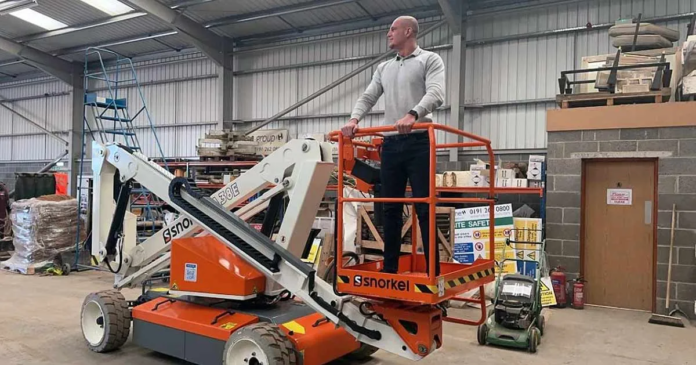

Most sites that use cherry pickers aren’t getting the full value out of them. The machine is brought in for a specific job and sits until the next time something needs to be done at height. That’s not particularly efficient. The cherry picker is one of the more versatile pieces of access equipment available, and the operations that treat it as such, rather than as a specialist tool, get considerably more out of it.
A well-run access operation keeps everything moving together, with the cherry picker positioned correctly and supporting equipment like an air compressor on site before work starts. For operations still piecing together their support equipment setup, the range of air compressor for sale options available in the UAE market makes building a properly matched kit straightforward. Getting that coordination right from the start is where maximising a cherry picker’s potential actually begins!
Choosing the right configuration for the job
The cherry picker for sale market covers a wide range of configurations, and to maximise its potential, you need to know which configuration your work requires. And for that, you need to evaluate a bunch of features.
There’s boom type, working height, platform capacity, and outreach to look out for. Buyers also need to know whether the machine needs to be tracked, wheeled, or trailer-mounted. All of these things affect just how useful it can be on a specific job.
The most common mistake in cherry picker selection is choosing based solely on working height. Height is one variable, but outreach can often be the more critical one. A machine that reaches high enough is great, but it won’t do much if it can’t extend far enough horizontally to position the platform where the work actually is. This’ll force the operator to either reposition the machine repeatedly or work at an uncomfortable angle, both of which cost time and can be very risky for your operations. So, you need to make sure you’ve measured your distances.
Platform capacity is another key feature here. Cherry pickers are frequently used for jobs where the operator needs tools and materials, and sometimes a second person on the platform, simultaneously.
A platform rated for one person and a light tool load will become a limiting factor the moment the job requires anything beyond that. So, specifying platform capacity based on the actual working requirements will save your team a lot of inconvenience.
Ground conditions determine more than most people plan for
A cherry picker perfectly specified for work at height can still be the wrong machine for the job if the ground conditions where it needs to operate haven’t been properly assessed. Outrigger spread and proximity to excavations significantly affect whether the machine can be set up safely and stably.
On construction sites where ground conditions vary across phases, this assessment needs to happen at each point of use rather than once at the start of the job. A surface that was solid enough for outrigger loading last week may not be after an adjacent excavation.
Imagine you’re overseeing a building maintenance programme across a large industrial facility. The cherry picker is being used across multiple areas over several days, moving between a concrete yard, a planted area alongside one of the buildings, and a partially excavated service trench zone.
Each of those surfaces presents different ground conditions, and the outrigger setup that’s appropriate for the concrete yard won’t be appropriate for the soft ground alongside the planted area.
Assessing each setup separately can feel daunting, but the time it takes will always be far less than the cost of an outrigger penetration incident. So, assess every setup as if it’s the first one of the day.
Operator competence is where productivity is made or lost
The technical specs and the quality of the ground assessment matter, but the operator’s competence ultimately makes or breaks the operation.
An experienced operator who understands the machine’s geometry and can position the platform efficiently will consistently outperform a less experienced one on the same machine, regardless of how well the job has been planned.
A facilities management contractor running maintenance operations in Dubai found that their cherry picker utilisation rate was low and their job completion times were consistently running over. The operators spent a significant portion of each job repositioning the machine because their initial setups didn’t bring the platform close enough to the work.
Once a structured competency development programme was introduced, completion times dropped and the repositioning events that had been eating into time reduced significantly.
It’s one part of your whole process
Getting the most out of a cherry picker is all about how it connects with the broader equipment strategy. Operations that have mapped their requirements across their facilities and projects and matched their fleet configuration to that map are consistently more productive than operations that make access equipment decisions reactively.
When a road milling machine is working on a nearby highway resurfacing project, the site infrastructure supporting that operation requires access for installation and maintenance that a cherry picker can handle efficiently. If you’re currently reviewing your access equipment setup, the range of cherry pickers for sale and road milling machine for sale packages available through equipment suppliers in the UAE has made building a properly matched fleet more straightforward than before. The investment in getting that match right pays back quickly through the productivity of the operations it depends on.