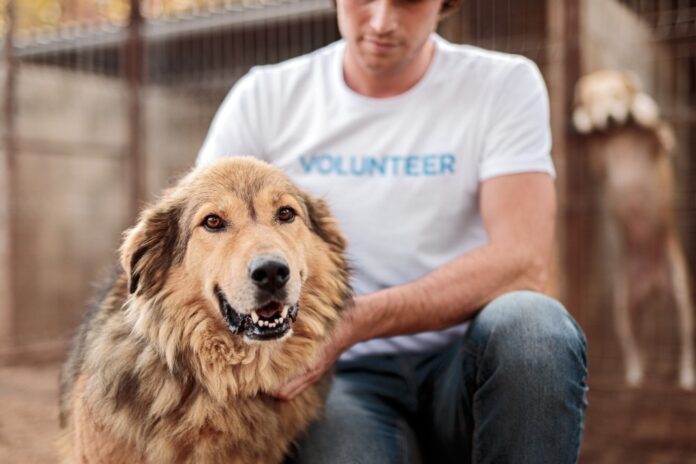

Reaching a shelter can mark the beginning of a safer life for a rescued dog, but physical safety is only one part of the journey toward adoption. Many dogs entering Romanian shelters come from uncertain backgrounds.
Some have lived on the streets for months or years, while others were abandoned after living with people, and puppies may have had very little contact with humans at all. Their experiences influence how they react to voices, touch, unfamiliar environments, other animals and everyday situations. This is why socialization has such an important place in responsible rescue work. Through regular, positive experiences, shelter teams and volunteers can help dogs become more comfortable with the world around them. The process is not about forcing every animal to behave the same way. It is about understanding each dog’s starting point and helping that animal develop the confidence and practical skills needed for life beyond the shelter.
Trust is often established through ordinary moments
For a dog with an uncertain past, interactions that seem completely normal to people can feel overwhelming. Someone approaching with a leash, reaching toward a collar or entering an enclosure may cause hesitation or fear. A dog that has survived by avoiding people cannot suddenly be expected to understand that every human interaction is safe.
Socialization begins with small experiences repeated consistently. Spending time near a dog without demanding interaction can sometimes be more useful than immediately trying to touch it. Over time, the animal may become curious enough to approach voluntarily.
These seemingly minor moments provide the foundation for a different relationship with people. A dog learns that a familiar voice can predict something pleasant, that a leash can mean a walk rather than danger, and that gentle handling doesn’t need to be frightening.
Patience is particularly important because progress differs considerably between animals. One dog may seek affection after a few days, while another may need months before feeling comfortable enough to approach someone confidently. Respecting those differences gives trust an opportunity to develop naturally.
Shelter life cannot offer every experience found in a home
A shelter offers protection, food and care, but it is still a very different environment from the home a dog may eventually join. Kennels contain unfamiliar sounds, other animals and daily activity that does not necessarily prepare a dog for everything it will encounter after adoption.
Household life introduces a different collection of experiences. Doorbells ring, vacuum cleaners make noise, visitors arrive, elevators move, and traffic passes outside. Dogs may encounter children, bicycles, stairs, cars or unfamiliar surfaces for the first time.
Socialization helps create a bridge between these worlds. Walks outside the shelter, controlled meetings with new people and exposure to different environments can gradually expand what a dog considers normal.
Foster homes can also play an important role when they are available. A temporary home gives rescuers an opportunity to observe how a dog behaves in a domestic setting and allows the animal to learn everyday routines before permanent adoption. The purpose is not to expose a dog to everything at once. Carefully managed experiences are far more valuable than overwhelming an already uncertain animal with too much stimulation.
Socialization helps rescuers understand each dog’s real personality
A dog observed only inside a kennel may behave very differently once it feels comfortable elsewhere. Stress can make an otherwise curious animal appear withdrawn, while excitement can make a friendly dog seem difficult to manage during its first interactions.
Regular social contact gives Romanian dog shelter teams a clearer picture of personality. They can observe whether a dog enjoys human company, how it responds to handling, how much exercise it appears to need and what situations make it uncomfortable.
This information becomes extremely valuable when potential adopters start asking questions. A family needs more than an attractive photograph and an approximate age. They need to understand what everyday life with that particular dog might involve.
Socialization therefore supports better matching between dogs and adopters. A confident, energetic animal may suit a very different household from a quiet dog that prefers predictable surroundings. Neither personality is better; they simply require different environments.
The more accurately a shelter understands its dogs, the easier it is to discuss expectations openly with potential families and find homes where those animals have a realistic opportunity to settle successfully.
Positive experiences can make the transition after adoption easier
Adoption is a happy event, but from the dog’s perspective it also involves another major change. The animal leaves familiar caregivers and surroundings before entering a completely new environment filled with unfamiliar people, smells and routines.
Dogs that have already gained confidence through appropriate socialization may have useful experiences to draw upon during this transition. Wearing a harness, walking on a leash, meeting unfamiliar people or travelling in a vehicle may no longer be entirely new situations.
This does not mean a socialized shelter dog will immediately understand every rule of its new household. Adopters still need to provide patience, consistency and time to adjust. Even confident animals can need a period of decompression after such a significant change.
Socialization provides a stronger foundation. Instead of encountering every aspect of family life for the first time after adoption, the dog may already have learned that unfamiliar experiences can be approached safely.
That confidence can be especially valuable for Romanian rescue dogs adopted internationally, where relocation may involve transportation and a completely different environment before the animal even reaches its new home.
Volunteers can make socialization part of everyday shelter life
Socialization does not always require elaborate training sessions. Some of its most valuable elements can happen during ordinary interactions with volunteers and caregivers. A walk offers opportunities to become comfortable with a leash and explore new smells. Quiet time with a volunteer teaches a dog that human company can be enjoyable without constant demands. Gentle grooming can make future handling easier. Play provides stimulation while allowing people to discover what motivates an individual animal.
For Romanian shelters caring for many dogs, these individual moments can be particularly valuable. Staff members must manage feeding, cleaning, medical needs, admissions and countless practical responsibilities. Volunteers can provide additional human contact and give individual dogs more opportunities to experience life beyond their kennels.
Consistency matters more than trying to achieve dramatic progress quickly. Socialization works best when the dog’s reactions are observed and the pace is adjusted accordingly. Fear should not be mistaken for stubbornness, just as excitement should not automatically be interpreted as bad behavior.
For a dog waiting for adoption, these interactions can gradually change what the outside world represents. A stranger becomes someone worth approaching, a leash becomes associated with exploration, and unfamiliar surroundings become manageable rather than frightening. When the right adopter eventually arrives, the work carried out during those weeks or months at the shelter travels with the dog. Socialization gives rescued animals something that cannot be packed into the car on adoption day but may prove just as valuable as any physical possession: greater confidence in their ability to live alongside people and adapt to the new experiences that come with having a home.