
Key Takeaways
- Furnace performance depends on the whole home, not just the equipment label.
- Insulation, air leakage, ductwork, ceiling height, and layout all affect heating demand.
- Square footage is useful for an early estimate, but it cannot replace a load calculation.
- Both oversized and undersized furnaces can create comfort, efficiency, and maintenance issues.
- Capacity, efficiency, airflow, and installation quality should be evaluated together.
Start With The Home, Not The Furnace
Choosing a furnace should begin with the building it will heat. Two homes with identical square footage can require very different amounts of heating because their insulation, windows, layout, and exposure to winter weather differ. Before comparing models, homeowners can visit the website for a practical overview of the factors that shape a furnace-sizing decision.
The goal is not to buy the biggest available unit or automatically match the old furnace. The goal is to select equipment that can replace the heat your home loses on the coldest expected days while distributing that heat evenly and efficiently.
What Furnace Size Really Means
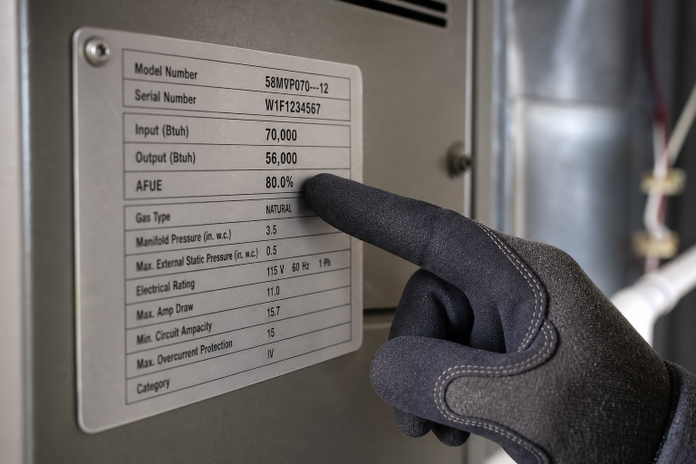
Furnace size usually refers to heating capacity, measured in British thermal units per hour (Btu/h). It does not refer to the physical cabinet size in the utility room.
- Input capacity is the amount of fuel energy entering the furnace.
- Output capacity is the usable heat delivered after efficiency losses.
- Cabinet dimensions affect installation space, but they do not determine heating capacity.
For example, an 80,000 Btu/h furnace rated at 80% AFUE can provide roughly 64,000 Btu/h of usable heat. A similarly rated 80,000 Btu/h furnace at 95% AFUE can provide about 76,000 Btu/h. That difference matters when comparing replacements.
Check The Biggest Sources Of Heat Loss
Heat escapes through the home’s exterior surfaces and through gaps that allow cold outdoor air inside. A heating checkup should look beyond the thermostat and include the conditions that make the furnace work harder.
- Attic, wall, basement, and crawl-space insulation
- Drafty or single-pane windows
- Exterior doors, weatherstripping, and thresholds
- Gaps around wiring, plumbing, vents, and recessed lights
- Tall ceilings, open floor plans, and stairwells
- Room additions, finished basements, and converted garages
- Home orientation and winter sun exposure
A compact, well-insulated home may need less capacity than an older, leakier home of the same size. This is why accurately determining heating loads is more dependable than relying on a simple rule of thumb.
Look At Airflow Before Blaming The Furnace
A correctly sized furnace can still leave rooms chilly if air cannot move through the system properly. Dirty filters, crushed flexible ducts, leaking duct connections, closed supply registers, and undersized return grilles can all reduce comfort.
Adding a larger furnace does not fix a restricted return duct or a poorly balanced second floor. In fact, more heat entering an already weak duct system can increase room-to-room temperature differences. A contractor should inspect accessible supply and return ducts, verify blower performance, and check whether registers deliver air where needed.
Why Square Footage Is Only A Starting Point
Square footage can help homeowners start a conversation, but it is not the final method for selecting equipment. A 1,800-square-foot ranch with good attic insulation, sealed ducts, and modern windows may have a much lower heating load than a 1,800-square-foot two-story home with tall ceilings, drafts, and an unfinished basement.
Use rough estimates to ask better questions, not to place an order. Local design temperatures, insulation levels, window area, air leakage, and ceiling height all change the answer.
The Role Of A Professional Load Calculation
A professional load calculation, commonly called Manual J, estimates how much heat the home needs under local winter design conditions. It accounts for room dimensions, construction materials, insulation, windows, orientation, infiltration, and other building details.
The calculation should guide equipment selection, while duct capacity and blower airflow should confirm that the chosen furnace can actually distribute heat throughout the home. This process is especially valuable when replacing an older system because the existing furnace may have been oversized from the start.
How Home Improvements Change Furnace Needs
Major upgrades can alter a home’s heating load. Attic insulation, air sealing, replacement windows, new exterior doors, duct repairs, and basement finishing can all change how much heat the home needs.
For example, a homeowner may replace drafty windows and add substantial attic insulation, then assume the replacement furnace should have the same capacity as the old unit. A new calculation may show that the previous furnace is now larger than necessary. Conversely, a large addition or newly finished living area may increase demand.
Oversized Versus Undersized Systems
Signs Of An Oversized Furnace
- Frequent starts and stops, often called short cycling
- Noticeable temperature swings
- Uneven temperatures between rooms
- Extra wear on ignition, blower, and control components
Signs Of An Undersized Furnace
- The thermostat setting cannot be maintained during severe cold
- Exterior rooms remain consistently cold
- The furnace runs continuously yet falls behind
- Backup heat is used more often than expected
Long run times are not automatically a warning sign. During very cold weather, a properly sized furnace may run steadily for extended periods. The real concern is whether it can maintain comfortable indoor temperatures without excessive strain.
Capacity And Efficiency Are Different Choices
Capacity answers the question, “How much heat can this furnace provide?” Efficiency answers the question, “How much of the fuel becomes usable heat?” AFUE, or Annual Fuel Utilization Efficiency, expresses that seasonal conversion efficiency as a percentage. The Department of Energy explains that AFUE compares useful energy output with energy input, making it helpful for comparing fuel use among properly sized models.
A high-AFUE furnace can reduce fuel waste, but it must still have the right output capacity and compatible ductwork. Efficiency cannot compensate for poor sizing or installation problems.
Questions To Ask Before Replacing A Furnace
- What heating load did you calculate for my home?
- Did you account for insulation, windows, air leakage, and ceiling height?
- What is the furnace’s output capacity, not only its input rating?
- Are the existing supply and return ducts large enough?
- Should duct repairs or air sealing happen before installation?
- Will the furnace work with the thermostat, venting, drainage, and electrical setup?
Common Planning Mistakes To Avoid
- Choosing the largest model for peace of mind
- Copying the old furnace size without reassessing the home
- Using square footage as the only measurement
- Ignoring duct leaks, filter restrictions, or return-air limitations
- Comparing AFUE ratings without comparing output capacity
- Focusing only on the purchase price rather than comfort and operating costs
Conclusion
The best furnace choice fits the home as it exists today. Review insulation, air leakage, ductwork, windows, room layout, and planned renovations before selecting capacity and efficiency. A complete home heating checkup reduces guesswork and helps create steadier comfort, better airflow, and more sensible energy use.