
Managing a large commercial building isn’t quite as straightforward as it might look. From the outside, everything can seem perfectly organized. The lights work, the heating is on, and people come and go without any obvious problems. Behind the scenes, however, a long list of maintenance jobs usually keeps the building running.
Whether it’s an office complex, shopping center, or industrial facility, these properties need constant attention. While major repairs tend to get noticed, it’s often the smaller, less visible problems that create the biggest headaches for facilities managers.
Keeping Up With Everyday Maintenance
One of the difficulties with larger buildings is simply keeping track of everything. Heating systems, lifts, lighting, plumbing and ventilation equipment all need checking, often on different schedules.
When several contractors are involved, arranging access and coordinating work can become complicated. A routine inspection might need to happen outside business hours, while an unexpected repair could disrupt employees or visitors.
Having a clear maintenance schedule helps, but it’s equally important to leave room for unplanned problems. Buildings don’t always cooperate with carefully organized calendars, and putting off a minor repair can sometimes lead to a much bigger job later.
Rooftop Access Can Be More Complicated Than Expected
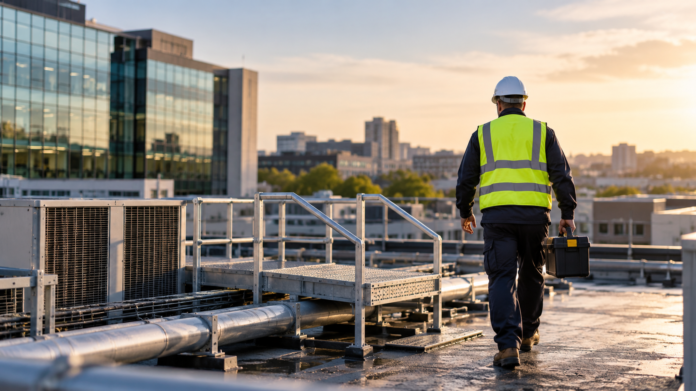
Commercial rooftops are rarely the open, empty spaces people imagine. They’re often filled with ventilation equipment, air conditioning units, pipes and cables, all of which need occasional inspection or maintenance.
For the people doing that work, reaching a particular piece of equipment can be difficult. Workers may need to navigate obstacles, changes in level or narrow routes, sometimes while carrying tools.
Rather than expecting maintenance teams to climb over pipework, building managers can think about getting purpose-built access solutions. For example, heavy duty step over platforms provide designated routes across rooftop obstacles, helping workers move between maintenance areas without stepping directly over equipment.
Of course, any access system needs to suit the roof’s construction, available space, and intended use. Proper installation and ongoing inspections are just as important as choosing the right equipment.
Balancing Safety With Daily Operations
Maintenance work doesn’t happen in isolation. In a busy commercial building, hundreds of people may be moving around while repairs and inspections take place.
Closing a corridor, restricting lift access or arranging noisy work can cause frustration if nobody knows what’s happening. That’s why communication between facilities teams, contractors, and building occupants is important.
Where possible, disruptive work should be scheduled during quieter periods. Clear signage and temporary access arrangements can also help people navigate the building safely while maintenance is underway.
Planning Makes a Real Difference
It’s tempting to focus on the problems that need attention today, particularly when budgets are tight. However, preventative maintenance can help businesses avoid unexpected breakdowns and expensive emergency repairs in the future.
Keeping accurate records of inspections, servicing, and previous faults makes it easier to spot recurring issues. It also gives facilities managers a clearer picture of which parts of the building may need investment.
Large commercial properties will always come with their challenges, and there’s no way to prevent every unexpected problem. With sensible planning, safe access arrangements, and good communication, maintenance becomes far more manageable.
The aim isn’t simply to keep everything looking presentable. It’s to make sure the building remains safe, functional, and comfortable for the people who depend on it every day.