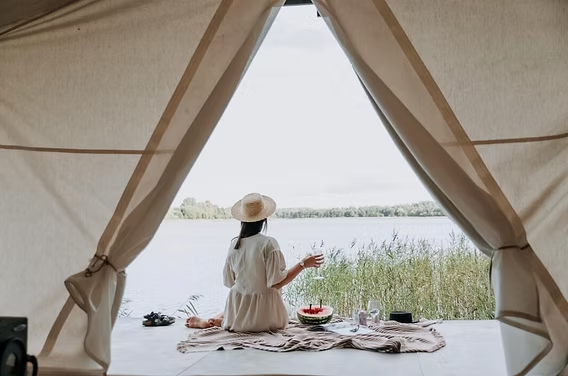

The tent stored in the garage indicates the trend. In 2020 and 2021, millions of households bought a tent, went camping a couple of times, then decided to spend the night somewhere that has a mattress, a nice steady wall, and a lock on the door, and a bathroom that doesn’t involve a shovel and a stroll into the bush. It’s the path toward that upgrade that is the true trend, not the camping boom itself.
The Numbers Behind The Shift
The 2022 North American Camping Report by KOA established the number that many people in the outdoor world and campgrounds across the US had already begun to expect: that 57.2 million US households had gone camping at least once that year. It was an increase of roughly nine million households in just three years. The more recent converts are not likely to be going anywhere soon, with 68% saying they plan to camp just as much or even more in future years. Three out of ten want to buy a camper in the next 12 months.
What is most notable about the “nation of campers” narrative is that many of the new campers had never, or rarely, camped before. They had simply run out of other things to do: alternatives were cancelled because of the pandemic or they were avoiding crowded places. “The increase in camping seen during this time was a demonstration of the latent demand for camping that existed because of people’s interest in the outdoors as well as camping’s natural-social-distancing attributes,” the report stated.
Comfort Was Never The Enemy Of The Outdoors
There is a common belief that “true” camping requires some level of discomfort – such as poor sleep, cold showers, worrying about the weather, and sharing a toilet facility late at night. Such a concept of camping still exists for those who seek it. However, this has long been a reason why a large portion of the population never went camping in the first place. Lack of sleep, concerns about hygiene, and the weather are not oddities of the great outdoors – they are obstacles. Eradicate these obstacles and you won’t create a weaker connection to nature. You will instead have more people ready to immerse themselves in it, more frequently and for longer periods.
That’s what glamping got right even before it was a thing. What glamping demonstrated is that there can be a market for canvas shelters complete with beds and even bathrooms. Glamping also showed that people are willing to pay for it. What has changed since then is that the general market for caravans and camper trailers has taken this lesson on board. Nowadays you don’t need a five-star glamping spot to crash beneath canvas or fiberglass in comfort.
Rig Selection Is Where The Trade-Offs Get Real
Planning a vacation for a comfort-focused trip all starts with one choice; what you’re actually going to camp in. Then the trade-offs stop being theoretical.
A tent is cheap and light but offers you almost nothing when things get tough with the weather or when you just want to stay put for a week. No power, no proper kitchen, no bathroom, and packing up every morning if you’re touring rather than basecamping. Ok for two days. Beginning to grate by the end of the long weekend. A source of marital discord after three nights in the rain with kids involved. Nigh on insufferable by day four if any of your joints are approaching middle age.
A full-size RV or caravan solves the comfort problem but creates a new one: size. Big vans shudder apart on outback roads but most national park campsites can’t fit them, and you can’t just pull in by the river at the free spot with the killer view because Puumba needs a three-point turn just to go around the block. You end up planning your trip around your limits rather than around where you actually want to go.
This is the gap a hybrid caravan is built to fill. They sit between camper trailer and van, having proper suspension and clearance for the tracks but still carrying a kitchen, a bed, and often an ensuite. They tow more easily than a full-size unit, go better than most RVs, and let you stay somewhere for four or five nights and still feel like you’re camping rather than doing it tough. For campers who regularly tow their own equipment, a practical trailer dolly can also make maneuvering a trailer around campsites, driveways, or storage areas considerably easier. This is where the comfort-versus-access trade-off actually gets resolved, rather than argued about.
What Actually Makes Off-Grid Comfort Possible
None of this would be possible without the advancements in electrical technology. About 10 years ago, being “off grid” meant having a battery that could run a light and a small fridge for a night or two before needing to be plugged in again. Now, solar panels and lithium batteries have changed the game entirely.
Lithium stores more usable power in a smaller, lighter form than the old lead-acid systems, and that power can be deep-cycled with a constant draw like from your fridge without getting near as grumpy about it as lead-acid might. Add in a reasonable solar system and you can run an air conditioner for a couple of hours, keep a fridge so cold ice cream bounces off the walls, and still fire up the toaster and coffee pot without ever needing to pull out the generator, as long as the sun is shining.
The comfortable “glamping” stuff is visible and gets the attention, but solar combined with useful electrical energy storage is what makes it all feasible in places that don’t have access to the grid. Climate control in particular has transformed the camping season for a lot of travelers. Places that used to be no-go zones in summer heat or shoulder-season cold are now workable because you can regulate the temperature inside the rig regardless of what’s happening outside.
Off-Grid Range Changes Where You Can Actually Go
When you’re not dependent on a powered site, it changes the holiday options available to you. Off-grid tourism means you can avoid caravan parks altogether, and steer for national parks, remote coastline, or regional areas that haven’t had the traffic to build major tourism developments yet. A lot of people never think about the downstream effect of that – what it does is funnels tourism spending right into the little regional economies that a bus tour or resort holiday would never touch. A family stocking up at a rural bakery, taking fuel at a regional stop, or dropping in at a small-town pub on the way to that camp spot is a solid slab of regional economic development, and they roll in thousands of small campers and caravans a year.
The Caravan Industry Association of Australia has done studies on this that show the spending spread, and this is one of the more underestimated arguments for why comfort-focused touring is beneficial – it’s not just good for the traveller, it’s good for the places they pass through. There’s a footprint argument here as well. Camping in general leaves a lighter footprint than a hotel stay – less laundry, less energy-intensive facilities, and less overall construction – and comfort-focused touring hasn’t really changed that. A fridge on the front of your caravan or a solar-and-lithium setup uses a tiny fraction of the energy a hotel room uses to run its air conditioning and lighting each night. For the people who care about that kind of thing, comfort camping isn’t a sacrifice in the pursuit of green tourism. It’s the right way to get more out of your trip without all the flights or resort visits.
Basecamp Planning Over Pack-and-Move
The old way was pack up, drive, set up, repeat, night after night. It gets the job done, but it’s not very restful, and it means most of your time off is spent in transit or in set up mode rather than actually relaxing. Comfort-driven rigs (and an aging population) have made holiday planning swing more toward a “basecamp” sort of logic: choose a nice spot, sit for four to seven nights, use day trips to fan out.
This only works if your rig is comfy enough that “sitting” doesn’t feel like you’re making do. Nobody wants to spend a week in a heat-trapping tent with nowhere to sit when it rains. A hybrid caravan with a real bed, a kitchen, and climate control makes the basecamp concept actually attractive, and it changes how people route their trips. Instead of connecting the dots between ten potential campsites, you’re just connecting the dots between two or three shortlist basecamp locations, and automatically creating day trips to explore what’s near each one. It’s a slower way to travel, and for a lot of families, it’s a less stressful one too.
Multi-Generational Travel Finally Works
Conventional tent camping isn’t suitable for many people. For instance, grandparents or toddlers, as well as those with health conditions that need refrigeration and air-conditioning, cannot participate in activities that require them to sleep on the ground and use shared shower facilities.
On the other hand, comfort camping can accommodate most of these circumstances. With a private bathroom, a real raised bed, climate control, and refrigeration facility, three generations of a family can enjoy a camping trip together. This is more important than many people realize, as family vacations are one of the few occasions when extended families can spend quality time together, and camping comfort can determine whether or not such a vacation can take place.
Comfort Isn’t A Lesser Version Of The Outdoors
This should be made clear: preferring comfort to austerity in a camping experience does not detract anything from the trip itself. Van life and minimalist camping are still very authentic, and many travelers truly enjoy this approach. However, if we present comfort camping as some kind of unfair advantage, we are missing the point. It has not replaced traditional camping. It has added a whole new group of people who enjoy outdoor activities and would not have gone otherwise, and for those who already went camping, it has allowed them to stay longer, go further and share the experience with those who couldn’t before.
This is the real change. Not a fad, but a lasting expansion of all those who can enjoy nature and how they plan to do so.