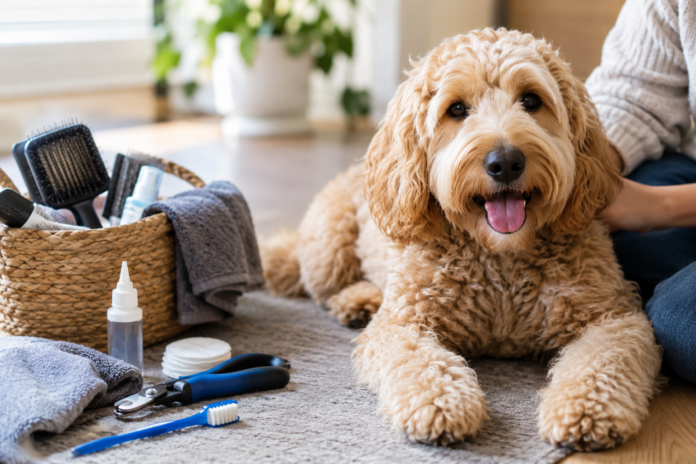

Twice a year. That is how often the average dog in this country gets professionally groomed, and I know it because I did it for years. My Goldendoodle, Biscuit, went in every spring for a shave down and every fall for a tidy-up, and in between I told myself that daily brushing at home was enough. Then his ears started smelling like a wet basement, and the vet visit that followed cost more than five grooming appointments combined.
Here is what I wish somebody had told me back then. Your dog does not need a haircut every month. Your dog needs a hygiene rhythm every month. Those are two different things, and mixing them up is the single most common mistake pet owners make.
If your dog’s nails click on the kitchen floor, if you can’t remember the last time anyone looked inside those ears, and if you’re already bracing for a spring shed bomb, keep reading. Plenty of folks in the area hand all of this off to professional Dog groomers Sandy, which is a perfectly good move. But even if you do, you still need your own routine at home between visits. Here is the monthly system I use now, several dogs later.
Why the Twice-a-Year Grooming Habit Falls Apart
Grooming isn’t one task. It’s four, and they run on different clocks.
Nails grow continuously and need attention every three to four weeks. Ears need a look every couple of weeks, because moisture and warmth inside that canal give yeast and bacteria a place to settle. Teeth accumulate plaque daily. And the coat itself, the part everyone thinks about, is really just the visible surface of all three of the others.
So when you book one big appointment in May, you’re resetting everything to zero at once and then letting three of the four clocks run out of sync for six months. That’s the design flaw. The fix isn’t more haircuts. It’s a monthly anchor visit you never skip, plus small home tasks in between.
What a Monthly Hygiene Visit Actually Covers
A hygiene appointment is the boring, essential layer. Bath with a towel-dry. Ear cleaning. Nail trim. Teeth brushing. A quick nose-to-tail wellness check where someone trained actually looks at your dog’s skin, eyes, and paws instead of just you glancing over while you fill the water bowl.
The professional haircut, the blow-dry, the fancy trim around the eyes, those are style. Style is wonderful and I’m not giving it up. But style without hygiene is a good-looking dog with a brewing ear infection, and I’ve had one of those. It is not cute.
Here’s a concrete scene from my own kitchen. Biscuit used to get a bath every six weeks. Well, every eight weeks when I was busy. Well, every ten when work got ugly, and at some point the intervals stopped being a schedule and became a mood. One afternoon I noticed he was licking his front paw raw. Turned out a nail had grown into the pad. That is what “I’ll get to it” looks like when it finally shows up.
Should You Do This at Home or Hand It Off?
Honest answer: it depends on your dog, your knees, and your tolerance for wrestling.
Nail trimming is where most people tap out, and I get it. Cut too short and you hit the quick, which hurts, bleeds, and buys you a dog who hides under the bed every time the clippers come out. That fear is hard to undo.
Ear cleaning looks easy until you realize you’re aiming liquid into a canal you can’t see. According to the American Veterinary Medical Association, regular ear checks matter because infections in that canal are common and easy to miss until they’re advanced, which tracks with everything I’ve seen.
Where I land on this: bathing and brushing, do at home. Nails, ears, and teeth, hand off to someone who does it forty times a week. Your dog gets handled by calm, practiced hands, and you keep your spot as the person who shows up with treats instead of the person who ambushes them with clippers.
My S.H.E.D. Framework for the Monthly Rhythm
I named this one after my shedding problem, partly as a joke, and then it turned out to be genuinely useful for remembering the order. Here’s how it works.
- Schedule it. Same week every month. Not “when the dog starts smelling.” Pick a date, put it in your phone, and treat it like a dentist appointment for your dog. The whole point is that you stop deciding.
- Handle the four. Bath or spot clean, ears, nails, teeth. If a professional is doing it, that’s your monthly anchor visit. If you’re doing it, budget twenty minutes and do all four in one sitting so nothing drifts.
- Eyeball everything. While the coat is wet and the dog is still, look. New lumps, hot spots, flea dirt near the tail, redness between the toes, a change in the way the skin smells. You are the one who sees your dog every day, which makes you the early warning system.
- Document it. One note on your phone. Date, what you noticed, what changed. Boring on the day you write it, invaluable six months later when your vet asks whether that lump is new.
Step four is the one everybody skips, and it’s the one that pays off. I’ve caught two skin issues early purely because I could look back and confirm something had changed.
Season by Season, What to Adjust
Your monthly anchor stays the same. The extras shift.
| Season | What changes | What to add |
| Spring | Coat blowout, pollen and mud on every walk | Extra brushing sessions, paw rinse after walks |
| Summer | Heat, swimming, more time outdoors | More frequent ear checks, watch for hot spots |
| Fall | Undercoat shed, burrs and foxtails | Daily brushing, thorough paw and pad checks |
| Winter | Dry indoor air, road salt, less daylight | Paw balm, longer coat left for warmth |
One caution that applies year round: never shave a double-coated dog down to the skin for summer. That coat insulates against heat as well as cold. The American Kennel Club covers breed-specific coat care in detail, and if you own a Husky, a Shepherd, or anything with a fluffy underlayer, it’s worth twenty minutes of your evening.
The Bag I Keep by the Door
Five things, one tote bag, no more decisions to make. If you set this up once, the monthly routine stops feeling like a project.
- A slicker brush and an undercoat rake for the coat
- Dog-safe ear cleaner and cotton pads
- Nail clippers plus styptic powder, just in case
- A soft toothbrush with dog toothpaste, never human paste
- A cheap washcloth for paw wipes after rainy walks
According to the American Society for the Prevention of Cruelty to Animals, dental disease is one of the most common issues vets see in adult dogs, which is a polite way of saying most of us are slacking on the toothbrush. I was. Now the brush lives in the bag and the bag lives by the door, and somehow that five second shelf placement changed my behavior more than any amount of good intentions.
Pick Your Anchor and Stop Deciding
The whole system comes down to one thing. Put the essential stuff on a monthly clock, keep the style appointments whenever you and your dog want them, and let the vet handle anything you spot during the eyeball step.
Do that and you’ll notice something funny. The grooming appointment stops being an emergency you remember in a panic on a Saturday morning. It becomes a standing date. Your dog walks in familiar, your groomer gets to know your dog’s normal, and small changes get caught while they’re still small.
So here’s your assignment this week. Open your phone, pick a recurring day, and book the next three months at once. Which recurring day are you claiming for your dog?