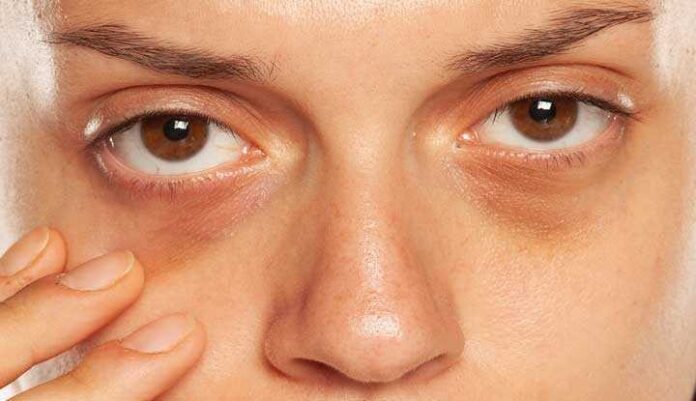

If you’ve ever layered concealer over dark circles and ended up with something that looked worse than the circles did, you’re not doing it wrong. You’re probably using the wrong texture.
Most concealers are built to sit on flat, stable skin the side of your nose, a spot on your chin, a patch of redness across your cheek. The under-eye is none of those things. The skin there is roughly a third the thickness of the skin on the rest of your face, it moves every time you blink or smile, and it produces almost no oil of its own. A formula that behaves beautifully on a blemish will often sink into fine lines, go patchy by lunchtime, or dry down to a grey cast within an hour.
This is why cream concealers keep coming out on top for dark circles specifically. Here’s what to look for, how to match a shade properly, and how to apply it so it stays put.
First: know what kind of dark circles you have
Not all under-eye shadow is the same, and the type you have changes what coverage will realistically achieve.
Pigmentation. Genuinely darker skin under the eye, usually brown or greyish, often genetic or the result of sun exposure and rubbing. This responds well to concealer because you’re covering an actual colour difference.
Vascular. The bluish or purple tint that comes from blood vessels showing through thin skin. Very common, and more visible when you’re tired or dehydrated. Concealer works here too, but you’ll want a formula with enough warmth to counteract the blue.
Structural. Shadow cast by hollowing or puffiness — the darkness isn’t in the skin at all, it’s the shape of your face creating a shadow. Concealer helps less than people expect here, because you’re trying to paint away something that’s three-dimensional. Careful highlighting of the hollow does more than heavy coverage.
Most people have some combination. Knowing which one dominates saves you from buying the wrong thing.
Why cream beats liquid under the eye
Three reasons, all practical.
Pigment density per unit of product. A cream concealer carries more pigment in less product. That means you can cover a stubborn area with a genuinely small amount rather than building up three or four layers of thin liquid and layers are what cause creasing.
It doesn’t dry down hard. Liquid and stick concealers designed for full coverage often contain higher silicone and film-former content, which sets firm. Firm plus mobile skin equals a crack line by mid-afternoon. A cream stays slightly flexible and moves with you.
Buildability without cakiness. Because you start with less, you have room to add more only where you need it — the inner corner is usually darkest, the outer third often needs almost nothing.
The trade-off is that a cream needs to be set. Skip that step and it will slide. More on that below.
What to look for in the formula
A few things separate a good under-eye cream from a mediocre one:
- A wax or emollient base rather than a heavy silicone one. Waxes like beeswax give staying power without the hard set. They also make a formula water and sweat resistant, which matters more than people think — teary eyes on a windy day are a real test.
- No shimmer or reflective particles. Marketing calls it “brightening.” Under the eye, on textured skin, it reads as glitter sitting in your lines.
- A shade range with actual undertone variation, not just five levels of beige. Matching depth without matching undertone is the single most common reason concealer looks obvious.
- Fragrance-free or low-fragrance, particularly if you have sensitive eyes.
Formulas in this category tend to sit in the mid-range price bracket. In New Zealand, Concealer Crème is a reasonable reference point at $39.99 NZD: it’s a beeswax-based cream in eleven shades, water and sweat resistant, and built for buildable coverage rather than one-coat opacity. It carries a 4.6 average across roughly 950 reviews, with dark circles and blemishes being the two most commonly mentioned uses. Worth noting it’s a full-face concealer rather than an eye-specific product, which is fine — but it means you’ll want to be deliberate about how much you use under the eye versus elsewhere.
Getting the shade right
This is where most people go wrong, and it’s fixable.
Go one shade lighter than your foundation, not two. The old advice about going dramatically lighter comes from an era of harsher photography. Two shades lighter under the eye now reads as a pale ring in daylight and in phone cameras.
Match your undertone first, depth second. If your circles are blue or purple, a concealer with peach or golden warmth neutralises them. If they’re brown, a neutral shade works better — adding warmth to brown pigmentation just makes it look orange.
Test on the actual area. Swatching on your inner wrist tells you very little, because your wrist isn’t the colour of your under-eye. Swatch on the side of your face near the jaw, or directly under the eye if you’re testing in-store.
Most brands with a decent shade range publish a colour matching tool, and it’s worth using before you buy online. Thin Lizzy has one, along with a shade swap policy if the first pick doesn’t work a fair signal when you’re buying without seeing the product in person.
The application method that actually holds
- Prep with a light eye cream and let it absorb properly. Two to three minutes. Concealer applied over wet moisturiser will slide, guaranteed.
- Use less than you think. A rice-grain amount per eye is genuinely enough for most people.
- Place it where the darkness is, not across the whole under-eye. Usually that’s the inner corner and along the tear trough — not a wide triangle down the cheek.
- Tap, don’t drag. Fingertip warmth or a damp sponge. Dragging pulls product off and stretches thin skin.
- Set immediately, and lightly. A small amount of finely milled translucent powder, pressed rather than swept, only over the areas that crease. Heavy powder is the second-biggest cause of a cakey under-eye after too much concealer.
- Check it in natural light before you leave. Bathroom lighting hides both grey cast and over-lightening.
When concealer isn’t the answer
Worth saying plainly: if your circles are structural, or they’ve appeared suddenly, or they come with persistent puffiness, makeup is managing a symptom. Sleep, hydration, allergy management, and sun protection do more for under-eye appearance over months than any product does in a morning. And if the change is recent and noticeable, it’s worth mentioning to a GP rather than assuming it’s cosmetic.
For everything else the everyday shadow that’s just part of your face a good cream concealer, matched properly and applied in a small amount, does the job. It’s one of the few makeup problems where technique genuinely matters more than spending more money.
READ ALSO: Foam, Gel, or Cream? How to Pick the Right Cleanser to Cleanse Your Skin Without Stripping It