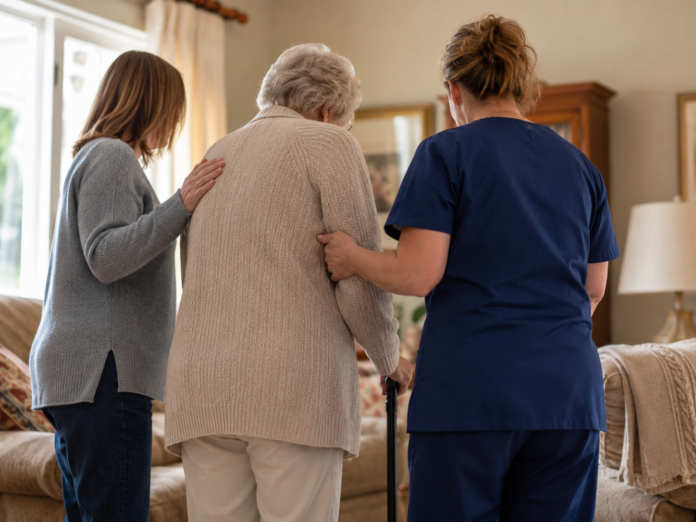

Most older adults, if given the choice, would rather grow old in their own living rooms than in an unfamiliar facility. Research from AARP has consistently shown that the majority of adults over 65 want to remain in their homes for as long as possible. The reasons are practical as much as sentimental. A home holds decades of muscle memory, from the height of the kitchen counter to the number of steps to the bathroom, and that familiarity supports both safety and confidence.
The challenge is that staying home often requires help. That is where professional in-home caregiving fills the gap between full independence and residential care.
What In-Home Care Actually Covers
In-home care is broader than many families expect. It runs from a few hours of weekly companionship to round-the-clock live-in support. Common services include:
- Personal care, such as bathing, grooming, and mobility assistance
- Companionship that eases loneliness and keeps seniors socially engaged
- Memory care for those living with Alzheimer’s or dementia
- Discharge planning that smooths the transition from hospital to home
Some providers now layer in technology as well. AI-enhanced monitoring tools can flag changes in routine, remind seniors about medications, and keep families informed without being intrusive. The point is not to replace human caregivers but to extend their reach between visits.
The Local Factor in Montgomery County
Care works best when it is rooted in the community it serves. In Montgomery County, families have access to established providers whose caregivers know the area, its hospitals, and its resources. Households searching for In-home Senior Care in Gaithersburg, MD will find agencies that have served the region for decades, including one operating since 1989 that has earned Best of Senior Care recognition for ten consecutive years. Longevity like that tends to signal consistent caregiver training, low turnover, and strong family communication.
Local knowledge matters in small ways too. A caregiver familiar with Gaithersburg traffic patterns can time medical appointments realistically. One who knows the neighborhood can suggest a manageable walking route or a nearby senior program worth trying.
Independence and Support Are Not Opposites
A common misconception is that accepting help means surrendering autonomy. In practice, the opposite is usually true. A senior who receives assistance with bathing and meal preparation often has more energy left for the things that matter to them, whether that is gardening, reading, or hosting grandchildren. Good caregivers build relationships rather than simply completing task lists, and that trust makes it easier for seniors to stay active in their own lives.
Questions Families Should Ask Early
Choosing a provider is easier before a crisis forces the decision. Families comparing options should ask about caregiver screening and training, backup coverage if a regular caregiver is unavailable, and whether care plans are reassessed as needs change. Clear answers to those three questions separate dependable agencies from the rest.
Aging at home is not the right fit for everyone, but for many seniors it remains the healthiest and happiest path. With the right support in place, familiar walls really do carry half the load.