
Introduction
Modern kitchens are designed to balance functionality, comfort, and efficient use of space. Homeowners often look for appliances and fixtures that make everyday tasks easier without overcrowding countertops or storage cabinets. Drinking water filtration has become an important consideration in this process, especially for families who want convenient access to filtered water directly from their kitchen sink.
Traditional reverse osmosis systems often use a storage tank to hold treated water until it is needed. While this arrangement can be practical, the tank occupies cabinet space that could otherwise be used for cleaning supplies, cookware, or other household essentials. Tankless water filtration systems offer an alternative by producing treated water on demand, depending on the system’s design and capacity.
Understanding how tankless systems work, their advantages, and their limitations can help homeowners decide whether this technology is appropriate for their kitchens.
What Is a Tankless Water Filtration System?
A tankless water filtration system treats incoming water without storing a large supply of filtered water in a separate tank. Instead, the system processes water as it passes through its filtration components and delivers it to the dispensing faucet.
Some tankless products use carbon filtration or other treatment technologies, while advanced models use reverse osmosis membranes to reduce many dissolved substances. Their performance depends on the filtration method, membrane specifications, water pressure, and the quality of the incoming water.
A tankless design does not automatically mean that a ro water filtration system provides better filtration than a tank-based model. The main difference concerns how treated water is produced and stored. Homeowners should therefore compare filtration performance and capacity separately from the system’s physical design.
Many modern units include electronic controls, filter-life indicators, or pumps to support operation. These features can improve convenience, although they may also introduce electrical requirements and additional components that need maintenance.
Why Kitchen Space Matters
Kitchen cabinets are frequently used for storing cookware, dishwashing products, food containers, and small appliances. Adding a large water filtration unit can make an already crowded cabinet less practical.
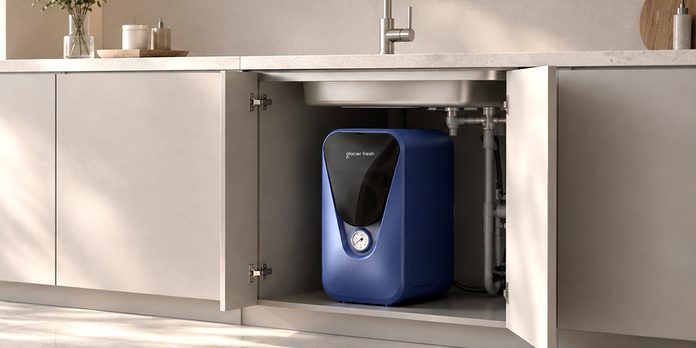
Tankless systems may reduce the amount of space required because they do not need a separate storage tank. This can be particularly helpful in apartments, compact kitchens, and homes with limited cabinet capacity.
An under-sink installation also keeps most filtration components out of sight. The countertop remains available for food preparation, while the filtered-water faucet can be positioned near the main sink.
Before purchasing a unit, homeowners should still measure the available cabinet space. The filtration equipment must fit alongside existing plumbing, and there should be enough room to access cartridges during replacement. A compact system that is difficult to maintain may not provide the best long-term experience.
How Reverse Osmosis Works in Tankless Systems
Reverse osmosis uses pressure to move water through a semipermeable membrane. The membrane allows water to pass while reducing many dissolved substances, depending on its design and operating conditions.
Tankless reverse osmosis systems generally combine a membrane with supporting filters. A sediment filter can capture suspended particles, while activated carbon may reduce chlorine taste and odor and protect the membrane. Some systems include a final polishing or remineralization stage.
A properly selected ro water filtration system can help address specific water quality concerns when its performance has been verified for the contaminants of interest.
However, the number of filtration stages does not guarantee a particular result. Homeowners should examine independent certifications and detailed performance data rather than relying solely on product descriptions.
The Convenience of On-Demand Water
One potential advantage of a tankless system is that it produces treated water when required instead of relying on a separate storage tank. Depending on its rated output, it may provide a convenient supply for drinking, filling reusable bottles, preparing coffee, and cooking.
The actual production rate varies between models. Water pressure, temperature, incoming water quality, and membrane condition can affect how quickly a system delivers treated water.
Households with several people may want to compare the system’s rated capacity with their daily consumption. A unit with insufficient output could become inconvenient during busy mornings when several family members need water at the same time.
It is also important to understand that on-demand production does not necessarily mean unlimited instant availability. Reverse osmosis membranes require time to process water, and system performance depends on the operating conditions.
Tankless Versus Tank-Based Filtration
Both designs can be useful, but they suit different household requirements.
Tank-based systems store filtered water for immediate use. This can be helpful when a household needs a quick supply of water even though the membrane produces it relatively slowly. However, the tank takes up additional space and must be maintained according to the manufacturer’s instructions.
Tankless systems reduce the need for a storage tank and can offer a more compact installation. Some models provide high production rates, but their actual output should be verified against the manufacturer’s specifications.
An under sink reverse osmosis system can be available in either configuration. The best choice depends on available cabinet space, household water consumption, plumbing conditions, and personal preferences.
Instead of choosing based on design alone, homeowners should compare the filtration capabilities, output, water efficiency, installation requirements, and replacement costs of each model.
Water Efficiency and Wastewater
Reverse osmosis systems produce a stream of treated water and a separate stream that carries away concentrated rejected substances. The wastewater ratio varies according to the system design and operating conditions.
Tankless models may use designs intended to improve water efficiency, but performance differs between products. Homeowners should review the stated water recovery rate or product-water-to-wastewater ratio and check the conditions used for testing.
Adequate water pressure is important because low pressure may reduce production rates and affect efficiency. Some systems use booster pumps to support operation when the incoming pressure is below the recommended range.
It is also sensible to consider whether pretreatment is necessary. Water with high sediment levels or other challenging characteristics may require additional treatment to protect the membrane and maintain performance.
Installation Requirements
Although tankless systems can be compact, installation still requires planning. Most under-sink models connect to the incoming water supply and may require a drain connection. Some also need an electrical outlet for pumps, electronic controls, or monitoring features.
Homeowners should review the installation manual before purchasing. This helps identify whether the unit is compatible with the existing plumbing and whether professional installation is advisable.
The cabinet should provide enough clearance for tubing and filter changes. Connections should be secure, and the system should be checked for leaks after installation.
If the kitchen has unusual plumbing or limited access to the water supply, consulting a qualified plumber can help avoid problems. Proper installation is essential for reliable operation and to prevent water damage.
Filter Replacement and Routine Maintenance
Tankless systems still require routine maintenance. Their filters have recommended service intervals, and reverse osmosis membranes may need replacement depending on water conditions and usage.
Some units include electronic indicators that show when a cartridge is approaching the end of its service life. Others rely on a manual replacement schedule. Homeowners should follow the manufacturer’s instructions rather than waiting for a noticeable decline in water quality.
Maintenance can include replacing cartridges, inspecting tubing and fittings, checking for leaks, and sanitizing components when recommended. Using compatible replacement filters is important because incorrect components can affect performance.
It is helpful to record replacement dates and keep spare cartridges available when practical. This makes maintenance easier and reduces the likelihood of operating the system with overdue filters.
How to Select the Right Tankless System
The most suitable system depends on the water quality issue being addressed. Homeowners should begin with a municipal water report or appropriate laboratory testing and identify the contaminants that require reduction.
Next, compare certified performance claims, rated production capacity, water efficiency, filter replacement costs, and warranty conditions. Check whether the system needs electricity and confirm that the cabinet has sufficient space.
Families should also consider their drinking-water habits. A compact system may be ideal for a small household, while a larger family may need a higher-capacity model.
Finally, confirm that replacement filters are readily available. A system that fits the kitchen but is difficult to maintain may become inconvenient over time.
Conclusion
Tankless water filtration systems offer a practical way to reduce the space required for drinking-water treatment in modern kitchens. By eliminating the need for a separate storage tank, some models make it easier to organize under-sink cabinets while providing convenient access to treated water.
A suitable under sink reverse osmosis system can reduce many dissolved contaminants when it is designed and verified for that purpose. An under sink reverse osmosis system with a tankless configuration may be particularly attractive to homeowners who want a compact installation.
Before choosing a model, compare filtration performance, output capacity, water efficiency, installation needs, and maintenance costs. These considerations help ensure that the system fits both the kitchen and the household’s water requirements.