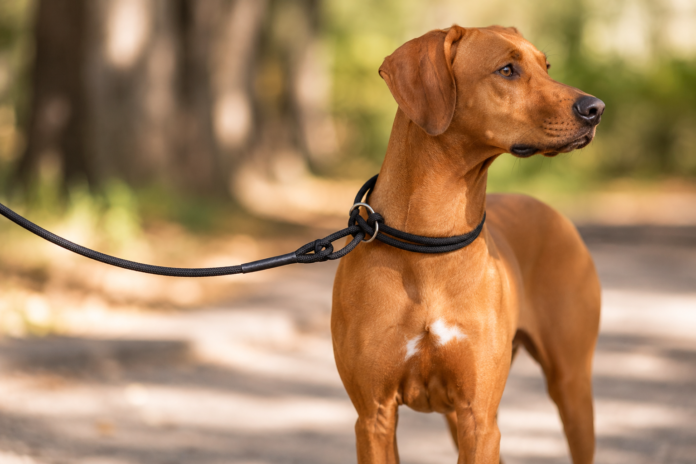

Choosing the right walking equipment starts with understanding the dog using it. A small companion with a narrow neck has very different needs from a strong, broad-headed dog that can put considerable force into a leash. Coat type, head shape, neck size, and even how a dog reacts when startled can all affect whether a particular setup feels secure and comfortable.
A poor match can create problems in either direction. Equipment that is too heavy may be awkward for a small dog, while a collar that does not account for a narrow head can slip off when a dog backs away. The goal is not simply to find the strongest option. It is to choose equipment that gives the handler enough control while allowing the dog to move naturally.
A martingale design can be useful when a limited-slip fit is needed. Its two-loop construction allows the neck loop to tighten within a set range when tension is applied, then loosen again when the leash goes slack. The key is choosing the right size, material, and hardware for the individual dog.
Why Breed Anatomy Dictates Leash Specifications
A single leash style cannot perform equally well across every canine body type. Dogs vary considerably in skull shape, neck size, coat density, and overall strength, all of which affect how walking equipment fits and behaves.
Sighthounds such as Greyhounds, Whippets, and Salukis are a good example. Their heads are often narrower than their necks, so a conventional flat collar may be easier to back out of when a dog becomes frightened or tries to retreat. Other breeds, including Bulldogs and Retrievers, have broader heads and thicker necks and may benefit from equipment that distributes contact more comfortably.
For owners considering a martingale leash for dogs, a properly fitted limited-slip design can provide added security without relying on an unlimited tightening action. The loop should tighten only enough to prevent the dog from backing out, then release as soon as tension is removed. Fit remains more important than the breed label itself, since individual dogs can vary substantially in size and shape.
Research on collar mechanics from Nottingham Trent University has examined the pressure created by different types of dog collars and raised concerns about concentrated forces around the neck. That is one reason proper sizing and careful handling matter when selecting any collar or leash system.
Matching Rope Thickness and Hardware to Breed Size
The diameter of the lead and the weight of its hardware should match the dog’s size and strength. Oversized rings and thick material can feel cumbersome on a small dog, while very light hardware may not be appropriate for a powerful dog that pulls or moves suddenly.
For toy and small breeds, such as Papillons, Toy Poodles, and Italian Greyhounds, lighter materials and smaller hardware are generally easier to handle. A thinner lead can provide adequate control without adding unnecessary weight around the dog’s neck or in the handler’s hand.
Medium-sized dogs, including Shelties, Cocker Spaniels, and Whippets, often need a middle ground between light handling and durability. The exact diameter should depend on the individual dog’s neck size, strength, and activity level rather than weight alone.
For large and extra-large dogs, such as German Shepherds, Golden Retrievers, and Boxers, stronger materials and appropriately sized metal rings can provide better durability and a more secure grip. Even with a larger dog, however, bigger is not automatically better. Hardware should be sturdy without becoming unnecessarily heavy.
| Breed Category | Typical Size | General Material Choice | Handling Priority |
| Toy and Small | Under 15 lbs | Lightweight rope or narrow webbing | Minimize unnecessary weight |
| Medium | 15 to 40 lbs | Medium-weight rope or webbing | Balance control and comfort |
| Large and Working | Over 40 lbs | Durable rope or wider webbing | Strength, grip, and durability |
These ranges are starting points, not strict rules. A 20-pound dog that pulls hard may need different equipment from a calm 20-pound dog, so the dog’s behavior and individual measurements should always be considered.
Material Selection: Nylon vs. Leather Across Coat Types
Coat texture can also influence the choice of walking equipment. Long, silky, or dense coats may catch on rough materials or bulky hardware, while dogs that spend a lot of time outdoors may benefit from a material that is easy to clean and dries quickly.
For long-coated or double-coated breeds such as Afghan Hounds, Setters, Rough Collies, and Pomeranians, smooth, tightly woven nylon or soft leather can help reduce unnecessary friction against the coat. The goal is to avoid equipment that catches, pulls, or creates repeated pressure in the same area.
The American Kennel Club’s conformation resources also emphasize the importance of appropriate handling equipment in the show ring. A lead that complements the dog’s size and coat can make gaiting and presentation easier without becoming a visual distraction.
For short-coated or water-loving breeds such as Labradors, Vizslas, and Dobermans, nylon can be a practical choice because it is lightweight, durable, and relatively easy to clean after wet or muddy walks. Leather can offer a comfortable hand feel as well, but it may require more care depending on how and where it is used.
Special Considerations for Sighthounds and Narrow-Headed Breeds
Owners of sighthounds and other narrow-headed dogs are often especially concerned about escape risk. A dog that can back out of a conventional collar may be difficult to secure if it becomes frightened near traffic, unfamiliar people, or other distractions.
A properly fitted martingale design can help address that problem by reducing the opening of the neck loop when the dog backs away. Unlike a traditional slip lead, the design has a defined limit to how far the main loop can tighten. That makes correct adjustment especially important.
The goal should always be security without excessive pressure. If the dog is constantly walking against a tight collar, the equipment is not being used as intended. The handler should be able to see the neck loop relax when the dog stops pulling or returns to a comfortable position.
Limited-slip equipment can be particularly useful for dogs that are prone to backing out of collars, but it should not replace calm training and supervision. A secure collar is only one part of keeping a dog safe during walks.
Step-by-Step Fitting and Sizing Checklist
Even a well-made martingale lead will not work properly if it is poorly fitted. Take a few minutes to check the fit before each new training session, especially if the dog is still growing or has recently changed weight.
Step 1: Measure the Right Location
Measure the dog’s neck according to the manufacturer’s fitting instructions, paying particular attention to the area where the collar will sit during use. For many martingale designs, the loop is positioned higher on the neck, behind the ears and below the jawline, rather than low near the shoulders.
The correct position can vary depending on the design and the individual dog, so avoid assuming that every martingale should sit at exactly the same point. The important thing is that the collar remains secure without creating unnecessary pressure.
Step 2: Verify the Control Ring Gap
With the leash or lead gently tightened, check the position of the two control rings. They should not come together when the loop reaches its maximum adjustment. The correct amount of space depends on the specific design and manufacturer’s instructions, so use the product’s recommended fitting range rather than relying on one universal measurement.
The collar should be secure enough to prevent the dog from backing out, but it should never interfere with normal breathing or cause discomfort. If you are unsure about the fit, have a qualified trainer or knowledgeable pet professional check it.
Step 3: Test the Slack Release
Release the tension and watch how the control loop moves. It should open smoothly without binding, allowing the neck loop to relax. If the hardware catches, the material twists, or the stopper does not move properly, correct the issue before using the lead.
| Fitting Stage | Action Required | Correct Indicator | Common Mistake |
| 1. Placement | Position according to the manufacturer’s fitting guidance | Collar sits securely and comfortably | Letting it sit too low |
| 2. Tension Test | Apply gentle tension to check the maximum adjustment | Neck loop stops at the intended limit | Allowing excessive tightening |
| 3. Slack Test | Release tension completely | Loop opens smoothly | Ignoring binding or a stuck stopper |
Using the Right Equipment With Training
The equipment itself is only part of the equation. Dogs still need time to understand how they are expected to respond to leash pressure, changes in direction, and distractions.
Start training in a quiet environment where your dog can focus without becoming overwhelmed. Reward calm walking and a loose leash rather than waiting until the dog is already pulling hard. If the dog moves ahead, use gentle directional guidance and give them an opportunity to return to a comfortable position.
Consistency matters more than force. Repeatedly pulling against a dog can create a cycle in which both handler and dog remain tense. Instead, keep your hands quiet and reinforce the moments when the leash becomes loose.
Training should also progress gradually. Once the dog responds reliably indoors or in a quiet yard, introduce slightly more distracting environments. This gives the dog an opportunity to practice the same behavior around smells, people, traffic, and other dogs without making the challenge too difficult too soon.
Finding the Ideal Match for Your Dog
Choosing walking equipment becomes much easier when you consider the dog’s actual needs instead of relying on breed stereotypes. Size, strength, head shape, coat type, behavior, and the environment where the dog is walked all play a role.
A properly fitted martingale design can offer useful limited-slip security for dogs that are prone to backing out of ordinary collars, while the right material and hardware can make daily handling more comfortable for both dog and owner. The best setup is one that stays secure without creating unnecessary pressure.
Whether you are walking a delicate Toy Poodle, managing a narrow-headed sighthound, or handling an energetic Golden Retriever, take time to measure carefully and introduce the equipment gradually. With a suitable fit, thoughtful handling, and consistent training, walks can become safer, calmer, and much easier to enjoy.