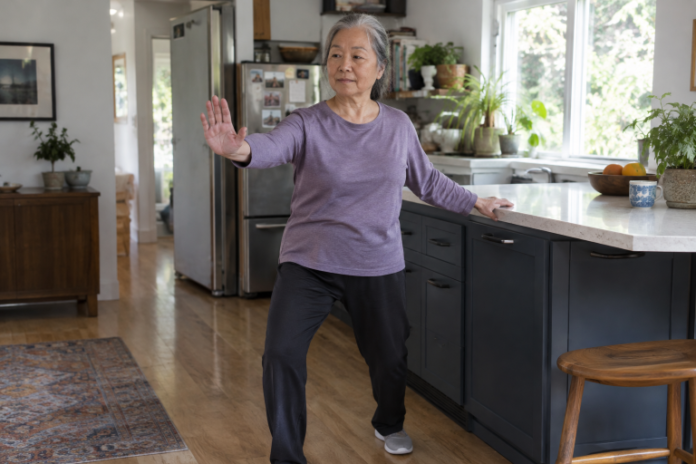

Living with chronic pain can make even ordinary movement feel uncertain. A gentle, adaptable practice such as Tai Chi for Chronic Pain may offer a manageable way to stay active while paying close attention to comfort, balance, breathing, and energy levels.
Tai chi is not a cure, and it does not replace medical care, physical therapy, or prescribed medication. It can, however, be a useful part of a broader plan for people whose pain affects joints, muscles, mobility, sleep, stress, or confidence with daily activities.
Why Tai Chi May Suit People With Chronic Pain
Tai chi uses deliberate, flowing movements that can often be modified for different ability levels. Rather than asking the body for quick impacts, deep stretches, or heavy effort, it emphasizes posture, gentle weight shifts, relaxed arms, and steady breathing. For someone who has become cautious about movement, this slower pace can make activity feel less intimidating.
Adaptation matters. A person with knee pain may practice beside a countertop for support, while someone with limited standing tolerance may begin with seated arm patterns, posture work, and breathing. The goal is not to copy a perfect form. It is to move within a range that feels controlled and tolerable.
What Current Research Says In 2026
Research on tai chi for chronic musculoskeletal pain measures outcomes such as pain, stiffness, physical function, sleep, mood, and quality of life. A 2026 review of research on tai chi for chronic musculoskeletal pain found the strongest support for knee and hip osteoarthritis, with potential benefits for pain, mobility, function, and stiffness compared with non-exercise controls.
For chronic low back pain and fibromyalgia, results are promising but vary across studies. Programs differ in style, session length, instruction, frequency, and whether tai chi is combined with other approaches. This makes it difficult to name one ideal routine for everyone. The most reasonable view is that tai chi may complement standard care for some people, though larger, longer-term studies are still needed.
Possible Benefits Beyond Pain Relief
Chronic pain affects more than the painful area. A comfortable tai chi routine may support day-to-day well-being by helping people practice movement without rushing or bracing against every sensation. Benefits, when they occur, are usually gradual rather than immediate.
- Movement and balance: Repeated weight shifts and controlled steps may build confidence with walking, turning, and standing.
- Stiffness: Regular motion within a comfortable range may feel better than long periods of complete stillness.
- Stress and tension: Slow breathing and focused attention can create a calming practice structure.
- Sleep and confidence: A consistent routine may help some people feel more capable of participating in daily life.
How To Begin With Less Strain
Start Small And Set Up Safely
Choose a clear space with a sturdy chair, wall, or countertop nearby. Wear supportive shoes for standing practice, avoid slippery surfaces, and keep a drink within reach. If you have a recent injury, severe balance problems, a new diagnosis, or major mobility limits, ask a clinician or physical therapist how to adapt activity safely.
Use A Short, Repeatable Routine
Begin with five to ten minutes. Try relaxed breathing, easy arm circles, gentle turning through the upper body, and small weight shifts while holding support if needed. Stop before fatigue affects your posture or balance. Add only a few minutes at a time when the current amount feels manageable for several sessions.
It can help to note how you feel later that day and the following morning. Track pain, stiffness, energy, sleep, and everyday function. This record can reveal whether your routine needs less time, more support, or a slower progression.
How To Adjust Practice During A Flare-Up
A flare-up does not always require an all-or-nothing response. If symptoms are familiar and mild, reduce the session length, use smaller motions, practice seated, and rest longer between movements. Skip anything that produces sharp, spreading, unfamiliar, or escalating pain. Resume your usual routine only after symptoms have settled, and movement feels controlled again.
Safety Tips And Warning Signs
Keep movements smooth, avoid forcing stretches, and do not lock your knees or hold your breath. Support is a practical tool, not a failure. Stop immediately if you develop dizziness, chest pain, unusual shortness of breath, sudden weakness, or a loss of balance.
Contact a clinician if pain suddenly becomes severe, changes character, worsens steadily after practice, or occurs with numbness, weakness, poor coordination, or a fall. These symptoms need assessment rather than repeated attempts to exercise through them.
How Tai Chi Fits A Wider Care Plan
Chronic pain often responds best to a combined approach that may include medical treatment, rehabilitation, strength work, sleep support, stress management, and pacing. The integrated approach to chronic pain care recognizes that self-management practices can sit alongside practitioner-delivered treatment rather than compete with it.
Set functional goals alongside pain goals. Walking a little farther, standing long enough to prepare a meal, or feeling steadier on stairs can be meaningful signs of progress. Discuss your tai chi practice with the professionals already involved in your care so it supports, rather than conflicts with, your plan.
Common Questions
Can Tai Chi Cure Chronic Pain?
No. Tai chi is not a guaranteed cure, but it may help some people manage movement limits, stiffness, stress, or pain-related concerns.
How Often Should Someone Practice?
Short, regular sessions are often easier to maintain than occasional long workouts. Begin with a few brief sessions each week and adjust based on symptoms and professional guidance.
Can Tai Chi Be Done While Sitting?
Yes. Seated tai chi-style movement can be a useful starting point for people who cannot stand comfortably for long periods.
Does Tai Chi Replace Physical Therapy Or Medication?
No. Do not stop or change prescribed treatment without guidance from the clinician who manages your care.
A Steady Way Forward
The best movement routine is often the one that feels safe enough to repeat. Start gently, make adjustments when symptoms change, and let steady practice, not intensity, guide your progress.