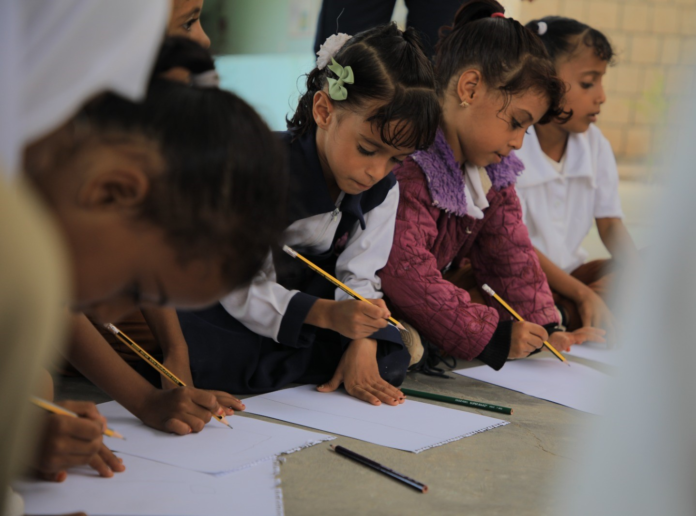

When people think about protecting children during war, the focus usually goes to schools, food supplies, shelters, or emergency medical care. All of these matter, and they should. But in most conflict-affected communities, child protection begins much earlier and much closer to home.
It begins with the mother. She is often the person holding daily life together when everything else starts to fall apart. She manages food when supplies are uncertain, keeps routines alive when displacement disrupts normal life, and makes difficult decisions about safety, education, and survival. Long before formal aid reaches a family, mothers are usually responsible for protecting children.
That weight becomes even heavier when healthcare systems collapse, income disappears, and legal systems become harder to access.
According to UNICEF, nearly 60 million women and girls worldwide will require humanitarian assistance in 2026, many of them living in conflict-affected regions where access to healthcare and protection is severely limited. What happens to mothers in these situations directly shapes what happens to children.
In this context, charitable organizations in the USA are increasingly recognizing that child-focused aid is far more effective when mothers are supported first.
Across humanitarian work, long-term child protection is becoming stronger when maternal support is treated as a central part of recovery rather than a separate issue.
The reasons become clearer when we look at how maternal support shapes children’s lives long after the immediate crisis.
1. A child’s survival often begins with the mother’s health
In conflict zones, healthcare is often one of the first systems to break down.
Clinics close, medicines become harder to find, and safe transport to hospitals is no longer guaranteed. Even something as basic as a prenatal check-up can become difficult or dangerous.
This is why maternal health in conflict zones cannot be treated separately from child protection. A child’s first chance at survival often depends on whether the mother can safely go through pregnancy and childbirth.
Access to prenatal care, emergency delivery support, vaccinations, and postnatal treatment all affect whether children survive their earliest and most vulnerable months.
It may sound obvious, but maternal care is still often treated as secondary in emergency response. In reality, it is one of the first places child protection begins.
2. Children feel safety through their mothers first
Children notice instability faster than adults sometimes realize.
They may not fully understand war, displacement, or financial stress, but they notice when routines disappear. They notice fear. They notice when the adults around them are exhausted.
In many households, mothers become the emotional center during that uncertainty.
That does not mean they are untouched by crisis. It usually means they are carrying more while trying to make life feel normal for everyone else.
When mothers have access to food, healthcare, emotional support, and safer living conditions, children experience crisis differently. There is still hardship, but not complete emotional collapse.
Sometimes child protection looks like something very ordinary, such as keeping one familiar routine alive.
3. Financial support prevents deeper risks for children
Conflict creates financial pressure very quickly. When income disappears, families are often forced into decisions they would never otherwise consider. Children leave school. Girls face early marriage. Unsafe labor becomes normal. Exploitation becomes harder to avoid.
This is where economic support becomes part of child protection in war, not simply poverty relief.
When mothers can access cash assistance, small business support, or work opportunities, the pressure inside the household changes. Decisions become less about immediate survival and more about long-term stability.
According to World Bank, women’s economic participation is strongly linked to stronger household resilience and better long-term outcomes for children in fragile settings.
Often, the safest place for a child begins with whether their mother has enough to keep the family steady.
4. Legal protection creates real security
Some of the biggest risks after conflict are not always visible. Missing documents, unclear legal status, land disputes, or barriers to healthcare and education can quietly keep families trapped for years. These problems may not look urgent from the outside, but they shape everyday life.
Mothers are often the ones trying to solve all of it while also managing the household.
This is one reason women in humanitarian crises face pressure that extends far beyond immediate physical safety.
Legal support helps mothers secure documentation, protect housing rights, access services, and reduce the risk of detention or forced displacement.
For children, that means fewer invisible barriers standing between them and a stable future.
5. Communities recover faster when mothers are supported
Recovery after war rarely happens through individuals alone. It happens through families, schools, and communities slowly becoming functional again.
Mothers are often at the center of that process.
They are connected to school attendance, food routines, healthcare visits, and the informal support networks that keep communities moving when formal systems fail.
When mothers are supported, recovery spreads outward.
Children return to school faster. Trust inside communities rebuilds more easily. Daily routines become possible again.
Support does not stop with one person. It moves through the entire household and often through the wider community as well.
6. Dignity shapes the next generation
Emergency aid begins with urgent needs first, including food, shelter, medicine, and safety. That should happen.
But surviving a crisis and rebuilding a life are not the same thing.
Long-term recovery depends on dignity.
Mothers rebuilding life after conflict need more than protection. They need the ability to make decisions, support their families, and feel that they still have ownership over their future.
Children grow up watching that.
They learn resilience not from formal programs, but from what they see repeated every day inside the home. Confidence, stability, and self-worth are often passed down quietly.
Sometimes the strongest way to protect a child is not by starting with the child first, but by making sure the mother is no longer carrying everything alone.
Closing Thoughts
Protecting children in conflict zones rarely begins with child-focused programs alone.
It often starts earlier, with healthcare for mothers, legal protection, financial stability, and the kind of support that allows families to keep functioning when everything else feels uncertain.
That is why investing in mothers creates such a powerful return.
It protects survival today, but it also shapes education, safety, and resilience for years ahead. In many cases, supporting one mother becomes the most effective way to protect an entire generation.