
Key Takeaways
- Every room has different flooring demands, especially when moisture and traffic are involved.
- Luxury vinyl and tile are practical choices for many wet or high-use spaces.
- Hardwood and engineered wood can bring warmth to living rooms, bedrooms, and dining spaces.
- Carpet adds softness and sound control where spills and outdoor debris are less likely.
- Subfloor preparation, transitions, and correct installation affect how well a new floor performs.
- Matte finishes, warm wood tones, and realistic natural textures remain useful design choices for busy homes.
Flooring in a busy North Carolina home has to do more than look good. It needs to withstand humid summers, muddy shoes after rain, pets, children, frequent guests, and everyday cleaning. Homeowners comparing materials through artisanflooringofnc.com can use a room-by-room approach to narrow the options before falling in love with a particular color or plank style. The right choice is rarely one flooring material used everywhere. A foyer needs protection from grit and water, while a bedroom benefits from warmth and quiet. By considering moisture, traffic, comfort, cleaning habits, and the condition of the subfloor, North Carolina homeowners can create a cohesive look without forcing a single surface to handle every challenge.
Why Flooring Should Be Chosen Room by Room
A formal living room and a mudroom may sit only a few steps apart, but they face very different conditions. Before choosing a finish, consider foot traffic, wet shoes, pet activity, comfort underfoot, noise, cleaning routines, budget, and expected lifespan. A surface that feels ideal in a quiet bedroom may be difficult to maintain near an exterior door or kitchen sink.
Entryways, Foyers, and Hallways
Entry spaces collect sand, pollen, rainwater, and grit that can wear on a floor over time. Porcelain tile, luxury vinyl, durable laminate, and properly finished wood can all work, depending on the household. Textured surfaces and medium-toned patterns often make small scuffs and tracked-in debris less noticeable than very dark, glossy floors. Use washable entry mats, runners, and regular sweeping to limit abrasive particles. Carpet is usually a less practical choice where wet shoes and outdoor messes are common.
Living Rooms and Open-Plan Areas
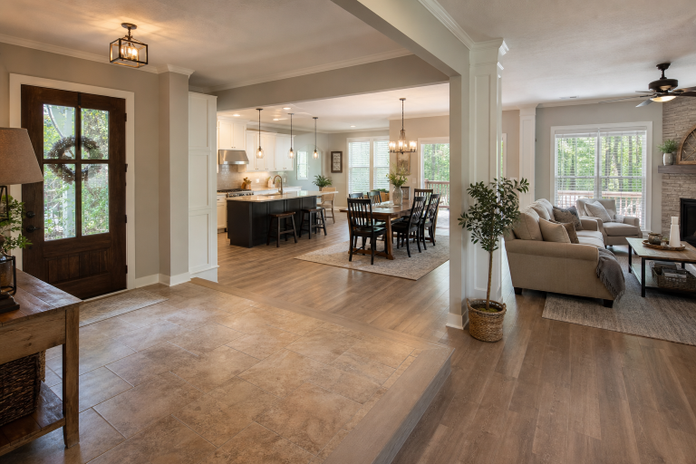
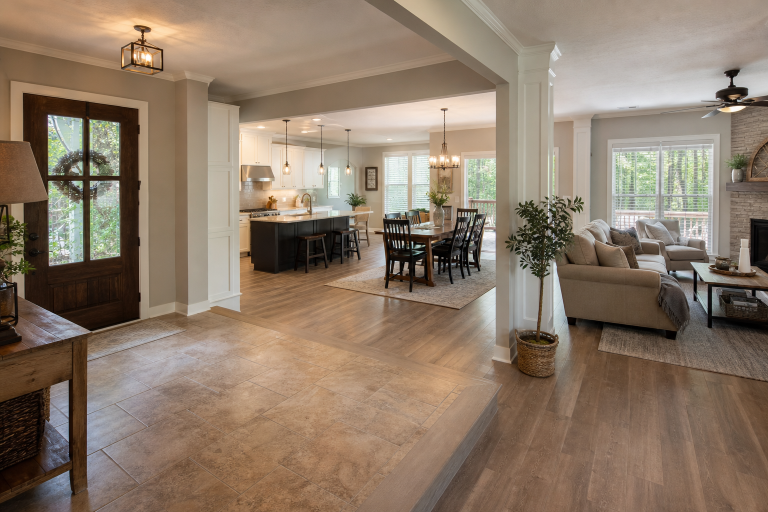
Living rooms call for a balance of aesthetics, comfort, durability, and ease of care. Hardwood, engineered wood, luxury vinyl plank, laminate, tile, and carpet can all be suitable. Hardwood and engineered wood offer natural warmth, while luxury vinyl and laminate can provide a wood-inspired look with straightforward daily upkeep. Area rugs can soften hard surfaces without committing the entire room to carpet. For open layouts, use related undertones across connected rooms and keep transitions purposeful. Wide planks, warm neutrals, and low-sheen finishes can make a shared kitchen, dining, and living area feel calmer. Avoid combining several bold grain patterns or competing tile designs in adjoining spaces.
Kitchen and Dining Room Flooring
Kitchens face spills, dropped cookware, chair movement, and frequent cleaning. Luxury vinyl, porcelain or ceramic tile, sealed wood, and certain laminate products are common options. Waterproof and water-resistant are not interchangeable terms. A waterproof surface may resist water at the plank or tile level, but seams, edges, transitions, and the surrounding installation still need attention. Tile handles moisture well but can feel hard and cool during long cooking sessions. Luxury vinyl often feels more forgiving underfoot. Sealed wood brings character to a kitchen but benefits from prompt spill cleanup. Consider slip resistance, surface texture, grout maintenance, and the cleaning products recommended for the selected finish.
Questions to Ask Before Choosing Kitchen Flooring
- How often will the floor face spills or standing water?
- Will it be comfortable for long periods of cooking and standing?
- Can it handle chairs, pets, and dropped dishes?
- How simple will regular cleaning be?
- Will it connect visually and physically with nearby rooms?
Bathrooms, Laundry Rooms, and Other Wet Areas
Moisture should be the first concern in bathrooms and laundry rooms. Porcelain tile, ceramic tile, sheet vinyl, and waterproof luxury vinyl are often considered because they are suited to wet conditions. Still, no product alone makes an entire installation waterproof. Seams, wall edges, toilet areas, appliance connections, and subfloor condition all matter. Choose surfaces with practical traction rather than relying only on a glossy appearance near tubs, showers, and washing machines. If there is an active leak, seepage, or damp slab, address leaks and seepage before covering the floor. Flooring should never conceal an unresolved moisture problem.
Bedrooms, Guest Rooms, and Flex Spaces
Bedrooms usually prioritize comfort, warmth, and quiet. Carpet can provide softness and help reduce footfall noise, while hardwood, engineered wood, laminate, and luxury vinyl offer easier cleanup and a consistent style across the home. Rugs add comfort beside beds when hard surfaces are preferred. For guest rooms that double as offices, playrooms, or storage spaces, select a material that fits the room’s most demanding use.
Home Offices, Playrooms, and Basements
Home offices need to accommodate rolling chairs, while playrooms need space for toys, crafts, and occasional spills. Luxury vinyl, laminate, low-pile carpet, carpet tiles, and wood can work with chair mats, furniture pads, or protective rugs. In basements and other below-grade rooms, moisture planning comes first. Luxury vinyl and tile are often more suitable than solid hardwood when a slab or foundation area is prone to dampness. Check for water intrusion, drainage problems, and uneven subfloors before installation begins.
Flooring Choices for Homes With Children and Pets
Durability is more than scratch resistance. Families may also need stain resistance, traction, dent resistance, sound control, and easy cleanup. Hard surfaces are practical for food spills and pet accidents, while carpet can make bedrooms and play areas feel softer. Use mats by exterior doors, trim pet nails, add furniture pads, clean spills promptly, and follow the manufacturer’s care instructions rather than using harsh cleaners.
Hardwood, Engineered Wood, Luxury Vinyl, Laminate, Tile, and Carpet Compared
- Hardwood: Warm, timeless, and potentially refinishable, but more sensitive to moisture and dents.
- Engineered wood: Offers real wood at the surface and may be better suited to some changing indoor conditions than solid wood.
- Luxury vinyl: Comfortable, easy to clean, and available in moisture-resistant or waterproof product lines.
- Laminate: Provides a durable wood-look surface, though product-specific moisture limits should be reviewed.
- Tile: Durable and moisture-friendly, but harder and cooler underfoot.
- Carpet: Soft and quiet, but more demanding in spaces exposed to dirt, stains, and water.
Budgeting and Avoiding Common Mistakes
Material price is only part of the project cost. Include removal, disposal, subfloor repairs, moisture testing, underlayment, trim, transitions, delivery, installation, and possible future repairs. Request a written estimate that explains preparation work and finishing details. The least expensive product may not provide the lowest long-term cost if it is poorly matched to the room. Common mistakes include choosing only by appearance, ignoring moisture, skipping subfloor preparation, overlooking door height, using the wrong cleaning products, mixing too many finishes, and failing to keep extra material for later repairs.
A Simple Flooring Selection Process
- List the rooms receiving new flooring and identify each room’s biggest challenge.
- Rank moisture resistance, durability, comfort, style, and maintenance needs.
- Choose two or three suitable material types, then review warranties and care requirements.
- View samples in daylight and artificial light, then compare full project costs.
- Confirm subfloor readiness, acclimation needs, transitions, and furniture timing before installation.
Conclusion
The best flooring plan for a North Carolina home starts with real daily life. Match the material to the traffic, moisture, comfort, and care demands of each room, and the finished home can feel cohesive while working harder for years to come. Consider how each space is used before choosing a material, from durable and easy-to-clean options for busy entryways and kitchens to comfortable surfaces for bedrooms and living areas. Bathrooms, laundry rooms, and lower-level spaces may require additional attention to moisture and subfloor conditions. It is also important to consider transitions, lighting, furniture, and the overall style of the home so that different flooring materials work together visually. With thoughtful planning, homeowners can balance appearance, comfort, maintenance, and practical needs while creating a flooring design that fits both the home’s conditions and the household’s everyday routines.