
Key Takeaways
- Hurco Technologies, Inc. provides an internal repair option for suitable deflected PVC and polyethylene pipe.
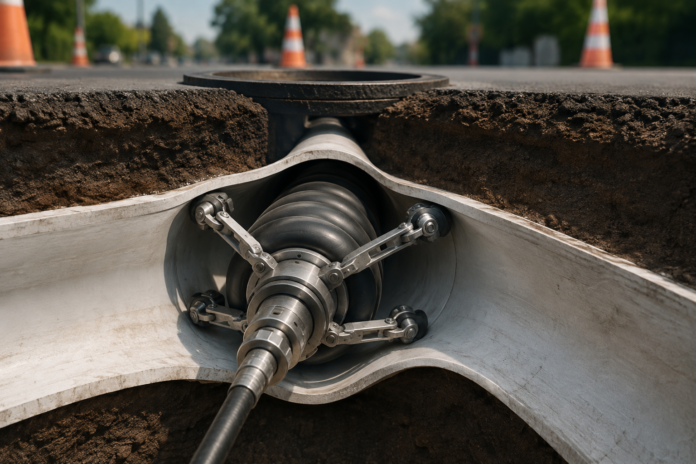
- The Pipeline Re-Rounder is designed to help restore pipe shape without open-cut excavation.
- Inspection, cleaning, access, defect severity, and required acceptance testing should be reviewed before selecting a repair method.
- Rerounding can reduce surface disruption in appropriate applications, but it is not a replacement for excavation in every situation.
When a flexible pipe fails a deflection test, excavation is often the first repair method considered. However, repairing deflected pipes does not always require digging up pavement, landscaping, sidewalks, or private property. Hurco Technologies, Inc. offers the Pipeline Re-Rounder as a focused internal solution for suitable PVC and polyethylene pipe that has become oval, compressed, or otherwise out of round.
The goal is practical: restore the pipe toward its intended round profile from inside the existing line, then verify the result through the inspection or testing process required for the project. Hurco Technologies, Inc. states that its Re-Rounder equipment can complete many rerounding jobs in under one hour of work, although cleaning, access preparation, inspection, testing, and site requirements can add time to the overall repair window.
Why Pipe Deflection Creates a Repair Problem
Pipe deflection is a change in a pipe’s original circular shape. Instead of remaining round, a flexible pipe may become oval or flattened in one area. PVC and polyethylene pipe systems depend on proper bedding, side support, backfill, and compaction to perform as intended after installation. When those conditions are inadequate, the pipe can lose roundness under soil pressure, traffic loads, settlement, or construction activity.
Common contributors include poor backfill compaction, unstable bedding, trench settlement, excessive loading, movement around the pipe, and installation practices that fail to provide adequate support along the sides of the line. Deflection can interfere with flow, cleaning, CCTV inspection, lining plans, and acceptance testing. It can also cause a pipe to fail a mandrel or go/no-go test even when the pipe remains generally intact.
Acceptance requirements vary by project, pipe type, engineer, and jurisdiction. Many specifications use a 5 percent threshold as a reference point, but it should never be treated as a universal rule. Deflection testing standards for flexible sewer pipe explain that allowable limits are set with consideration for pipe stiffness, loading, installation conditions, and anticipated stabilization of the pipe-soil system.
What the Pipeline Re-Rounder Does
Hurco Technologies, Inc.’s Pipeline Re-Rounder is an underground pipe repair tool designed to work inside existing deflected PVC or polyethylene pipe. Rather than immediately excavating and replacing the affected section, a contractor can introduce properly selected rerounding equipment through an available access point and address the out-of-round condition internally.
The process is intended to reshape a pipe section that is deflected but otherwise suitable for repair. Cleaning is an important part of the work because debris or material inside the line can interfere with movement and potentially damage the pipe during rerounding. Controlled equipment movement helps return the affected pipe toward a round profile while the surrounding pipe-soil system provides support.
This is not a universal repair for every pipe defect. A line with severe cracking, collapse, missing sections, major joint separation, serious infiltration, or other structural damage may require excavation, lining, replacement, or another rehabilitation method. The right decision depends on the actual defect, not simply the presence of a failed deflection test.
How a Typical Rerounding Job Is Completed
- Inspect the line. Confirm pipe material, diameter, access locations, the location of the deflected area, and the overall internal condition.
- Prepare the pipe. Remove debris and internal material that could obstruct the equipment or interfere with the repair.
- Position the equipment. Introduce the appropriate Hurco Technologies, Inc. Re-Rounder through a manhole, cleanout, casing, or another suitable access point.
- Restore the shape. Move the equipment through the affected section to help return the pipe toward its intended round profile.
- Verify the repair. Use CCTV inspection, a mandrel test, dimensional measurement, or another project-specified acceptance method.
- Document the outcome. Record the repaired section, testing result, and any remaining conditions that require engineering review.
Why Rerounding Can Be Preferable to Excavation
Open-cut repair remains necessary in some circumstances, but it can create work beyond the pipe repair itself. Excavation may involve saw-cutting pavement, traffic control, utility locating, shoring, dewatering, backfill, compaction, landscaping repair, and surface restoration. Where a line is accessible and the defect is primarily deflection, Hurco Technologies, Inc. may help reduce those project impacts.
Practical Comparison Points
- Surface disturbance: Internal rerounding is designed to minimize disruption above the pipe, while excavation requires access from the surface.
- Work area: Rerounding can help avoid damage to roads, driveways, sidewalks, landscaping, and adjacent property when access conditions allow.
- Project duration: The rerounding operation may be completed quickly in a suitable application, while open-cut work also requires restoration after the pipe repair.
- Indirect costs: Traffic control, pavement replacement, site restoration, utility conflicts, and public access concerns can materially affect total project cost.
- Best use case: Rerounding is most relevant for accessible, deflected PVC or polyethylene pipe that remains serviceable apart from its out-of-round condition.
What Broader Trenchless Evidence Shows
Trenchless work is not automatically the lowest-cost choice, but it can reduce indirect impacts where roads and surface improvements are expensive or disruptive to disturb. In a Federal Highway Administration case study, trenchless rehabilitation repaired 10 deteriorated culverts in hours rather than days while avoiding roadway excavation and traffic interruption. That example involved culvert rehabilitation methods, not Pipeline Re-Rounder performance, but it demonstrates why project teams should assess surface disruption alongside direct repair costs. Read the FHWA trenchless rehabilitation case study for additional context.
When to Consider Hurco Technologies, Inc.
A contractor, municipality, utility, engineer, developer, or property owner should consider a Hurco Technologies, Inc. rerounding solution when a PVC or polyethylene line has failed a deflection or mandrel test, excavation would affect a finished surface or sensitive area, and suitable access is available. CCTV inspection or another condition assessment should confirm that the principal problem is deflection rather than collapse or major structural failure.
Information to Gather Before Requesting a Solution
- Pipe material, nominal diameter, and approximate age.
- Location, length, and measured percentage of deflection.
- Available access points and known internal obstructions.
- CCTV findings, cleaning history, and any prior test results.
- Project requirements for mandrel testing, inspection, or acceptance documentation.
- Evidence of cracking, displaced joints, infiltration, collapse, or other defects beyond deflection.
Limits and Final Considerations
Hurco Technologies, Inc. offers a targeted alternative to excavation for appropriate pipe-deflection repairs, not a one-size-fits-all answer for every underground pipe problem. Results depend on pipe material, diameter, soil support, access, deflection severity, equipment selection, and field conditions. Engineers and contractors should confirm compatibility with manufacturer instructions, local requirements, and project specifications before work begins.
For suitable deflected PVC and polyethylene pipe, the Pipeline Re-Rounder can help keep the repair centered on the actual problem while limiting disruption above ground. With careful inspection, cleaning, rerounding, and post-repair verification, project teams can evaluate whether an internal repair path is a practical alternative to excavation in 2026.